Hotel de Memórias
A documentary about the sea and memory. Its movement is its form. Its strength.
This is the story of my grandfather, Tiago Florit, who for 50 years was a film operator at the Teatre Principal de Maó, in Menorca. It is a review of his life, from his birth to his death, in a cinematographic key. A true love story to cinema.
A concert movie dedicated to the formation of the World Club of Odesa under the leadership of Mikhail Zhvanetsky. "Let many people be proud of the expanses and fields," says Mikhail Zhvanetsky himself about his favorite city, "someone falls to his favorite birch tree, thinking that it grows only here. We have the only homeland - Odesa, the only party of Odessites. Odesa is halfway around the world, from America to Australia. Odesa is a phenomenon, an Odessite is a character. Odesa was, is and will be one of the most famous cities on this temporal globe. And we, who stayed, and you, who left, will live and live with it.... Odesa is worth dedicating your youth and old age to it, and it will repay you like a native land".
The bleached palette and home-movie aesthetics of Super 8 footage provide the image track for this testimonial about an illegal abortion in Mexico City in the 1960s, delivered in voiceover by the filmmaker’s mother. In its account of this intimate and disorienting memory, Lesser Choices summons a time of profound uncertainty—a moment from an era without rights—and offers a warning to the present.
An intimate, behind-the-scenes look at how an anonymous chef became a world-renowned cultural icon. This unflinching look at Anthony Bourdain reverberates with his presence, in his own voice and in the way he indelibly impacted the world around him.
A poetic exploration of the multi-generational affects of Canada's Indian Residential School system, based on the personal trials of Aboriginal playwright Yvette Nolan.
On a lonely night, a girl searching for her missing dog is transported to a magical world, where she reunites with her friend in an unexpected form. As she explores this whimsical realm, she confronts memories from her life.
Parole tremanti
Filmmaker Froukje van Wengerden’s 86-year-old grandmother shares a powerful memory from 1944, when she was just 14. As her story unfolds, we see a group of contemporary 14-year-old girls. Their procession of portraits permits the spectator to see simultaneously forward and back, into the future and towards the past. A miraculous testimonial that uses eye contact to focus the viewer inward and evoke unexpected emotions.
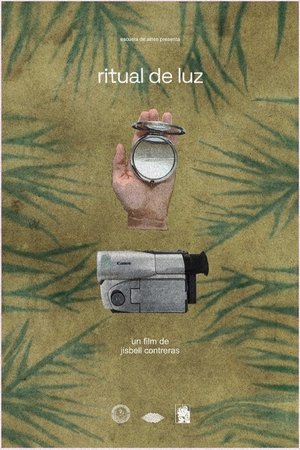
A visual essay on the stimuli that draw a bridge to past memories of my life; a real documentary about where I was and where I am, what I did and what I do; a reflection of the person I was and continue to be.
A daughter writes a letter for her father, who she lost after he was sentenced on charges of blasphemy.
The Water Map is an essayistic journey through the ethnography and landscapes of the Region of Murcia. These places are in the process of disappearing due to the increasing and abundant agricultural exploitation. Water has marked the territory and the culture of the area, and with its disappearance, the memories of four characters fade away.
In 1950s Italy, two middle-aged brothers go on a magical odyssey through their past as they take part in the world's most beautiful car race: the Mille Miglia.
The war memorials of 1914-1918 have become so familiar that we no longer see them. They've become an invisible museum, blending into the landscape of France. Then, one fine day, a sculpture catches our eye. Another History appears, perhaps the most gigantic artistic project since the cathedrals...
Son Bir Numara
Altepetl: Sin cerro, sin agua
Nested Sequence
Damian, grieving his girlfriend's death, travels through Mexico seeking solace. Along the way, he connects with strangers and witnesses their coping rituals, finding a path through his own memories and regrets.
In the vestibule of a hospital room, a young boy waits to see his dying mother. The clamor and spiralling movements of bodies around him intensify, forming a grotesque circus—a cacophonous circle that pushes the child back, depriving him of one final touch of his mother's hand. Using rotoscoped drawings suggestive of charcoal sketches, as well as 3D and object animation techniques, The Circus compels viewing with its unsettling realism. Colour is employed metaphorically to subtly express the promise and the memory of maternal affection. Nicolas Brault's highly personal film, suffused with poetic modesty, casts a poignantly sincere gaze on the heartbreak of a child facing the fearful, mysterious experience of his mother's death.