In Paradisum relates two disturbing stories simultaneously. The female narrator tells her personal tale of imprisonment as the wife of the notorious Estonian serial killer, Andreas Hanni. Although her story is bizarre, it touches familiar themes that run throughout modern life: the desire to be loved and the fear of being alone. Pille Hanni's tale unfolds over cinema vérité images of life in several Estonian prisons. At times the images reflect in a literary way the events of the narration, yet they are representations and impressions, rather than traditional documentary style footage of the people involved. This opens the story to a more general interpretation, often with unsettling results. The parallel contents reveal, at two levels of story and social organisation, how the bizarre and inhuman can be tolerable and even addictive in the face of our fears.
A riveting expose about the personalities of murderers and their motives. This 72 minute film covers the McDonalds' restaurant massacre, President Reagan's assassination attempt, serial murderer Henry Lee Lucas and others.
In the late 1960s, with the triumph of bilingualism and biculturalism, New Brunswick's Université de Moncton became the setting for the awakening of Acadian nationalism after centuries of defeatism and resignation. Although 40% of the province's population spoke French, they had been unable to make their voices heard. The movement started with students-sit-ins, demonstrations against Parliament, run-ins with the police - and soon spread to a majority of Acadians. The film captures the behind-the-scenes action and the students' determination to bring about change. An invaluable document of the rebirth of a people.
Pete and Toshi Seeger, their son Daniel, and folklorist Bruce Jackson visited a Texas prison in Huntsville in March of 1966 and produced this rare document of of work songs by inmates of the Ellis Unit. Worksongs helped African American prisoners survive the grueling work demanded of them. With mechanization and integration, worksongs like these died out shortly after this film was made.
Nine fictitious documentaries and films reflect the mood of late 1970s Germany, particularly the two-month period in 1977 when a businessman was kidnapped by the RAF (Red Army Faction). The kidnap had been made to orchestrate the release of the original leaders of the RAF, aka the Baader-Meinhof.
Former conservative Justice Secretary Ann Widdecombe visits a Norwegian prison that has been described as the most luxurious of its kind.
Join Tony Rykers as he takes us on an exclusive behind the scenes tour of an African prison in Mocuba, Mozabique. This unscripted and raw footage introduces you to the dreadful conditions many of the prisoners face each day and how, in a simple way, God is touching their lives.
71 years in the making, this feature documentary experience reveals the extraordinary life journey of Hollywood's most unlikely hero, Danny Trejo.
Set entirely inside Folsom Prison, The Work follows three men during four days of intensive group therapy with convicts, revealing an intimate and powerful portrait of authentic human transformation that transcends what we think of as rehabilitation.
A haven for Black intellectuals, artists and revolutionaries—and path of promise toward the American dream—Black colleges and universities have educated the architects of freedom movements and cultivated leaders in every field. They have been unapologetically Black for 150 years. For the first time ever, their story is told.
The issue of artificial insemination has biological, medical, psychological, and ethical dimensions. Filmmaker Marie Mandy approaches the topic in her own unique way, involving scientists from various disciplines. The artificial womb—is it a futuristic fairy tale or scientific reality? Filmmaker Marie Mandy uses a very personal visual style to explore the latest research findings in the field of artificial insemination. She highlights the biological, ethical, and psychological issues surrounding this (r)evolution, while also questioning the value of life and the power of science.
Documentary feature about 11-time Jeopardy! champion and Internet iconoclast, Arthur Chu.
At the beginning of the 1980s, a group of Germans ventured into a social experiment: in the remote hills of Umbria, they founded a self-sufficient community beyond consumerism and bland gainful employment. After 40 years, the rural commune still exists. Not all the plans have come to fruition over the years. How are the dropouts doing today?
When one thinks of the American Deep South, the image of veiled Muslim students strolling the University of Alabama campus is the last thing that comes to mind. VOICES OF MUSLIM WOMEN FROM THE US SOUTH is a documentary that explores the Muslim culture through the lens of five University of Alabama Muslim students. The film tackles how Muslim women carve a space for self-expression in the Deep South and how they negotiate their identities in a predominantly Christian society that often has unflattering views about Islam and Muslims. Through interviews with students and faculty at Alabama, this film examines representations and issues of agency by asking: How do Muslim female students carve a space in a culture that thinks of Muslims as terrorists and Muslim women as backward?
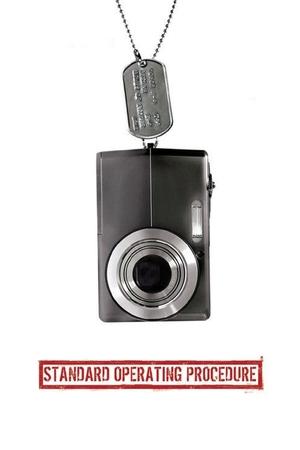
Errol Morris examines the incidents of abuse and torture of suspected terrorists at the hands of U.S. forces at the Abu Ghraib prison.
The Big One is an investigative documentary from director Michael Moore who goes around the country asking why big American corporations produce their product abroad where labor is cheaper while so many Americans are unemployed, losing their jobs, and would happily be hired by such companies as Nike.
A true animated film about invented islands. About an imaginary, linguistic, political territory. About a real or dreamed country, or something in between. Archipelago is a film of drawings and speeches, that tells and dreams a place and its inhabitants, to tell and dream a little of our world and times.
From its beginning during the Reagan years through current times, the War on Drugs has left many victims stranded in the prison system. PRISONERS OF THE WAR ON DRUGS reveals life behind bars in the nation’s prisons. Each prisoner has his or her own story, but for most, the story is predictably similar; they have been criminalized for drugs or drug related offenses, locked up with easy access to substances, and given little opportunity for rehabilitation. This film provides an inside look at the prison system, its prisoners and a war on drugs we do not seem to be winning.
Why do people vent such toxic opinions online? Filmmaker Kyrre Lien spent three years travelling the world to find out who these anonymous ‘internet warriors’ are and why they do it.
Marzena Sowa is a quintessential contemporary European: independent, aware of how the world works—or should work—and single. After her mother’s death, she is consumed by longing and sets off for her distant homeland, a Polish village where her beloved aunt Niuszka—an embodiment of joie de vivre and peace with herself—lived her entire life under the heavy weight of patriarchy. The film becomes a collision of social models, resolved with an open ending.