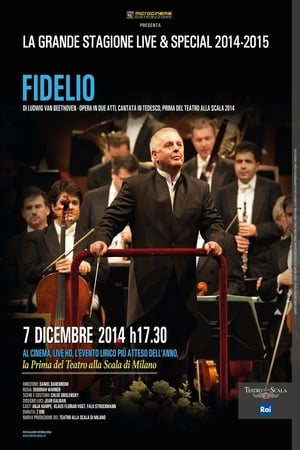
A tribute to marriage coming from a bachelor is a tad suspicious. But for Beethoven the idealization of the woman-bride was heartfelt and sincere. It has always been a unique opera starring a courageous wife who wows audiences. Fidelio is a moral title, associated with the ideals of liberty of the French Enlightenment. Nobility and commoners are united in their thirst for justice against the oppression of power. For once the faithful consort of a desaparecido wins her battle against a treacherous tyrant, and the collective joy truly is “nameless”, as is sung on the stage. Especially because the “our heroes to the rescue” finale is recounted by the triumphant symphonic flair of the quintessential musician. Beethoven really does bring the world to collapse at the conclusion of this opera, which begins like a delightful little comedy, but which scales and transcends all the summits of the dramatic-musical art.
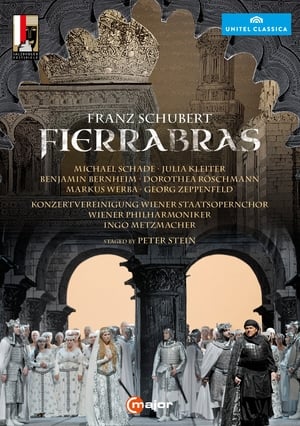
Fierrabras of 1823 is the last of Franz Schubert’s stage works. Rarely performed to this day, this heroic-romantic opera has now been staged for the first time ever at the Salzburg Festival by famous director Peter Stein. Based on an old French 12th-century epic, the plot depicts the military conflict between Christians and Moors at the time of Charlemagne – as a backdrop to stories of love and friendship that prove to be stronger than war and hatred of otherness. The strong cast includes the “marvellously expressive miracle Dorothea Röschmann” (Die Zeit) and “Michael Schade, who exudes his exceptional tenor in Fierrabras’s heroic arias” (Der neue Merker). Under the energetic baton of lngo Metzmacher, the Vienna Philharmonic unfold “the melos, the poetry, the sweetness and the dramatic force of Schubert’s highly refined and atmospheric sound worlds” (Kleine Zeitung) in highly romantic fashion.
Májové jitro
A production of Mozart's opera recorded live at Zurich Opera House in 2000. Cecilia Bartoli leads an all-star cast including Roberto Saccà, Liliana Nikiteanu, and Agnes Baltsa. The conductor is Nikolaus Harnoncourt. Filmed live at the Zurich Opera House in February 2000 on a set which visualises the subtitle "The School for Lovers", the plot revolves around two army officers arguing about the fidelity of their brides, then setting out to test their chastity. Despite the often playful humour, this is not only psychologically telling music-making, but reveals Mozart exploring the structure of opera, discarding convention to mix large ensemble sections with arias for as many different combinations of singers as possible. With Liliana Nikiteanu attractively contrasted with Bartoli, and thoroughly convincing performances by Roberto Sacca (Ferrando) and Oliver Widmer (Guilelmo), this Così has a freshness and flow which, coupled with the timeless romantic themes, feels very contemporary.
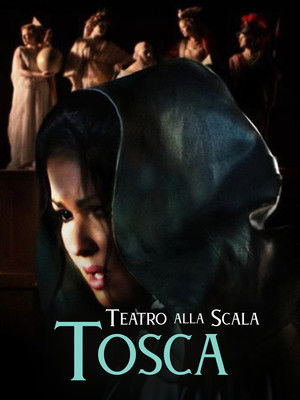
To open its 2019-2020 season, La Scala in Milan has chosen Tosca, in a new production directed by Davide Livermore. The production is part of the rediscovery of Italian opera led by Riccardo Chailly, the conductor of the production and music director of La Scala. He has chosen the original version of Tosca, as created by Puccini in Rome in January 1900, which included eight "additional musical inserts" that were removed from the work after its second performance in Turin in February 1900 and will now be rediscovered for the first time on December 7 at La Scala.
In the awe-inspiring Teatro Olimpico,Vicenza, Cecilia Bartoli, recognised as one of the best singers of our time, gives the most outstanding recital of work from a variety of composers such as Caccini, Schubert, Handel, Vivaldi, Bellini, Donizetti,Mozart, Rossini, Viardot and Bizet.
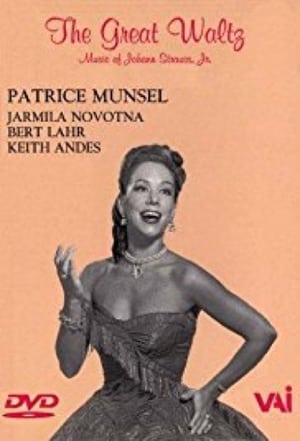
Johann Strauss, Jr., a would-be composer of waltzes in mid-19th Century Vienna, attempts to thwart his father's efforts to prevent his success when the older man becomes jealous of his melodic skill.
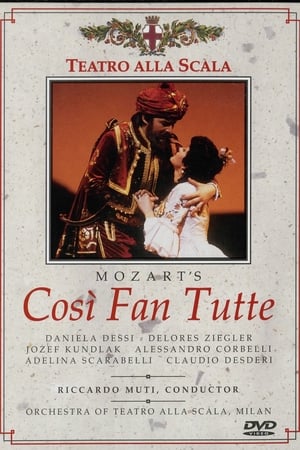
Officers Ferrando and Guglielmo are certain that their lovers Dorabella and Fiordiligi are faithful to them, but the cynical Don Alfonso challenges them to a bet that the women will be unfaithful given the chance. The officers thus pretend to go off to war, and return in disguise as Albanian strangers, to woo Dorabella and Fiordiligi incognito. The ladies are initially frosty, but soon warm to their new suitors, spurred on by their maid Despina. Performed at the La Scala Theatre in Milan.
La folie Offenbach
An anthology of four abbreviated operas: "William Tell" by Rossini, "The Marriage of Figaro" by Mozart, "Don Pasquale" by Donizetti, and "Carmen" by Bizet. Filmed in Italy with major opera stars, and accompanied by English narration.
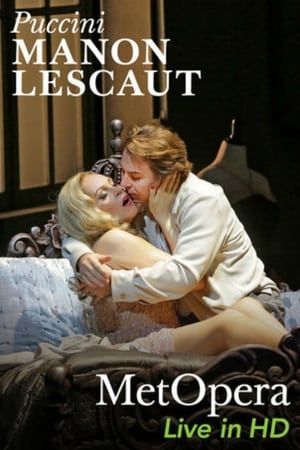
Kristine Opolais is the young woman whose conflicting desires for love and luxury lead to her tragic end, and Roberto Alagna plays the man who falls for her in Puccini’s early hit. Richard Eyre’s elegant production, which sets the action in 1940s occupied France, was one of the highlights of the Met’s 2015–16 season. Massimo Cavalletti as Manon’s brother and Brindley Sherratt as her aging admirer co-star, and Principal Conductor Fabio Luisi is on the podium.
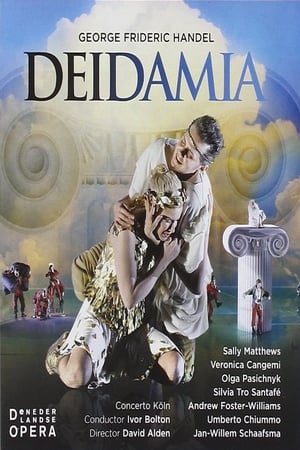
A production of an opera by George Frideric Handel, about the Skyrian princess Deidamia helping Achilles while he is disguised as a girl to avoid dying in the Trojan War, based on Greek mythology.
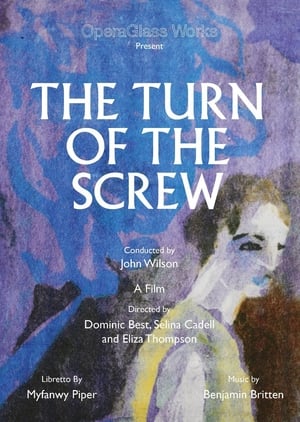
A film of the opera The Turn of the Screw by Benjamin Britten. A young governess arrives at an old house in the country to look after two orphans. What unfolds is a chilling tale as she experiences strange ghostly encounters with some of the previous occupants of the house and finds herself engaged in a battle to protect the children’s souls from evil. Myfanwy Piper’s libretto of Henry James’s famous short story leaves much to our imagination and Britten’s score is haunting, terrifying and brilliant. Shot on location at Wilton's Music Hall, London, the whole space of the venue, not just the stage, is used to tell the story.
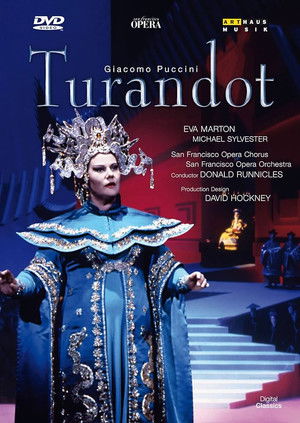
Donald Runnicles directs the San Francisco Opera in this lavish production of Giacomo Puccini’s final masterpiece, which was left unfinished upon his death and was later completed by Franco Alfano. Declaring himself a suitor of the beautiful Princess Turandot (Eva Marton), the son of a conquered king (Michael Sylvester) must correctly answer three troublesome riddles. According to tradition, if he fails, it will mean his death.
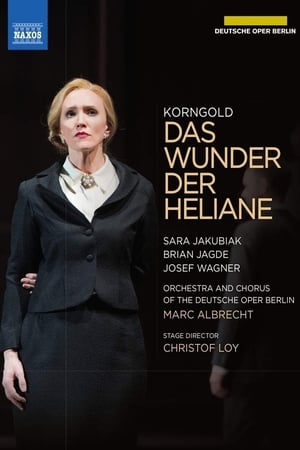
The first-ever audio-visual recording of this opera – directed by Christof Loy, conducted by Marc Albrecht and with Sara Jakubiak, Brian Jagde and Josef Wagner in the leading roles
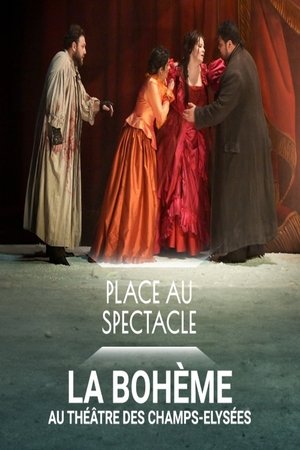
La Bohème
Brazilian "singing film" (filme cantante) directed by Alberto Botelho, featuring a screen synchronization of the famous Italian tenor aria "Amor ti vieta" (composed by Umberto Giordano for his 1898 verismo opera Fedora) and performed by Enzo Bannino.
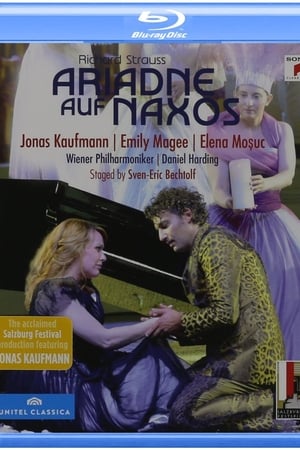
Starring Jonas Kaufmann as Bacchus and featuring Emily Magee with Daniel Harding conducting the Vienna Philharmonic, Ariadne auf Naxos was filmed at the acclaimed Salzburg Festival in 2012. This release also includes "Le Bourgeois gentilhomme."
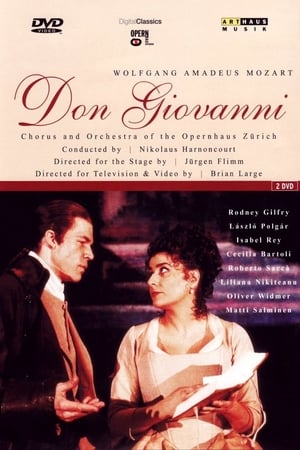
Live 2001 production from the Zurich Opera House of the classic Mozart/Da Ponte opera, with Nikolaus Harnoncourt conducting and directed for television and video by Brian Large.
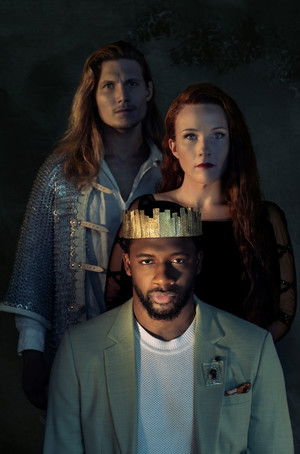
Idealism, treachery, honor, and perfidy collide in this richly lyrical opera by French composer Ernest Chausson. This opulently scored work, which premiered in 1903, lays bare the tragedy of King Arthur’s betrayal at the hands of his queen Genièvre and his trusted knight Lancelot. Considered one of the finest examples of French romanticism, King Arthur (Le roi Arthus) was composer Chausson’s only opera—his own composing career was tragically cut short by his early death at age 44. Performed by a stellar cast, helmed by baritone Norman Garrett, mezzo-soprano Sasha Cooke, and tenor Matthew White, this production of King Arthur takes us to a world in the midst of upheaval where long-standing codes of honor and loyalty no longer hold sway.