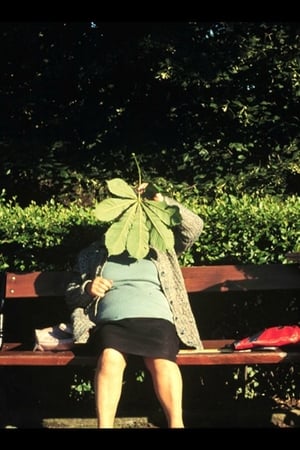
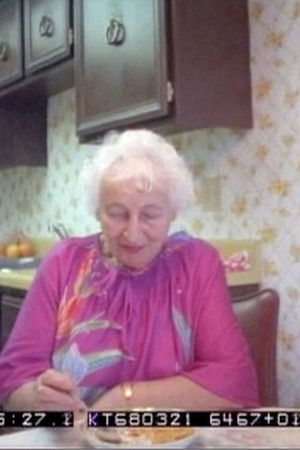
1-channel film installation (21‘20‘‘). 2.00:1 aspherical widescreen, stereophonic sound. A wife waits for her dead husband. An adaption of three japanese poems in three different translations. An examination of waiting and the slowness of time. An exercise in slow cinema.
Impressions of New York City. Experimental short.
"Like a Pig in Shit" is a twenty-minute video piecing together audio and visual material found online, a collage technique common to the artist’s practice. It comprises nine movements and a spiraling, ultra-introspective, stream-of-consciousness monologue that diarizes the cumulative effects of life in the mediated, surveilled, freelance matrix.
part 2 in the "LA in Lockdown" trilogy
A series of eight moments captured over a single day in the Sussex village of Mayfield. From first light until night Daniel & Clara engage in a process of psychological orientation, their state of mind inexplicably linked to the countryside and shifting weather conditions.
Images of the Church of the Sagrada Familia by Antoni Gaudí confronted with brief flashes of housing projects and industrial areas. The furious display of a effervescent imagination is opposed to a grey functionality.
Super 8 experimental film by Claudio Caldini.
Noite de Lamentações (Night of Wails)
A satiric comedy which dissects the iconography of the 'Soviet Hero'. Original footage of a propaganda film from 1941 is the starting point for this parody of the ideological cliches of Soviet cinema. It follows the story of a Russian crew across the North Pole.
Set in Florida and inspired by Harmony Korine’s homonymous book, Leo Gabin’s film consists of a collage of YouTube videos, mostly self-made, which depicts negative yet realistic aspects of the lost American dream. Moreover, it interprets contemporary social and political reality similarly to how Korine’s novel collects allegedly documentary fragments of American culture.
a minimalistic audio visual composition you can play yourself.
Two criminals take a trip up the coast of California. As they arrive at a small town- what should just be a small stop on the way- one of them begins to feel as though they've been their before.
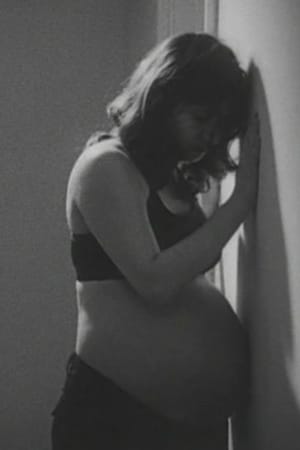
"Now Eat My Script is a precipice, a fluid solution in which some spectral noises of the self float adrift. Narration takes the role of a pregnant writer who continuously affirms her hunger and clumsiness towards language and history. Her body is crossed over by both the years to come and the stories that have been buried. As a would-be pirate, she navigates through the tumult of familiar waters."
A young man and his dog encounter a sinister force while on a walk through the woods.
Optical sound film by Guy Sherwin
One of my first 16mm films, made without a camera as an experiment in how to visualize rhythm. It equates four simple shapes with four simple sounds, made by punching shapes into black film and scratching into the film's optical sound track. The film uses a bar structure similar to a music score. Each bar lasts one second (24 frames of film) and is divided into 2, 3, 4 or 6 aural and visual beats per second (bps). These are used in alternating patterns such as: 2/3, 3/4, 3/4/6, 2/3/6 In each section of the film an arbitrary relationship is established between image, sound and beats per second, for example: circle = 12 scratches per frame (high pitch sound) at 6 bps rhombus = 6 scratches per frame (mid pitch sound) at 4 bps triangle = 3 scratches per frame (low pitch sound) at 3 bps rectangle = 1 scratch per frame (percussive sound) at 6 bps A print of the film was hand-painted in 2006 G.S.
A film made without a camera: A newspaper glued onto clear film is projected as audio-visual typography. "For NEWSPRINT I glued a newspaper onto clear 16mm film then punched out the sprocket holes to enable the film to run through the projector. Using a strong light I printed ‘newspaper-film’ to copy it onto another strip of film. This shows up the letters and words clearly, which can also be heard as they pass over the sound-head in the projector. Newsprint #2 is a live projection event for two 16mm projectors and two loudspeakers [...] Two identical prints are shown superimposed onto the same screen." -GS.
One of a series of films that uses soundtracks generated directly from their own imagery. I shot the images of a staircase specifically for the range of sounds they would produce. I used a fixed lens to film from a fixed position at the bottom of the stairs. Tilting the camera up increases the number of steps that are included in the frame. The more steps that are included the higher the pitch of sound. A simple procedure gave rise to a musical scale (in eleven steps which is based on the laws of visual perspective. A range of volume is introduced by varying the exposure. The darker the image the louder the sound (it can be the other way round, but Musical Stairs uses a soundtrack made from the negative of the image.) The fact that the staircase is neither a synthetic image, nor a particularly clean one (there happened to be leaves on the stairs when I shot the film) means that the sound is not pure, but dense with strange harmonics. – G.S.
"One of a series of films that investigates qualities of sound that can be generated directly from the image track. The images that you see are simultaneously scanned by the optical sound reader in the projector, which converts the into sound. This particular film makes use of the aural effect of visual perspective; the steeper the perspective on the railings, the closer the intervals of black and white, and the higher the frequency of sound. I also wanted to find out what freeze frames and visual strobe would 'sound' like. Visual strobe is created both in the camera (camera shutter v. railings) and in the printer (printer shutter v. slipping frames)." -G.S.