The second part: Brakhage’s layering of images spends less time with images of war, and begins filtering in scenes of Vienna and his home in Colorado. He sets up a comparison between “Kubelka’s Vienna” and his own.
A loose collection of scenes in Hong Kong shot over a five-year period, this film begins with the Umbrella Movement in 2014 and ends right before the summer of 2019, when large-scale social unrest and violent resistance erupted. The everyday scenes capture the ambience and the landscape of change in the city, standing as a quiet prelude to the ensuing conflicts.
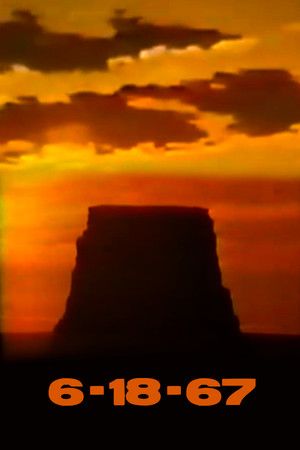
Filmed during the production of the Columbia Pictures western "Mackenna’s Gold," this short work presents a non-narrative visual study of the Arizona desert. Rather than documenting the film set itself, "6-18-67" assembles landscape images, time-lapse photography, and ambient sound into an abstract record of place and duration.
In the small town of Kansk, the Krasnoyarsk Territory many years in a row there is an international festival of short experimental films, which has a strong reputation throughout the world. "Russia as a dream" is an international project, shot by a team of authors and united directors, artists, poets. Each of the guests of the 14th International Kan Video Festival held in 2015 was invited to participate in the creation of a general film, the theme of which was the relationship of man and landscape, civilization and nature, reality and sleep.
The Sarah Vaccine is a technicolor COVID nightmare from the deranged mind of Sarah Squirm. Your government has failed you...but SARAH never will! CW: excessive gore, poop, vomit, blood
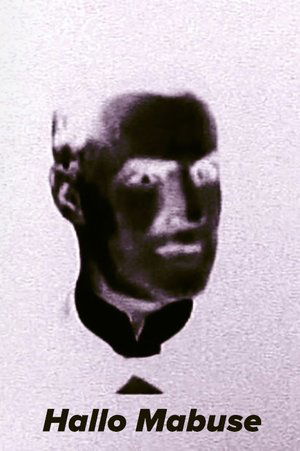
Hallo Mabuse captivates through its reduction, in which a conspiratorial narrative takes place, but even more so, the images themselves appear ambiguous, obscure, untrustworthy. A nod of the head, which seems treacherous in its mechanical repetition, meets the profile of a bearded man who does not appear to react at all in a suggested counter shot. The slight flickering of the image further intensifies the impression of an illicit agreement, of witnessing a crooked handshake. The ringing of the unseen telephone and the constant ticking of a clock lend the events a limited temporality. Something is running out, and in doing so, is also already reaching its end, a ghostly final act, which is anticipated by an explosion and breaks off with the sound of a falling guillotine.
Shelter is a multi-layered experimental film that cleverly weaves archival social commentary and recent political activism in a playful analysis of our culture’s misplaced priorities. The film blends a variety of appropriated material — including a homeless demonstration during the gala premiere of an Atom Egoyan film at the Toronto Film Festival — with archival footage of circuses, westerns, and Pierre Burton discussing the pros and cons of building a bomb shelter. Shelter also celebrates the inherent qualities of the film medium, qualities that have quickly become marginalized through the current obsession with digital technology.
"'Rote Movie' is part of a series of works examining aspects of the traumatic experience. It is an examination of decay and forgetting, where what both distance and time can bring to one's private feelings of belonging and home. Highly immersed in a fragmented and disjointed haptic space of its own materiality, this film stutters out its thoughts frame by frame" - Steven Ball, 'Mesh' 3, Autumn 1994.
A meditation on the human quest to transcend physicality, constructed from decaying archival footage and set to an original symphonic score.
Hoping to find a sense of connection to her late mother, Gorgeous takes a trip with her friends to visit her aunt's ancestral house in the countryside. The girls soon discover that there is more to the old house than meets the eye.
A multiple-superimposition hand-painted visual symphony of animal life of earth. THE LOOM might be compared to musical quartet-form (as there are almost always four superimposed pictures); but the complexity of texture, multiplicity of tone, and the variety of interrelated rhythm, suggest symphonic dimensions. The film is very inspired by George Melies: the animals exist (in Jane's enclosure) as on a stage, their interrelationships edited to the disciplines of dance, so therefore one might say this hardly represents "animal life on earth"; but I would argue that this work at least epitomizes theatrical Nature, magical Creature, and is the outside limit, to date, of my art in that respect. (The balance-of-light was so perfectly realized in making the neg. of this print that I wish to credit Western Cine Lab's "timer" Louise Fujiki as creative collaborator in the accomplishment of this work.)
Cine de Emboscada
A man and woman embark on a sexual journey to detach mind from body. The relationship slowly grows into one of emotional domination, physical disease, abandonment and the creation of personal pornography.
The main protagonist is a young fellow who tries to live his life within 30 frames. He's a person suitable for any atmosphere, which makes him different from the rest. He's like a plant that differs from others, an informer who wants to escape out from his skin. This man loves, hates, eats, drinks, lies ill, laughs, cries, kisses, plays... These are agonies of a contemporary man.
"The filming of the entrance to the company dormitory in which the film-maker was living. Centering the film on one pillar, he warps the spaces to the left and right and creates an unstable space similar to painting that employs anamorphosis. Made as were SPACY and BOX with a large number of photographs, the film ends with a violent movement, but is poetic for this." - Takashi Nakajima
"The majority of my 8-mm works were made for the three-minute "Personal Focus" film special put on in Fukuoka. This film is an animation of photographs I had taken on a regular basis as a sort of diary, and was made to have a rough feel to it." - Takashi Ito
I turned my gaze to the various events in daily life and made this filmic diary in a manner as if confessing my feelings. Of course, since I was making the film, I wanted to depict these feelings and events with tricky techniques. I used various methods to shoot photographs of a relative's wedding, the landscape I see from window of my house, commemorative travel photographs and the like frame-by-frame.
James Sumner directs and animates the entire Dirty Projectors’ The Getty Address.
A film in five different sections, each containing a different soundscape by Ostrowski. Hand painted film, intense exposure, morphing textures and shapes into a seamless whole; geometrical games sabotaging themselves; and the incessant lure of the abstract paint drift. The soundscapes, of course, build up like fountains of picture, oscillating between contemplative sculptures with electronically manipulated strings and harsh noise attacks on our senses. Despite the use of sound as a central filmic element, Cyanonide stands as a proof of the enduring influence of Brakhage on american avant-film.
This independent film follows the actions and inner thoughts of four unusual individuals as they go about their lives in Tokyo, occasionally meeting up with one another. Their thoughts tend to focus on questions of death, existence, and the conflict of society against the individual. All of the action is performed silently, with narration dubbed over.