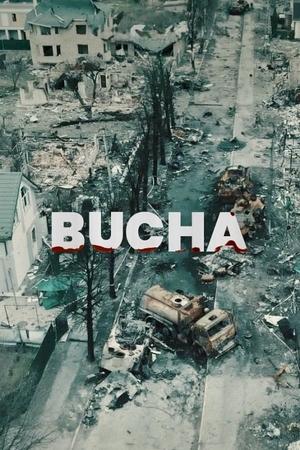
The residents of Bucha, Ukraine, are rebuilding their city from the rubble after surviving the horrors of Russian occupation. A newly married couple, a schoolgirl, a city official, and an elderly housewife have all endured the painful experiences of war, yet they manage to hold onto hope and solidarity. But how do you rebuild in the wake of growing trauma, especially with war still raging in your country? As time hopes for a peaceful life fade, they must grapple with mounting tensions within their communities. Shot over a three-year period, the film is a follow-up to When Spring Came To Bucha, as five protagonists navigate the complex terrain of inner conflicts, trauma, and a longing for justice, posing questions about the future of a society at war.
Between February and April 2025, filmmakers Bernard-Henri Lévy and Marc Roussel filmed the Pokrovsk and Soumy fronts in eastern Ukraine, following the fighters of the Anne de Kyiv Brigade, armed by France. They filmed the daily lives of the inhabitants, bombarded by Russian forces terrorizing civilians on the eve of possible negotiations. They interview President Zelenskyy, who is reluctant to travel to Washington, and then watch the rebroadcast of the meeting with Ukrainian soldiers in a bunker. For the real heroes are the anonymous fighters and civilians who hold their heads high in the face of adversity and suffering, and who are filmed on a daily basis. The final part of Lévy’s “Ukrainian Quartet”, Our War is a diary, peppered with flashbacks in which the author recalls the high points of this war that began in 2014.
One year after the beginning of the full-scale Russian invasion of Ukraine, philosopher Bernard-Henri Lévy takes us to the heart of the combat through this war diary made during the second half of 2022. From Kharkiv and Bakhmut to Kherson, in the aftermath of the city’s liberation, this documentary bears witness to the ravages of war through the testimonies of soldiers, chronicles of the front and portraits of civilians, and shares with us the struggle of the Ukrainian people.
何以为家
Ukraine, 16th century. While the Poles dominate the Cossack steppes, Andrei, son of Taras Bulba, a Cossack leader, must choose between his love for his family and his folk and his passion for a Polish woman.
Lugansk region, May 2014. The Novozhilov family, by chance, finds itself in the thick of events in Lugansk. Vlad Novozhilov is a former participant in the war in Afghanistan. He knows firsthand what war is. Having seen enough of the horrors of war in his time, in principle he does not even want to touch a weapon. In a situation, he sees only one way out - to leave the country. But you can't run away from the war, the border is already closed. To save his family, he will have to make difficult moral choices.
Ten years ago, Volodymyr Zelensky was just one of the many faces on Ukrainian television screens. He became a star thanks to the 2015 satirical series Servant of the People, in which he played a history teacher who becomes president. Four years later, what began as fiction became a reality. This French documentary follows the transformation of a popular TV comedian into a statesman on the front lines of the Russian invasion. Archival footage, family photos, television appearances, and interviews with Zelensky and those closest to him create a multi-layered portrait of a man who always longed for a large audience. At the same time, the film places his personal development in the broader context of post-Soviet Ukraine, which is also searching for its own identity.
On February 24, 2022, Yevhen, together with his friends, volunteered to join the first aid squad on the front line. They provided life-saving support and evacuation of the wounded. This film reveals the experiences of these young men for six months full of drama, despair, fear, hatred, bitterness, love, and, most importantly, faith in victory.
A documentary story about the participation and victory at the Eurovision Song Contest 2022 by the Ukrainian band Kalush Orkestra.
A family with five children flees the war raging in their home village on the Russian border. They end up in Mshanets, a farming village on the other side of the country, remote and unknown. Here the family starts building a new home. At the same time, two documentary makers come to the village, looking for a story. In the Lymar family they find the ideal characters for their film. But one day, when the renovation of their house is almost finished, the family disappears. The filmmakers go in search of their characters and along the way they try to find an answer to the question: what does a person need to feel at home?
The story of the events of 1941, the beginning of the occupation of Vinnytsia, when the mass extermination of Jews began.
The story of trust and its absence against the background of events unfolding in Eastern Ukraine in early 2014. The main topic is revealed through the prism of the Luhansk border base, whose fighters the separatists and Russian special services tried unsuccessfully force to betray their country.
Bombed-out streets, destroyed Russian tanks, evening meals in an Underground repurposed into a shelter. Image by image, the directors push beyond easily reproducible images of war to enter the reality the country has experienced since February 24, 2022.
In 2014, the war begins. Immediately, a system of evacuation of the wounded and killed is being built, the outpost of which is the Dnieper - it is here that the first will be delivered, it is here that they are still received. Tatiana Guba has been coordinating the evacuation for 5 years. She is called "Mom Tanya". Thousands of people are grateful to her for her life. Serhiy Kryvorotchenko, director of the Dnipro Airport, has deployed a helicopter evacuation system since the beginning of the war. Eugene Titarenko, the film's director, in 2014-2015 was part of a volunteer medical battalion, communicates with the heroes of the film about the evacuation system. The viewer will see the whole way of saving lives, will be directly in the vortex of events and will understand how many people are involved in the process of saving one person.
After the end of the Cold War, the Baltic was viewed almost as a quiet backwater. A nice place to visit to see charming Hanseatic cities and sandy beaches. But since the war in Ukraine the Baltic sea, bordered by eight European Union countries as well as Russia, has become a hot spot of world geopolitics. And tensions are high.
For five teenagers living in the conflict-ridden Donbas region of Ukraine, a Himalayan expedition provides a brief escape from reality. A portrait of a generation that, in spite of everything, is able to recognise and celebrate the fragile beauty of life.
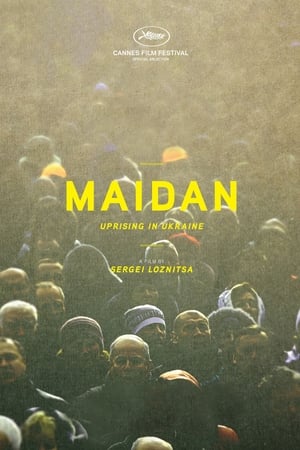
A chronicle of the civil uprising against the regime of Ukrainian president Viktor Yanukovych that took place in Kyiv in the winter of 2013/14. The film follows the progress of the revolution: from peaceful rallies, half a million strong in the Maidan square, to the bloody street battles between protesters and riot police.
In 2014 Russia’s hybrid war against Ukraine turns hot. An engineer, actor, soccer coach and florist volunteer to fight on the front line. Unaware of the pivotal role they will play in the war, they discover the meaning of true leadership.
Russia is grappling with a critical issue: they have become the country with the most at large serial killers in the world particularly concentrated in Rostov, the same city that witnessed Andrei Chikatilo's infamous killing spree. In response, law enforcement has turned to Dr. Alexander Bukhanovsky, a prominent psychiatrist and criminal profiler, who is implementing radical measures to understand the root causes of this phenomenon and develop effective solutions. Within Dr. Bukhanovsky's clinic, we encounter three of his young patients: Edward and Igor, whose families express deep concerns about their disturbing fantasies, and 'Mischa', who has perpetrated acts of torture and sexual assault. Dr. Bukhanovsky's approach is groundbreaking, offering treatment to potential serial offenders. However, critics argue that by keeping individuals like 'Mischa' anonymous, he may inadvertently shield them from public awareness and accountability, prompting debate over the ethics of his methods.
Monroe, Aura, Marlene: Three drag queens from the Ukrainian LGBTQ+ community raise funds for the frontlines, re-defining resilience and hope between glamorous shows and wartime life.