A 60-minute salute to American International Pictures. Entertainment lawyer Samuel Z. Arkoff founded AIP (then called American Releasing Corporation) on a $3000 loan in 1954 with his partner, James H. Nicholson, a former West Coast exhibitor and distributor. The company made its mark by targeting teenagers with quickly produced films that exploited subjects mainstream films were reluctant to tackle.
This documentary captures the sounds and images of a nearly forgotten era in film history when African American filmmakers and studios created “race movies” exclusively for black audiences. The best of these films attempted to counter the demeaning stereotypes of black Americans prevalent in the popular culture of the day. About 500 films were produced, yet only about 100 still exist. Filmmaking pioneers like Oscar Micheaux, the Noble brothers, and Spencer Williams, Jr. left a lasting influence on black filmmakers, and inspired generations of audiences who finally saw their own lives reflected on the silver screen.
A retrospective documentary about the groundbreaking horror series, Friday the 13th, featuring interviews with cast and crew from the twelve films spanning 3 decades.
A free and intimate portrait behind the scenes of Valeria Bruni Tedeschi's creation. In front of the camera, she transmits to today’s young actors the memory of the 1980s.
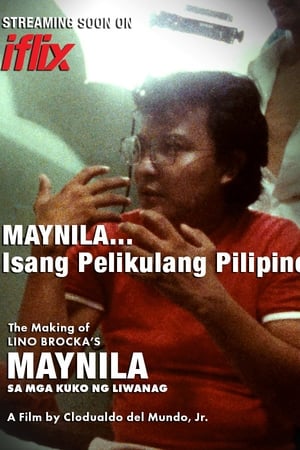
Making-of documentary about Lino Brocka's 1975 film "Manila in the Claws of Light," featuring interviews and behind-the-scenes footage.
Conrad Brooks discusses "Hellborn," his unfinished movie with Ed Wood, and other projects
Documentary about the life and career of a comic genius, Peter Sellers.
Documentary about the making of Disney's animated musical adaptation of Kipling's classic.
Who has ever compared Reservoir Dogs? What are “Open Road” and “New World Disorder”? Why is Harvey Keitel a fairy and how did we all almost become diehard fans of Paul Calderon? Here’s a story about Quentin Tarantino. The director who needs no introduction.
Documentary about WWII propaganda cartoons.
The history of the Yakuza Eiga at the TOEI studio is roughly outlined. Real Yakuza and also their connections to the movie business are discussed, and many important actors and directors of the genres are interviewed. Former real yakuza boss turned actor Noboru Ando, Takashi Miike, Sonny Chiba and many more get a chance to speak.
The shooting diary of a film shot in France and in the United States. Using photos of Paris and of New York City, excerpts of his former films, statements by friends of his and shooting sequences of the film itself, tormented filmmaker Marcel Hanoun has made a heterogeneous and unclassifiable film about the difficulty of filming.
Despite the anti-Semitic campaign launched by the Polish People's Government in the late 1960s, director Jerzy Hoffman finishes working on the film Pan Wołodyjowski. It becomes the ticket to the production of Potop, the most expensive film in the history of Polish cinematography. During his work, the director not only has to deal with mounting production problems, the distrust of the People's Government, but also with the expectations of millions of Poles.
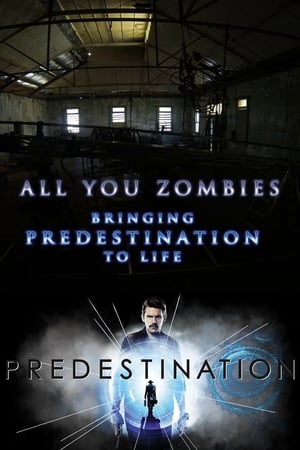
Documentary about the making of the Spierig Brothers' 2014 film PREDESTINATION that is based on Robert A. Heinlein's 1959 science-fiction short story '—All You Zombies—'. Through interviews with cast and crew, film clips and behind-the-scenes footage, this documentary thoroughly explores how the film came to be from casting to pre-production to principal photography to post-production. Interviewees include writers/directors Michael and Peter Spierig, producers Paddy McDonald and Tim McGahan, director of photography Ben Nott, special makeup effects designer Steve Boyle, production designer Matthew Putland, special makeup effects supervisor Samantha Lyttle, costume designer Wendy Cork, film editor Matt Villa, and actors Sarah Snook, Noah Taylor and Ethan Hawke.
Brought to life through archival material and the reflections of over 40 colleagues, friends and fans, BLOOD & FLESH is much more than the story of a moviemaking life most unusual. It beautifully captures the worlds of outsider filmmaker communities that existed in California in the ’70s, and the weird ways they intersected with Hollywood mainstream and union indies. On Adamson shoots, regular Orson Welles crew and cinematographers like Gary Graver, Vilmos Szigmond and Lazlo Kovaks worked alongside Bud Cardos — and at one point, Charles Manson! Director David Gregory (founder of Severin Films, director of LOST SOUL: THE DOOMED JOURNEY OF RICHARD STANLEY’S ISLAND OF DR. MOREAU) spent years making this film, speaking to everyone down to the cops who investigated Adamson’s murder, vividly encapsulating both a bold life and tragic demise, with alien conspiracies, go-go dancers and Colonel Sanders coming in along the way. If you’ve got even a passing interest in cinema, you want to see this
Kirby Dick's provocative documentary investigates the secretive and inconsistent process by which the Motion Picture Association of America rates films, revealing the organization's underhanded efforts to control culture. Dick questions whether certain studios get preferential treatment and exposes the discrepancies in how the MPAA views sex and violence.
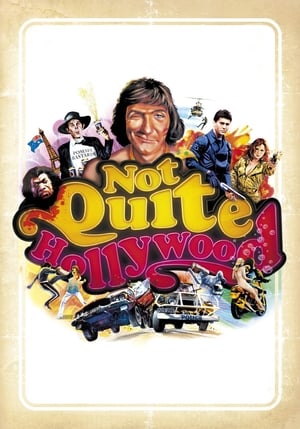
As Australian cinema broke through to international audiences in the 1970s through respected art house films like Peter Weir's "Picnic At Hanging Rock," a new underground of low-budget exploitation filmmakers were turning out considerably less highbrow fare. Documentary filmmaker Mark Hartley explores this unbridled era of sex and violence, complete with clips from some of the scene's most outrageous flicks and interviews with the renegade filmmakers themselves.
Alternately hilarious and horrifying, Overnight chronicles one man's misadventures of making a Hollywood movie. It starts out as a rags to riches story as Troy Duffy, a Boston-bred bartender, sells his first screenplay for The Boondock Saints.
A feature-length documentary focusing on the acclaimed work and eclectic career of maverick filmmaker Larry Cohen, writer-director of "Black Caesar," "It's Alive," "God Told Me To," "Q," "The Stuff," and many more.
Since the early 1990s, Quentin Tarantino has been on a cinematic rollercoaster ride, that's never looked like slowing down, that has cemented himself as one of the worlds most influential filmmakers. Through his unique style, Tarantino carved out a place in Hollywood just for him, and even when others have tried to emulate him, his films stand-out amongst the crowd. And with one movie left before he supposedly retires, we take a look back at the ups and downs of his incredible life on film.