In 2010 David Crowley, an Iraq veteran, aspiring filmmaker and charismatic up-and-coming voice in fringe politics, began production on his film Gray State. Set in a dystopian near-future where civil liberties are trampled by an unrestrained federal government, the film’s crowd funded trailer was enthusiastically received by the burgeoning online community of libertarians, Tea Party activists and members of the nascent alt-right. In January of 2015, Crowley was found dead with his family in their suburban Minnesota home. Their shocking deaths quickly become a cause célèbre for conspiracy theorists who speculate that Crowley was assassinated by a shadowy government concerned about a film and filmmaker that was getting too close to the truth about their aims.
Jak vzniká film
France, le plus beau décor de cinéma
Cinecitta is today known as the center of the Italian film industry. But there is a dark past. The film city was solemnly inaugurated in 1937 by Mussolini. Here, propaganda films would be produced to strengthen the dictator's position.
A cheerful road movie all about Belgian films at Cannes over the past 70 years. Filmmakers from the past converse with those from the present to paint the portrait of a cinema that is both diverse and free. An account of Belgium’s participation in the greatest film festival in the world.
This documentary composed of numerous testimonies and archives, filmed in Japan highlights the extraordinary career of the actress-director Kinuyo Tanaka and her singular ambition to impose a female point of view on cinema, reflecting her own vision of the world.
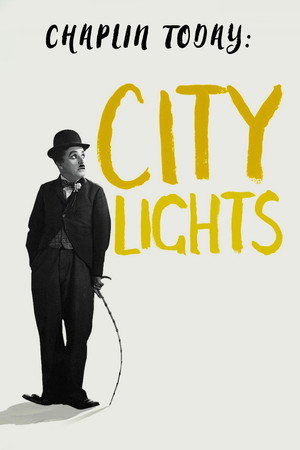
In 1928, as the talkies threw the film industry and film language into turmoil, Chaplin decided that his Tramp character would not be heard. City Lights would not be a talking picture, but it would have a soundtrack. Chaplin personally composed a musical score and sound effects for the picture. With Peter Lord, the famous co-creator of Chicken Run and Wallace & Gromit, we see how Chaplin became the king of slapstick comedy and the superstar of the movies.
Delves into the history of the most extreme and shocking films that have ever been made. chronicles the timeline of Red Films: those films that are too extreme for the mainstream and historically have been circulated via the bootleg circuit.
Tells the story of Tucson and the legendary movies that were shot there.
Author Lee Clark Mitchell discusses the Western genre and literature.
Interview with critic Molly Haskell about Hawks and Red River
Interview with filmmaker Peter Bogdanovich about Red River and the two versions of the film.
The story of the shooting of Satan's Blood (Escalofrío), a film directed by Carlos Puerto in 1978.
Haunted by three unfinished films, a filmmaker seeks to demystify his relationship with failure through encounters with past collaborators.
Tvář a maska
Dinosaurs Vs. Apes: DINOSAUR MOVIES and HOLLYWOOD GOES APE! have been hailed as the definitive documentaries on the prehistoric and anthropoid creatures that have appeared on the silver screen. Filled with rare movie clips, behind-the-scenes footage and interviews.
The early days of the future genius of Spanish cinema Luis García Berlanga, from his birth in Valencia in 1921 to his departure to Madrid in 1947 to become a filmmaker.
The story of Leon Vitali, who surrendered his promising acting career to become Stanley Kubrick's devoted right-hand man.
Since he was 18 years old, Blake Eckard has written and directed six feature length films in his hometown of Stanberry, Missouri (population 1186). Aside from a short distribution deal in Canada and a few festival screenings, his movies have largely gone unseen.
Through the life and career of Marcel Carné, using film excerpts and archives (including touching interviews with the director), François Aymé weaves a fascinating portrait of a hypersensitive man who had to deal with his homosexuality and who, despite his brilliance, was long relegated to the shadow of his actors and Prévert, who were credited with their greatest success.