Alinur, a student filmmaker, tries to make a film about the apocalypse for his capstone project. The movie itself happens to be about a mercenary named M who inadvertently causes an apocalypse. As he tries to “create” the destruction of this supposed apocalypse through utilizing technical gimmicks that he has enforced onto the production of the film, this supposed effort also creeps in as a force that starts to “destroy” him, piece by piece. The outcome of it tests the sincerity of not only the film itself but also of the performative efforts that Alinur has made as a filmmaker—even this test might not be as sincere as it seems.
A series of indie filmmakers are documented over the course of a few months throughout the production of their passion projects, as they change professionally and personally; moving closer to the lives they wish to live.
It's 1957, and James Whale's heyday as the director of "Frankenstein," "Bride of Frankenstein" and "The Invisible Man" is long behind him. Retired and a semi-recluse, he lives his days accompanied only by images from his past. When his dour housekeeper, Hannah, hires a handsome young gardener, the flamboyant director and simple yard man develop an unlikely friendship, which will change them forever.
Equal parts documentary, essay, and narrative,"Captain Elliot's Circle" is mostly a poetic interaction with an obscure corner of Chinese and British history. Constructed using primary source documents about the taking of Zhoushan, Britain's first choice for a seaport, in the late 1830s,this movie uses Captain Charles Elliot's reluctance to brutalize the Chinese to reflect on the cyclical nature of history and the power structures that move it. The long takes used throughout function to illustrate the dramatically different ways in which people who lived in the mid-19th century perceived time. Additionally, it represents the psychological effect of living on an island regardless of what era you were born in.The last third of the movie focuses on a young woman whose strange day job has taken her far away from the island of Zhoushan generations after Captain Charles Elliot was last there. "Captain Elliot's Circle" was shot on location in Zhoushan and Hangzhou.
Pixar director Peter Sohn takes viewers on a humorous personal journey through the inspiration behind Disney and Pixar’s feature film “Elemental.” “Good Chemistry: The Story of Elemental” traces his parents’ voyage from Korea to New York, explores his dad’s former grocery shop in the heart of the Bronx, and delves into his choice of a career in animation, rather than the family business.
A patient camera glides over the everyday objects: still lives on the wall, flowers in the vase, a swaying drop light. The sun enters the cosy home where Noëlla sits smoking at her laptop, playing Solitaire. The situation is hopeless. She’s going to lose against the computer once again. All the while her son-in-law, Pierre, is organising everything she needs, pragmatic and friendly: breakfast, the (last) doctor’s visit – and then the transfer.
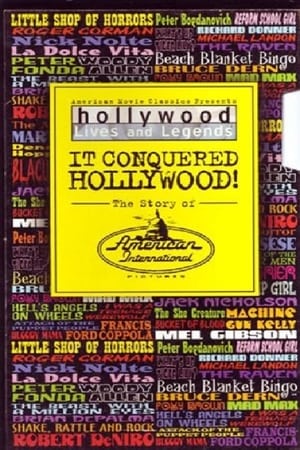
A 60-minute salute to American International Pictures. Entertainment lawyer Samuel Z. Arkoff founded AIP (then called American Releasing Corporation) on a $3000 loan in 1954 with his partner, James H. Nicholson, a former West Coast exhibitor and distributor. The company made its mark by targeting teenagers with quickly produced films that exploited subjects mainstream films were reluctant to tackle.
Thirty-three shots based on the landscapes of the Isère region near Vienne. A work of observation on light, the dilation of Time, wind, calm and storm.
An abstract perspective into two young South African workers in the heart of Johannesburg's industrial sector during Covid-19
Prestonburg, KY is a small blue-collar town with hunting, fishing, coal mining, and two of the biggest names in online horror talk radio: Wes Vance and Aaron Frye (aka "The Creepy Kentuckian" and "Uncle Bill") The two self-proclaimed "redneck geeks" bonded at a young age while their weekends devouring horror films. They now use their extensive horror knowledge to record a weekly podcast on DEADPIT.com and have found a worldwide audience through their candid conversation, quick wit, and lots of swearing. What started as an outlet to express their love for horror films has evolved into an online industry with millions of followers and the ability to talk to their childhood heroes. But what happens when your childhood pursuits start to collide with your adult aspirations? Can Deadpit survive it's own success?
Skip Liberty enlisted in the Army in 1968. During his tour in Vietnam he shot 3,100 feet of Super 8 film, over 3 hours worth. Upon returning to the states the film was placed in storage, Skip had never seen the footage he shot. Until now.
As Australian cinema broke through to international audiences in the 1970s through respected art house films like Peter Weir's "Picnic At Hanging Rock," a new underground of low-budget exploitation filmmakers were turning out considerably less highbrow fare. Documentary filmmaker Mark Hartley explores this unbridled era of sex and violence, complete with clips from some of the scene's most outrageous flicks and interviews with the renegade filmmakers themselves.
A two parts making of documentary, following José Augusto Silva and his film crew during the shooting of a university short film called Castelo.
For decades, Freddy Krueger has slashed his way through the dreams of countless youngsters, scaring up over half a billion dollars at the box office across eight terrifying, spectacular films.
Ten years after winning a world title in bodybuilding in Russia and becoming a star of said discipline in Mexico, Antonio Osta (43) leads a life of austerity in the Uruguayan rural town where he grew up. He resides there with his son Juanjo (17), a sensitive teenager who keeps him company and confronts him openly. Suffering from acute kidney disease which keeps him from competing professionally, Antonio is stuck in limbo, halfway between his glorious past and the impossibility of being who he once was. However, he is unwilling to give up his lifestyle, even if it kills him. In an attempt to reinvent himself, and seeking a better future for his son, Antonio plans a comeback to the Mexico bodybuilding scene, where he may relive his glory days.
This cinematic portrait shows the Austrian filmmaker Ulrich Seidl at work. The much-discussed ‘Seidl method’ is conveyed here vividly and directly: The camera watches over Seidl’s shoulder during the filming of his new production IM KELLER, and observes him at the rehearsals for his latest theatre production ‘Böse Buben / Fiese Männer’. The film paints the picture of a fascinating and exceptional artist using a combination of extensive interviews and excerpts from earlier works.
The raft man Manuel Jacaré was swallowed by the sea when Orson Welles was filming It's All True in 1942. The fact evokes memories of the dictatorship of the Estado Novo, of World War II, of Ceará fishermen's struggle for labor rights and housing in their traditional space - target of real estate speculation.
An epic documentary of rise and fall of Ustasha regime in Croatia.
The Kabin Studio on the north side of Cork gives teenagers the mic and the confidence to use it. Writing and performing infectious Irish-language rap, they grow from shy beginners into viral sensations—their lyrics pulsing with pride, heritage and the joy of being heard.
An insight into one of the most groundbreaking horror films of all time; the infamous The Exorcist (1973).