This 10-minute short documentary exploring the shifting state of the American poultry industry was preserved in 2015 from an original nitrate print. More information is available on the film's page in the National Film Preservation Foundation's website, where this version can be found featuring original music by Michael D. Mortilla.
Die Bio-Revolution - Die Karriere der ökologischen Landwirtschaft
1972 in Haute-Savoie (France) : the Bertrand's farm, with a hundred dairy cows owned by three bachelor brothers, is filmed for the first time. In 1997, they were the subject of Gilles Perret's first movie, as they let their farm to their nephew Patrick and his wife Hélène. Nowadays, 25 years later, Gilles Perret take another look at this farm, managed by Hélène who will step down. Through their words, an intimate, social and economic history of the rural world.
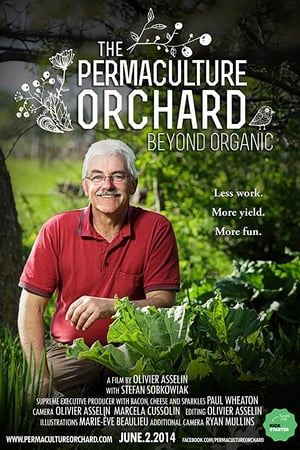
This feature-length educational film teaches you how to set up your own permaculture orchard at virtually any scale. We recognize the limitations of the organic model as a substitute to conventional fruit growing, and want to propose a more holistic, regenerative approach based on permaculture principles. Based on 20 years of applied theory and trial and error, biologist and educator Stefan Sobkowiak shares his experience transforming a conventional apple orchard into an abundance of biodiversity that virtually takes care of itself. The concepts, techniques and tips presented in this film will help you with your own project, whether it is just a few fruit trees in your urban backyard, or a full-scale multi-acre commercial orchard.
Paul and Phyllis van Amburgh, believing that a small, family farm is the best place to raise their children, take their life savings and buy a defunct dairy. With three children and a fourth on the way and armed only with their principles and determination, they fight to defy the odds as they become full time farmers. THE FIRST SEASON, through an intimate, cinema verite style, bears witness to the Van Amburgh's struggle as they fight against relentless toil, financial ruin and the harsh reality of diary farming to achieve their version of the American dream.
During the rice sowing season, Jun, a young Catalan of Chinese origin, works as a seasonal worker in the Ebro Delta. This ancient labour will make him confront his own roots and the distance that separates him from his family.
Patrick Kielty explores the untold story of Harry Ferguson and Henry's Ford's remarkable handshake agreement and how it led to a $250 million lawsuit.
In a world drifting further away from participatory food production, relying instead on large corporations to feed us, this film asks “What do we lose by giving up our responsibility to produce food?”
In rural Alabama, Freedom Farm Azul stands as a sanctuary for nourishment, education, and healing. Through intimate interviews and lush imagery, this poetic documentary explores how land stewardship becomes an act of resistance, restoration, and collective care.
Beneath the harvest sun and the cicada song, Mónica Martins Nunes builds a touching portrait of Serra de Serpa, an arid region in the south of Portugal affected by rural exodus. The poems sung by the shepherds and market traders resonate like the last gesture of a human landscape which resists sinking into oblivion.
Paul and Lindsey, a couple who left the hustle of city life for country life. From caring for animals to sustaining the land, their journey is filled with challenges, heartwarming triumphs, and a deep connection to nature. Discover how they’ve redefined what it means to live a meaningful life.
From the Black Earth is a collaboration between Bristol based company Cables and Cameras, and a local farmer Humphrey Lloyd. Employing both lucid speakers and poetic camera work, the film poses stark questions such as; why does food poverty exist in a nation of plenty, and why are people of colour so under represented not only in our countryside and farms, but in the environmental movement more broadly? By giving a platform to people of colour who are connecting with nature and working the land, this short documentary starts to unpick these questions...
El año del relevo
A documentary about the history of scrapie in Iceland.
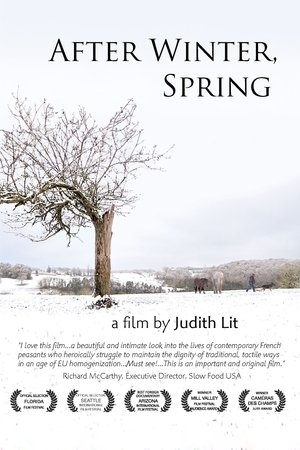
Family farmers in southwest France practice an ancestral way of life under threat in a world increasingly dominated by large-scale industrial agriculture.
Sprout. In the vacant lots against the hammering of buildings always under construction, between walls of granite, cement and sheet metal with rust, moss and cats; on the hillside between the train and the river, next to the traffic on the highway, facing the subway, vegetable gardens sprout. In this city, the choreography of ancient gestures of cultivating the land is repeated day after day, without fail. Sowing, digging, harvesting, watering, eating, talking, resting and returning the next day. The longest day of the year brings S. João and nobody goes to bed, but when the sun rises, the discreet gestures of resistance will restart.
The documentary offers a glimpse into the life of a farmer who worked in the fields with his father when he was young. After spending time in the city as an adult, he returns to the countryside to take over the family’s business and learns the essence of making a living from the land.
Rural life in the mountainous valley near Gilgit - now in the Northern areas of Pakistan.
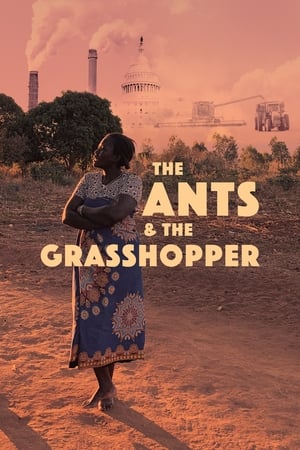
Anita Chitaya has a gift: she can help bring abundant food from dead soil, she can make men fight for gender equality, and maybe she can end child hunger in her village. Now, to save her home in Malawi from extreme weather, she faces her greatest challenge: persuading Americans that climate change is real. Traveling from Malawi to California to the White House, she meets climate sceptics and despairing farmers. Her journey takes her across all the divisions that shape the USA: from the rural-urban divide, to schisms of race, class and gender, and to the American exceptionalism that remains a part of the culture. It will take all her skill and experience to help Americans recognise, and free themselves from, a logic that is already destroying the Earth.
A look at man's relationship with Dirt. Dirt has given us food, shelter, fuel, medicine, ceramics, flowers, cosmetics and color --everything needed for our survival. For most of the last ten thousand years we humans understood our intimate bond with dirt and the rest of nature. We took care of the soils that took care of us. But, over time, we lost that connection. We turned dirt into something "dirty." In doing so, we transform the skin of the earth into a hellish and dangerous landscape for all life on earth. A millennial shift in consciousness about the environment offers a beacon of hope - and practical solutions.