In the summer of 2000, federal fishery officers appeared to wage war on the Mi'gmaq fishermen of Burnt Church, New Brunswick. Why would officials of the Canadian government attack citizens for exercising rights that had been affirmed by the highest court in the land? Alanis Obomsawin casts her nets into history to provide a context for the events on Miramichi Bay.
In this powerful tale about the rise of Korea’s global adoption program, four adult adoptees return to their country of birth and reconnect with their roots, mapping the geographies of kinship that bind them to a homeland they never knew.
The film describes the microcosmos of the small village Wacken and shows the clash of the cultures, before and during the biggest heavy metal festival in Europe.
When a Mongolian nomadic family's newest camel colt is rejected by its mother, a musician is needed for a ritual to change her mind.
Documentary depicting the lives of child prostitutes in the red light district of Songachi, Calcutta. Director Zana Briski went to photograph the prostitutes when she met and became friends with their children. Briski began giving photography lessons to the children and became aware that their photography might be a way for them to lead better lives.
Started as a class project in what was likely the first filmmaking course ever taught at Harvard, Marathon documents the running of the 1964 Boston Marathon.
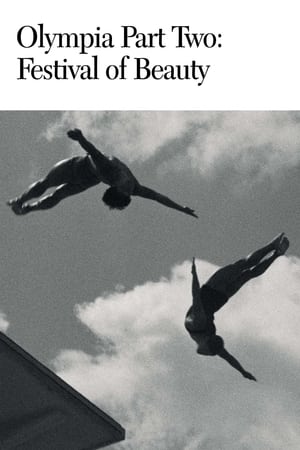
Part two of Leni Riefenstahl's monumental examination of the 1938 Olympic Games, the cameras leave the main stadium and venture into the many halls and fields deployed for such sports as fencing, polo, cycling, and the modern pentathlon, which was won by American Glenn Morris.
Filmmakers Alan and Susan Raymond spent three months in 1976 riding along with patrol officers in the 44th Precinct of the South Bronx, which had the highest crime rate in New York City at that time.
The compelling story of an extraordinary woman's journey from her birth in a paper thin shack in the cotton fields of Georgia to her recognition as a key writer of the twentieth Century.Walker made history as the first black woman to win a Pulitzer Prize for her groundbreaking novel, The Color Purple.
Tan Pin Pin employs a strictly external perspective for this portrait of her hometown, the tropical economic powerhouse of Singapore, interviewing political exiles in London, Thailand and Malaysia, who are to this day unable to return home.
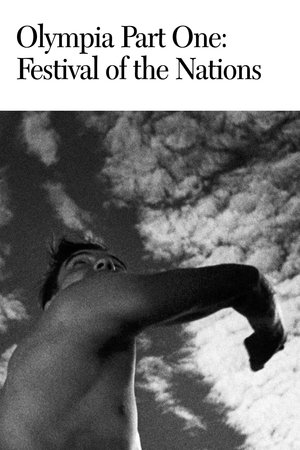
Starting with a long and lyrical overture, evoking the origins of the Olympic Games in ancient Greece, Riefenstahl covers twenty-one athletic events in the first half of this two-part love letter to the human body and spirit, culminating with the marathon, where Jesse Owens became the first track and field athlete to win four gold medals in a single Olympics.
For decades, American touring ice shows dominated family entertainment with their dazzling production and variety acts. This documentary honors them through interviews and archival footage, and depicts one skater's quest to keep this history alive.
Vienna’s Prater is an amusement park and a desire machine. No mechanical invention, no novel idea or sensational innovation could escape incorporation into the Prater. The diverse story-telling in Ulrike Ottinger’s film “Prater” transforms this place of sensations into a modern cinema of attractions. The Prater’s history from the beginning to the present is told by its protagonists and those who have documented it, including contemporary cinematic images of the Prater, interviews with carnies, commentary by Austrians and visitors from abroad, film quotes, and photographic and written documentary materials. The meaning of the Prater, its status as a place of technological innovation, and its role as a cultural medium are reflected in texts by Elfriede Jelinek, Josef von Sternberg, Erich Kästner and Elias Canetti, as well as in music devoted to this amusement venue throughout the course of its history.
The senior year of a girls’ high school step team in inner-city Baltimore is documented, as they try to become the first in their families to attend college. The girls strive to make their dancing a success against the backdrop of social unrest in their troubled city.
At the sea shore, a goat, a child, and a naked man. This is a photograph taken in 1954 by Agnès Varda. The goat was dead, the child was named Ulysses, and the man was naked. Starting from this frozen image, the film explores the real and the imaginary.
There are places that we don’t want to know anything about, places that we would rather pretend don’t exist at all. One such place is a dumpsite. From the humans’ point of view, it is a ghastly place, a stinking desert of trash. But it’s a desert that is teaming with life.
This in-depth look into the powerhouse industries of big-game hunting, breeding and wildlife conservation in the U.S. and Africa unravels the complex consequences of treating animals as commodities.
When Harvard PhD student Jennifer Brea is struck down at 28 by a fever that leaves her bedridden, doctors tell her it’s "all in her head." Determined to live, she sets out on a virtual journey to document her story—and four other families' stories—fighting a disease medicine forgot.
A nonfiction account of the Ferguson uprising told by the people who lived it, this is an unflinching look at how the killing of 18-year-old Michael Brown inspired a community to fight back—and sparked a global movement.
From a historic genocide trial to the overthrow of a president, the sweeping story of mounting resistance played out in Guatemala’s recent history is told through the actions and perspectives of the majority indigenous Mayan population, who now stand poised to reimagine their society.