Warsaw's Central Railway Station. 'Someone has fallen asleep, someone's waiting for somebody else. Maybe they'll come, maybe they won't. The film is about people looking for something.
Not everyone sleeps at night in Zagreb. An exploration of various night-time jobs.
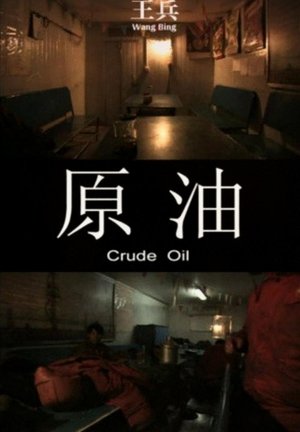
Filmed in the Inner Mongolian portion of the Gobi Desert, this film follows a group of oil field workers as they go about their daily routine.
Three women share their experience of navigating the app-world in the metro city. The sharings reveal gendered battles as platform workers and the tiresome reality of gig-workers' identities against the absent bosses, masked behind their apps. Filmed in the streets of New Delhi, the protagonists share about their door-to-door gigs, the surveillance at their workplaces and the absence of accountability in the urban landscape.
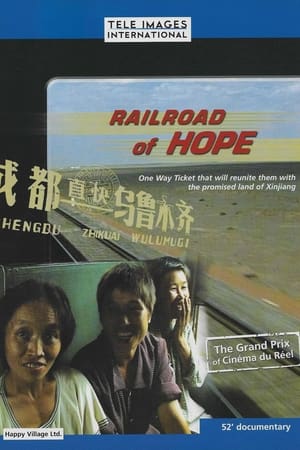
Railroad of Hope consists of interviews and footage collected over three days by Ning Ying of migrant agricultural workers traveling from Sichuan in China's interior, to the Xinjiang Autonomous Region, China's northwest frontier.[1] Through informal interviews aboard the cramped rail cars, Ning Ying explores the hopes and dreams of the workers, many of whom have never left their homes before.
Follows members of the Zulu Club, New Orleans’ first Black Mardi Gras, as they work to bring the Zulu parade back to the streets for Mardi Gras Day 2022, in the face of a global pandemic, hurricane Ida and the loss of members due to COVID and gun violence.
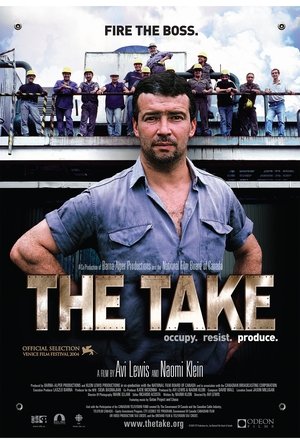
In suburban Buenos Aires, thirty unemployed ceramics workers walk into their idle factory, roll out sleeping mats and refuse to leave. All they want is to re-start the silent machines. But this simple act - the take - has the power to turn the globalization debate on its head. Armed only with slingshots and an abiding faith in shop-floor democracy, the workers face off against the bosses, bankers and a whole system that sees their beloved factories as nothing more than scrap metal for sale.
A beautifully done video of Burning Man 2001, 2002 & 2003. Lots of people interviews, Center Cafe activity and extensive coverage of artist David Best and the Temple construction and burn. This documentary captures the swirling columns of dust that were created during the intense heat of the 2002 Temple burn.
In China’s popular live-streaming showrooms, three millennials – a karaoke singer, a migrant worker and a rags-to-riches comedian – seek fame, fortune and human connection, ultimately finding the same promises and perils online as in their real lives.
Few of us have stopped to consider the lives of the workers who manufacture the objects that make up our daily lives. We use these objects without knowing anything about the Foxconn plants in which they are made, or even where these factories are located, let alone who works in them. One such worker was the young Chinese poet Xu Lizhi, who, at the age of 24, jumped out of a building not far from where he worked at the Foxconn factory in Shenzhen.
Auguste Lumière directs four workers in the demolition of an old wall at the Lumière factory. One worker is pressing the wall inwards with a jackscrew, while another is pushing it with a pick. When the wall hits the ground, a cloud of white dust whirls up. Three workers continue the demolition of the wall with picks.
Master baker, owner of Duffryn Bakery, Onllwyn, turns his hand to film-making and captures community events in glorious colour.
Festive Land examines one of the largest and most extraordinary popular celebrations in the world, the week-long Carnival that brings more than two million people to the streets of Salvador, the capital of Bahia, in northeastern Brazil. Carnival is the most expressive showcase of the unique cultural richness of Bahia, where African culture has survived, prospered, and evolved, mixing with other Brazilian influences to create forms found nowhere else in the world. The film captures this unique cultural energy through extraordinary footage of musical performances, dances, religious manifestations, and street celebrations. At the same time, Carnival reflects the racial and social tensions of Brazil's heterogeneous society. At first glance there appear to be two million people chaotically mixed on the streets, but a more detailed look reveals how patterns of segregation driven by racial, social and economic differences continue in Carnival.
The drastic economic development in South Korea once surprised the rest of the world. However, behind of it was an oppression the marginalized female laborers had to endure. The film invites us to the lives of the working class women engaged in the textile industry of the 1960s, all the way through the stories of flight attendants, cashiers, and non-regular workers of today. As we encounter the vista of female factory workers in Cambodia that poignantly resembles the labor history of Korea, the form of labor changes its appearance but the essence of the bread-and-butter question remains still.
After consolidating itself as a tourist destination in the mid-1960s, this small coastal village has become the dormitory town for the workers of a Nuclear Power Plant. With the liberal promise of prosperity and socioeconomic wellfare, many workers left their homes to move to the small city and started working at the new Nuclear Power Plant. The collective unrest and the silence, cut off by the great gusts of wind, articulate the landscape of the village that is now under the aid of the Nuclear Power Plant.
A film about non-territorial office space, multi-mobile knowledge workers, Blackberries and Miles&More. A road movie discovering the working world of tomorrow. This documentary will take you on a journey through the post-industrial knowledge and services workshops, our supposed future working place. In this new world work will be handled more liberally. Time clocks cease to exist. Attention is not compulsory any more. The resource “human“ comes into focus. The film closely follows the high-tech work force – people who are highly mobile and passionate to make their work their purpose in life. Further episodes resume this topic and lead into the world of modern office architecture and into the world of Human Resource Management.
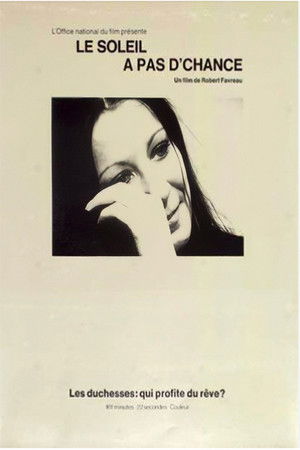
A feature-length documentary about the famous Quebec Winter Carnival beauty pageant of 1975. Each year, seven beauties are carefully selected: a queen and six duchesses. A dream that many a young girl has cherished and lived... or experienced firsthand. They will have entered a competition marked by several stages. A tailor-made demeanor will have been demanded of them, one that has taken many hours to shape. The overall impression the viewer gets is captivating: the backstage of the Carnival is opened to an honest, yet wonderfully biased, camera.
Although it was actually an impersonal commissioned film, the director's style is clearly recognizable. Once again he manages to make something that is normal very strange: the dancing people in costumes are filmed in such a way that they look bizarre and absurd. Jan de Bont's camerawork shows a series of color images of dancing people, edited to the rhythm of the music. Halfway through the film, a lonely clown can be seen among the dancing crowd, accompanied by sad music. This clown is played by Ditvoorst himself.
A documentary film about the Brazilian town of Toritama, the self-proclaimed capital of jeans. The workers of the city’s self-managed small businesses only get one real break from their self-exploiting lives in the textile business: the annual Carnival.
A 2008 short made in accompaniment with Our Beloved Month of August, documenting Gomes's and his crew's hapless search, during 2007's carnival, for one of Arganil's most storied and elusive characters (who does, in fact, ultimately appear as an interviewee/player in the finished film). Paulo "Miller" is known for taking a dangerous jump into the Alva from a bridge each year during carnival, but what this film is about is, in keeping with the free-roving feature, much less the subject himself than Gomes and co.'s inability to pin him down; not only does he not do his famous jump during this year's carnival, but an ostensible technical/audio failure (as with the feature, it's very difficult to say how much of this film is "fact," how much invented) during Gomes's initial on-camera meeting with Paulo "Miller" leads to five minutes of lip-readers attempting to decipher their conversation.