A detailed history of documentary filmmaking in the US and the UK from 1929 to 1945. The first part, Working for Change, focuses on 1929-1941 and the social movements of the times, The Great Depression, The New Deal, and the awakening of the Leftwing in the UK. The second part, The Strategy of Truth, focuses on 1933-1946 and explores the role of film as propaganda during World War II, and the different forms it took in the US, the UK, and Germany.
Wallace Carlson walks viewers through the production of an animated short at Bray Studios.
Wicked Wishes: Making the Wishmaster
The Making of a Mobster: 'Mickey Blue Eyes'
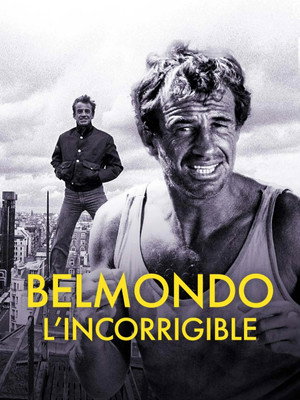
Jean Rochefort, Jean-Pierre Marielle, Philippe Noiret - This is the story of a bunch of friends. Comedian buddies. Actors who dreamed of the Conservatory and the National Theater of Paris. The theater was their ideal, cinema will be their paradise. Their friend Jean-Paul Belmondo, the relaxed Parisian, who failed the entrance exam, will make sparks fly. Rochefort, Marielle and Noiret, the three provincials, will climb the steps of recognition one by one. From the little cabarets on the Left Bank to the TV shows of the Buttes-Chaumont pioneers. From the second roles to the first and from the B movies to the classics.
An Asian film crew’s attemptsat making a film while navigating the strict laws of filming in the UK. They don’t have a budget or enough preparation, all they have is a shared passion to create. Stay Maybe is a comparison of cultures, at times sublimely political and desperately hilarious; it is made by and for the people who are divided by language but united by cinema; a film about filmmaking – blurring the lines between fiction and reality.
A look at the legendary Czech sound designer and his profession. Editor and documentary filmmaker Adéla Špaljová has her father Ivo Špalj talk about his life, career, and working methods. Over the course of his long life, sound designer Ivo Špalj (*1940) has collaborated on hundreds of films and become a mentor for at least one generation of men and women behind the mixing board. This gentle documentary also shows “Engi” (as he is known to his colleagues) again working with Jan Švankmajer, whose films he has lent their typical, dense, and sophisticated sound mix.
From the ambitious young filmmaker behind Boundless, The Weaving of a Dream is a short documentary that details the making of Johnnie To's film Three.
A documentary about the career of director Jack Arnold at Universal-International Studios. (An early version of this film, only 20 minutes in length, was screened in 2012.)
Documentary about the original 1986 film Critters. Features interviews with actors Dee Wallace, Don Opper, Terrence Mann, and Lin Shaye; producer Barry Opper; writer Brian Muir; critter designers and voice actors; and many more.
This documentary captures the sounds and images of a nearly forgotten era in film history when African American filmmakers and studios created “race movies” exclusively for black audiences. The best of these films attempted to counter the demeaning stereotypes of black Americans prevalent in the popular culture of the day. About 500 films were produced, yet only about 100 still exist. Filmmaking pioneers like Oscar Micheaux, the Noble brothers, and Spencer Williams, Jr. left a lasting influence on black filmmakers, and inspired generations of audiences who finally saw their own lives reflected on the silver screen.
The Movie Movie shows how the camera, editing techniques, make-up and sound can be used in film and video to deliberately manipulate our perceptions and emotions. Drama, action and slapstick humour are combined in a simple, family-oriented plot. There is no dialogue, but there is an explanatory song. Behind-the-scenes vignettes highlight the message that in a movie everything is not quite as it seems.
When World War II broke out, John Ford, in his forties, commissioned in the Naval Reserve, was put in charge of the Field Photographic Unit by Bill Donavan, director of the soon-to-be-OSS. During the war, Field Photo made at least 87 documentaries, many with Ford's signature attention to heroism and loss, and many from the point of view of the fighting soldier and sailor. Talking heads discuss Ford's life and personality, the ways that the war gave him fulfillment, and the ways that his war films embodied the same values and conflicts that his Hollywood films did. Among the films profiled are "Battle of Midway," "Torpedo Squadron," "Sexual Hygiene," and "December 7."
HECKLER is a comedic feature documentary exploring the increasingly critical world we live in. After starring in a film that was critically bashed, Jamie Kennedy takes on hecklers and critics and ask some interesting questions of people such as George Lucas, Bill Maher, Mike Ditka, Rob Zombie, Howie Mandel and many more. This fast moving, hilarious documentary pulls no punches as you see an uncensored look at just how nasty and mean the fight is between those in the spotlight and those in the dark.
A retrospective documentary about the groundbreaking horror series, Friday the 13th, featuring interviews with cast and crew from the twelve films spanning 3 decades.
Former Disney child star Hayley Mills returns to the Walt Disney Studio for a look at the techniques of animated film production, with various veteran Disney animators illustrating said techniques.
An independent filmmaker takes on the challenge of creating a large scale WW1 film. When faced with harsh weather conditions and the constraints of limited resources, the director and crew must battle every day to get the film across the line.
As Australian cinema broke through to international audiences in the 1970s through respected art house films like Peter Weir's "Picnic At Hanging Rock," a new underground of low-budget exploitation filmmakers were turning out considerably less highbrow fare. Documentary filmmaker Mark Hartley explores this unbridled era of sex and violence, complete with clips from some of the scene's most outrageous flicks and interviews with the renegade filmmakers themselves.
Kirby Dick's provocative documentary investigates the secretive and inconsistent process by which the Motion Picture Association of America rates films, revealing the organization's underhanded efforts to control culture. Dick questions whether certain studios get preferential treatment and exposes the discrepancies in how the MPAA views sex and violence.
Brought to life through archival material and the reflections of over 40 colleagues, friends and fans, BLOOD & FLESH is much more than the story of a moviemaking life most unusual. It beautifully captures the worlds of outsider filmmaker communities that existed in California in the ’70s, and the weird ways they intersected with Hollywood mainstream and union indies. On Adamson shoots, regular Orson Welles crew and cinematographers like Gary Graver, Vilmos Szigmond and Lazlo Kovaks worked alongside Bud Cardos — and at one point, Charles Manson! Director David Gregory (founder of Severin Films, director of LOST SOUL: THE DOOMED JOURNEY OF RICHARD STANLEY’S ISLAND OF DR. MOREAU) spent years making this film, speaking to everyone down to the cops who investigated Adamson’s murder, vividly encapsulating both a bold life and tragic demise, with alien conspiracies, go-go dancers and Colonel Sanders coming in along the way. If you’ve got even a passing interest in cinema, you want to see this