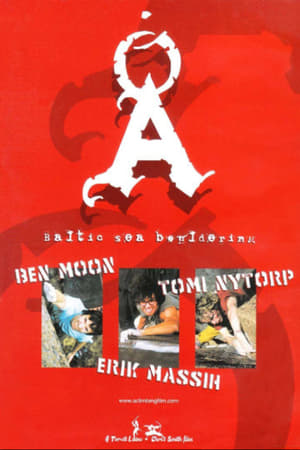
In late summer 2003, climbers from Britain, Sweden, and Finland descended upon the sleepy archipelago of Aland in the Baltic Sea to discover for themselves, its combination of spectacularly beautiful scenery and array of climbing problems. Baltic Sea Bouldering presents an insight into how climbers tackle this fresh and exciting bouldering destination. What we receive is a fascinating look at how some of Europe's best climbers tackle an unclimbed highball project that stretches mental strength to the limits.
Finland’s first nature documentary. The filmmakers’ expedition leads them all the way to the Åland Islands and the Karelian Isthmus.
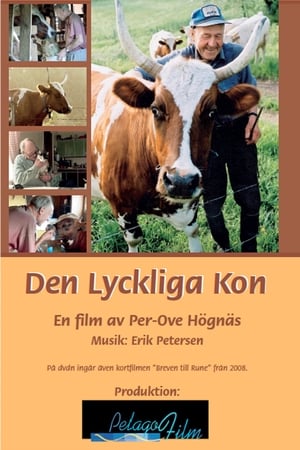
The Happy Cow ”is a documentary about the love and concern of a human being for animals. At the same time, it is a story about a person's great sacrifices and the stubborn struggle to maintain a lifestyle and culture that are irrevocably about to disappear. Rune has chosen to stay out of EU regulations. He refuses to fill out forms and refuses to mark his cows with yellow plastic markings in their ears. Therefore, he cannot even deliver his milk to the dairy. Some of the milk is given to the calves, but most of it ends up in the manure pile. Thousands of litres of milk are thrown away every year.
A film about Edo's petrol station run by two brothers that seems like it has been frozen in time since the 1950s.
The old bus "Tired Theodore" came into service in 1954 and operated for long periods along the line Lumparland - Mariehamn. One summer day a number of older people had gathered for a bus ride along the winding country roads in Lumparland, and to relive old memories. At the same time one of the locals, Putte Karlsson, took up a large project: rebuilding the old mill in Lumparby. The mill was owned by his grandfather, skipper and farmer in the village. Sawmills previously existed in many villages in Åland Islands but today they are no longer in use. It is a big challenge and many are skeptical that Putte will put everything to work.
Bomarsund 1854 tells the story of two humanists, whose actions during the Crimean War prevented bloodshed. They are the British hydrographer, Bartholomew James Sulivan, and the Russian commandant, Jacov Andreyevitch Bodisco, two men who fought on opposite sides in the war. It also traces the rise and fall of the multi-cultural community of Bomarsund. The small island of Åland, located in the Baltic Sea between Sweden and Finland, played a significant role in the war that raged during 1854, originally called the Oriental War and partially fought in Northern Europe. The Baltic campaigns became the forgotten theatre of the Crimean War. The attention awarded events elsewhere has overshadowed the significance of this theatre, which lay close to the Russian capital of St Petersburg.
Världens Minsta Parlament
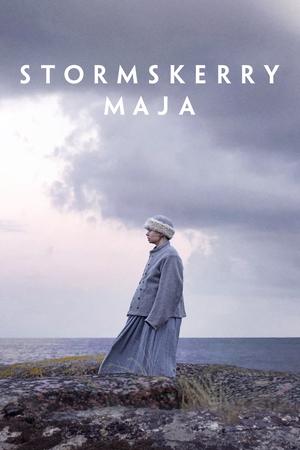
Maja and Janne move to the barren and remote island of Stormskerry, where survival is a daily struggle. Growing up in a world of old values, Maja becomes aware of a new era: a woman can be an equal partner instead of a mere bystander. The couple have children, and life is good until trouble sets in: war arrives on the island, Janne is forced to flee from the English troops, and Maja and the children are imprisoned. The family also faces many financial difficulties and death. Years pass, but Maja remains strong and stays in Stormskerry despite all the hardships and difficulties.
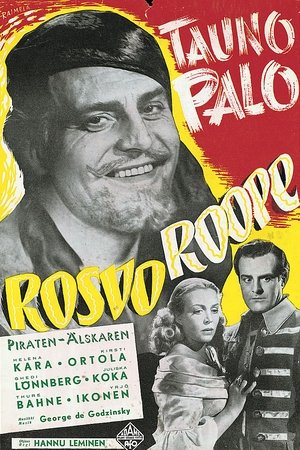
In the 18th century, Robert's beloved Helena is forced to marry the cruel Henrik Brest. Robert becomes Roope the Pirate, the most famous pirate in the Baltic Sea, whose legendary life includes scheming and partying, sword fights and women's adventures.
Sveket
As the Egyptian society is hit with a wave of religious and national extremism, filmmaker Nadia Kamal and her grandmother Mary resort to storytelling as they recount to the grandson Nabeel the history spanning 100 years of changes. What's a better way than storytelling to preserve identity?
In the Honduran coup of June 28, 2009, where the Constitutional President was kidnapped, a popular movement was born without precedent because of its national character. The students, members of the popular resistance, explain their reasons and their vision in the middle of this conflict that received continental uproar. Filmed in August 2009 while the president is still in involuntary exile. Filmed days after the coup, this documentary shows impressions, opinions and positions of the Central American people in their struggle for democracy and the restitution of the Constitutional President José Manuel Zelaya. In the voice of the students and other Honduran protagonists.
Based on careful research, this documentary touches on the most striking aspects of Foxilandia, the management of President Vicente Fox, and dissects this national tragicomedy from the political, economic and social points of view.
The Disobbedienti emerged from the Tute Bianche during the demonstrations against the G8 summit in Genoa in July 2001. The “Tute Bianche” were the white-clad Italian activists who used their bodies – protected by foam rubber, tires, helmets, gas masks, and homemade shields – in direct acts and demonstrations as weapons of civil disobedience. The Tute Bianche first appeared in Italy in 1994 in the midst of a social setting in which the “mass laborer,” who had played a central role in the 1970s in production and in labor struggles, was gradually replaced in the transition to precarious post-Fordist means of production. “Disobbedienti” thematizes the Disobbedienti’s origins, political bases, and forms of direct action on the basis of conversations with seven members of the movement.
Cómo empezar una película sobre Javier Aguirre
Documentary - Short Film
The film explores the sexual aspects of Serbian folklore. Ancient myths that have trickled into everyday household remedies or explanations are juxtaposed with the joys of the female and male sexual forms from which all human life originates. Functioning as both sexual liberation and reinvented modern myth, Balkan Erotic Epic is a display of the need for a cultural change in viewpoint around sex.
In the hot summer of 1975, in the middle of the revolution, in the heat of political and social conflicts, a crime is committed in a slum neighborhood on the outskirts of Lisbon. Analyzing this crime, as its causes, its protagonists, its local and national context, the film proposes a hot reflection on the Revolutionary Process in Progress (Processo Revolucionário em Progresso ) that throughout the year and throughout the country, and on how political contradictions, Social and economic rights that divided Portugal as a result of the military coup of 25 April 1974.
6 Jahre, 7 Monate und 16 Tage - Die Morde des NSU
A documentary of insect life in meadows and ponds, using incredible close-ups, slow motion, and time-lapse photography. It includes bees collecting nectar, ladybugs eating mites, snails mating, spiders wrapping their catch, a scarab beetle relentlessly pushing its ball of dung uphill, endless lines of caterpillars, an underwater spider creating an air bubble to live in, and a mosquito hatching.