Upon Canada's entry into World War II, the RCMP rounded up thousands of people it considered fascist sympathizers. Among them, 700 Italian-Canadians were held for up to three years in internment camps. None were ever charged with a criminal offence.
The Blackprint explores what it means to be Black and British. will.i.am traveled the UK to meet civil rights heroes, schoolchildren and technology trailblazers while also exploring issues they face because of their race. A basic look at racial discrimination experienced by young Black men and women but also, where it began with the slave trade in the 1800s.
This incisive, urgent documentary examines the history of anti-Black racism in hockey, from the segregated leagues of the 19th century to today’s NHL, where Black athletes continue to struggle against bigotry.
Emma Dabiri looks at racism in Britain via the world of modern dating, love apps, and a national survey suggesting that young Britons could be more segregated than ever.
When a group of Eritrean refugees arrive in the small town of Härnösand there is a growing sentiment against them from the locals. 17-year old Sara Westin decides to found an anti-racist group to combat these feelings but when Sara and her best friend are murdered by Sara's Eritrean ex-boyfriend the feelings in the city reach a boiling point.
Elliot Page brings attention to the injustices and injuries caused by environmental racism in his home province, in this urgent documentary on Indigenous and African Nova Scotian women fighting to protect their communities, their land, and their futures.
How do white South Africans deal with their fears of crime and violence? Like crocodiles, some survive without evolving, living with their fears. Others make fear their friend and evolve in ways you'd never imagine.
Black people face a lot of problems, but the root cause of those issues is our lack of businesses. 7 A.M. is the first documentary ever that talks to leading scholars, academics, and businessmen exploring in depth why racism isn’t a social issue but an economic one. Since the 1960’s we’ve focused on education and politics, however, the solution isn’t building more schools or government positions… The solution is building more businesses.
The first in-depth analysis of the unspoken ethnic component behind the most devastating socio-economic movement in America today.
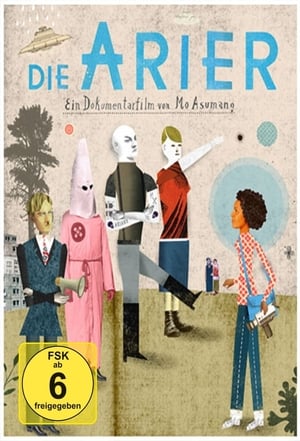
Donal MacIntyre investigates the secretive world of white power music and how the money made helps fund far right political organizations in many countries, including the British National Party in the UK. In this documentary, the crew gained access to the men and women behind one of the most disturbing musical movements. It reveals how British neo-Nazis and skinheads plan to launch 'Project School-Yard' in Britain after a similar scheme was tried out in the United States. In the UK, the team follows one of the most infamous British white-power bands, Whitelaw, as they prepare for one of the biggest gigs of their career. The band are filmed on stage, with riot police surrounding the venue, performing as the forces of law and order move in to shut down their hate-filled act. The film also contains shocking images of hate rock concerts in the USA where, thanks to the first amendment protecting freedom of speech, anything goes.
October 2003, Alma and Lila Levy are excluded from the Lycée Henri Wallon in Aubervilliers solely because they were wearing a headscarf. What follows is a deafening political and media debate, justifying in most cases the exclusion of girls wearing head-scarves to school. February 2004, a law was eventually passed by the National Assembly. "A thinly veiled racism" is about this controversy since the affair of Creil in 1989 (where two schoolgirls were excluded for the same reasons) and attempts to "reveal" that maybe what hides behind is the desire to exclude these girls. This film gives them a voice as well as others - teachers, community activists, feminists, researchers - gathered around the group "A School for You-All" fighting for the repeal of this law they consider sexist and racist ... This movie was censured in Septembre 2004 in France.
Behind-the-scenes documentary about the making and broadcasting of pedagogical radio shows on the BBC.
The extraordinary work of the American artist Philip Guston is a milestone in modern painting. Guston is one of the most discussed painters of his time and today a star of the younger generation of contemporary artists. ARTE is showing the documentary on the occasion of the major Guston retrospective at the Tate Modern in London.
10 years after being diagnosed with scoliosis, Helena revisits her experience with the orthopedic braces she wore during adolescence.
In 1946, Isaac Woodard, a Black army sergeant on his way home to South Carolina after serving in WWII, was pulled from a bus for arguing with the driver. The local chief of police savagely beat him, leaving him unconscious and permanently blind. The shocking incident made national headlines and, when the police chief was acquitted by an all-white jury, the blatant injustice would change the course of American history. Based on Richard Gergel’s book Unexampled Courage, the film details how the crime led to the racial awakening of President Harry Truman, who desegregated federal offices and the military two years later. The event also ultimately set the stage for the Supreme Court’s landmark 1954 Brown v. Board of Education decision, which finally outlawed segregation in public schools and jumpstarted the modern civil rights movement.
A leader of a non-profit organization redefines the education system by using the arts as a vehicle to uplift youth with essential life skills through performance and artistic discovery. Empowering the next generation, Pilita Simpson, CEO and Founder of Positively Arts, draws from her personal upbringing and past experiences as a Disney live performer to exemplify a lasting change for the youth in order to rival the education system through positivity. Built upon her Harvard degree in Arts in Education, her holistic approach emphasizes vital life lessons on mental health, empathy, and empowerment, enriching young minds with essential tools for a brighter future. With their newfound skills, the kids of Positively Arts embark on the production of their very first musical.
Pier Paolo Pasolini sets out to interview Italians about sex, apparently their least favorite thing to talk about in public: he asks children if they know where babies come from; asks old and young women if they support gender equality; asks both sexes if a woman's virginity still matters, what do they think of homosexuality, if divorce should be legal, or if they support the recent abolition of brothels. He interviews blue-collar workers, intellectuals, college students, rural farmers, the bourgeoisie, and every other kind of people, painting a vivid portrait of a rapidly-industrializing Italy, hanging between modernity and tradition — toward both of which Pasolini shows equal distrust.
An analysis of the controversy over the participation of women in the Irun and Hondarribia festivity known as Alarde. It is divided into three parts: in the first part, the history, structure, and characteristics of the Alarde are explained; in the second part, the beginning of the conflict and its development in the 1990s; and in the third part, the present situation, reflecting on the present and future of the festival.
In contrast to the lens that focuses exclusively on the racist traditions that are rooted in America’s social history, the moral counterweight of close, loving, friendship and collaboration, which have always been present in our history, represents “the other tradition.” This “other tradition” is a source of inspiration and presents models of behavior that are instructional and include unknown and uncelebrated legacies to be absorbed and emulated across generations of present day Americans. The documentary discusses the “better in us” a needed collective perspective in the current climate of national disunity across racial, religious, and political lines. This has significant implications for addressing public issues from immigration to health care and the myriad of governmental, educational, business, and religious challenges that we must successfully meet to weave the fabric of unity which is indispensable to survival as a nation.
In April 1999, three Lakeside brothers murdered a Mexican migrant worker by beating him to death. Producer Lee Harvey spent several months talking with Lakesiders--teachers, social workers, longtime residents and teens who are avowed racists--to unearth the reasons why kids would commit this gruesome crime and why it happened in the peaceful, semi- rural town of Lakeside in eastern San Diego county.