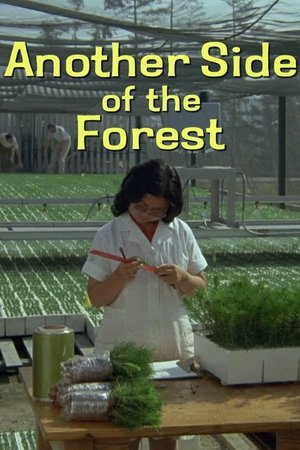
Developments in the Canadian forestry industry during the 1970s are shown being carried out both as lab experiments and in the field to protect and conserve the country's vast forests. These include turning a Newfoundland bog into woodland, fostering British Columbia seedlings that withstand mechanical planting, inoculating Ontario elms against the bark beetle, devising ways of controlling fire, and more.
Sweat, sun, rain, tears, and green thumbs are all part of the challenge for a young couple attempting to become full-time organic farmers in this illuminating doc.
The Gods of Food: The Last Promise
This documentary presents the scientific facts behind the issue of peat haze as well as points of view and opinions from local and regional stakeholders. The burning of the peat forests throughout tropical Southeast Asia creates pollution, and this posed significant challenges to human health and the economies of the region during the second decade of the 21st century. The problem of peat haze pollution has been somewhat mitigated in recent years but in spite of this positive progress a few of the critical issues are yet to be solved. A complete solution to this complex issue will not be a simple one.
In the year 2000, Les Blank, along with co-filmmaker Gina Leibrecht, visited Richard Leacock (1921-2011) at his farm in Normandy, France and recorded conversations with him about his life, his work, and his other passion: cooking! With the flair of a seasoned raconteur, Leacock recounts key moments in his seventy years as a filmmaker and the innovations that he, D.A. Pennebaker, Albert Maysles and others invented that revolutionized documentary filmmaking, and explores the mystery of creativity. With the passing of both Blank and Leacock, the documentary is a moving insight into the lives of two seminal figures in the history of film.
Tibet - Les nourritures terrestres
This film tells a story of ethnic Koreans from Russia and the post-Soviet territories making their new home in New York City. The history of the diaspora is told through conversations with Lidiya Kan’s mother, personal stories, fragmented memories, and her family photo archive. An important character of the film is Morkovcha, the Korean carrot salad, an invention of the Russian Korean diaspora; its essence is symbolic of their mixed identity.
A short documentary concerning a group of friends who get together, eat shawarma and drink beer. They talk utter nonsense at times, yet they couldn't be happier.
From the UFC Octagon in Las Vegas and the anthropology lab at Dartmouth, to a strongman gym in Berlin and the bushlands of Zimbabwe, the world is introduced to elite athletes, special ops soldiers, visionary scientists, cultural icons, and everyday heroes—each on a mission to create a seismic shift in the way we eat and live.
Morgan Spurlock subjects himself to a diet based only on McDonald's fast food three times a day for thirty days without exercising to try to prove why so many Americans are fat or obese. He submits himself to a complete check-up by three doctors, comparing his weight along the way, resulting in a scary conclusion.
Documentary filmmaker Robert Kenner examines how mammoth corporations have taken over all aspects of the food chain in the United States, from the farms where our food is grown to the chain restaurants and supermarkets where it's sold. Narrated by author and activist Eric Schlosser, the film features interviews with average Americans about their dietary habits, commentary from food experts like Michael Pollan and unsettling footage shot inside large-scale animal processing plants.
From both local and global perspectives, this documentary examines the harsh realities behind the mounting water crisis. Learn how politics, pollution and human rights are intertwined in this important issue that affects every being on Earth. With water drying up around the world and the future of human lives at stake, the film urges a call to arms before more of our most precious natural resource evaporates.
Minnesota: A History of the Land vividly brings to life the epic story of the people and landscapes of Minnesota. From the retreat of the last ice sheets to the growth of today’s suburbs – the series seeks to entertain as it enriches our understanding of Minnesota’s past, present, and future. A visually stunning and groundbreaking 4-part documentary series featuring nature videography from across the state, never before seen historic images, state-of-the-art animations and historic recreations. Original soundtrack by award-winning composer, Peter Ostroushko.
A group of students interviews customers of an organic store about their eating habits.
Korean pop culture has taken over, but another Korean export is also becoming very popular - the culinary delicacy of kimchi.
Filmmakers Robert Kenner and Melissa Robledo reunite with investigative authors Michael Pollan and Eric Schlosser to take a fresh look at our efficient yet vulnerable food system.
A compilation of conferences/debates between renowned designers, environmental activists, and students on the concept of design. Held in Aspen, Colorado, USA.
This piece gives the viewer a glimpse into the life and philosophy of Dale Egan who has been practicing the art of 'Gl'nage' for decades where he reclaims the artefacts of our disposable society.
Lydia Jennings is a member of the Huichol (Wixaritari) and Pascua Yaqui (Yoeme) Nations and holds a doctorate in soil microbiology. Her work is dedicated to environmental science and the essential role of Indigenous communities in these spaces. Her hope is to create more inclusive academic and environmental landscapes. In place of her graduation, which was canceled as a result of the pandemic, Lydia instead celebrated by running 50 miles in honor of the Indigenous scientists and knowledge keepers who came before her. It’s a run to honor the past and present while looking towards the future.
Comida Callejera