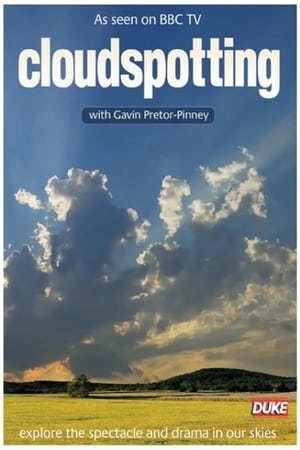
This 90-minute documentary brings to life Gavin Pretor-Pinney’s international bestseller, “The Cloudspotter’s Guide”, which draws on science, meteorology and mythology for a magical journey through the world of clouds. It is no dry treatise on the science of nephology but a playful trip through the varied beauty and distinctive personalities of the ten principal cloud types From the ethereal cirrus to the terrifying cumulonimbus, the film tells the story of the short but eventful life of clouds and their importance to our planet. Find out how immense quantities of water can stay up in the sky for so long and how lightning and thunder are created.
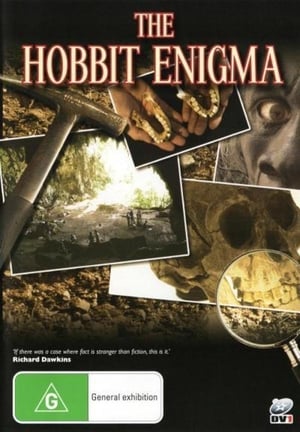
The Hobbit Enigma examines one of the greatest controversies in science today: what did scientists find when they uncovered the tiny, human-like skeleton of a strange creature, known to many as the Hobbit, on the Indonesian island of Flores in 2003?
Beziehung wirkt Wunder - Was Kinder und Jugendliche zum Aufwachsen brauchen
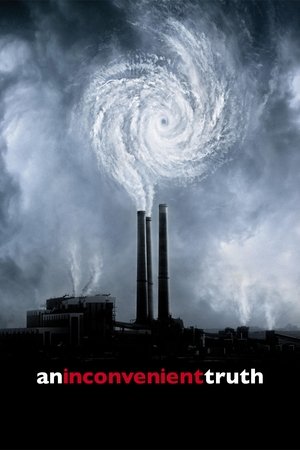
A documentary on Al Gore's campaign to make the issue of global warming a recognized problem worldwide.
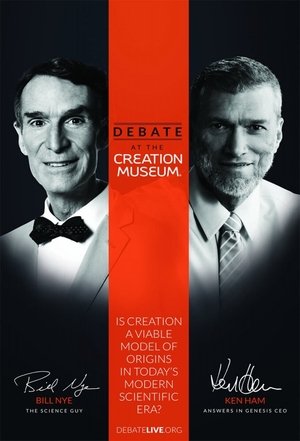
Bill Nye and Ken Ham debate whether creation is a viable model of origins in today's modern scientific era.
The use of embryonic stem cells has ignited fierce debate across the spiritual and political spectrum. But what if we could create manmade stem cells - or find super cells in adults that could forever replace embryonic cells and remove the controversy? Today, we are on the brink of a new era - an age where we may be able to cure our bodies of any illness. Stephen HAWKING has spent his life exploring the mysteries of the cosmos, now there is another universe that fascinates him - the one hidden inside our bodies - our own personal galaxies of cells.
A 12 minute film about the Evoluon [a conference centre and former science museum erected by the electronics and electrical company Philips at Eindhoven in the Netherlands], of which is thought that it was made in 1969 by Bert Haanstra or Pim Heytman. British TV viewers will probably remember this movie, since the BBC used it for test transmissions. In those transmissions a number of films was broadcast every day in the early seventies so technicians could adjust the new color TVs they installed at customers homes. —http://www.dse.nl/~evoluon/film-e.htm
A breathtaking adventure across five continents and through time to reveal nature's most vital secret. Watch a flying fox gorge itself on a midnight snack of figs. Climb into the prickly jaws of insect-eating plants. Witness a mantis disguised as a flower petal lure its prey to doom.
Darwin's great insight – that life has evolved over millions of years by natural selection – has been the cornerstone of all David Attenborough’s natural history series. In this documentary, he takes us on a deeply personal journey which reflects his own life and the way he came to understand Darwin’s theory.
Woolly Mammoth: Secrets from the Ice is a documentary presented by English anatomist Dr. Alice Roberts that reveals some of the secrets of one of the most widely known extinct animals ever. Humans have been transfixed by the Wolly Mammoth since the end of the last ice age when there were still herds of them roaming the continents of Asia and Europe. Despite many people knowing about the great Woolly Mammoth until recently very little was known about them despite ancient humans living along side them for so long; few documented accounts exist.
It has been said that 10,000 years from now only one name will still be remembered, that of Neil Armstrong. But in the four decades since he first set foot on the moon, Armstrong has become increasingly reclusive. Andrew Smith, author of the best-selling book Moondust, journeys across America to try and discover the real Neil Armstrong. He tracks down the people who knew Armstrong, from his closest childhood friend to fellow astronauts and Houston technicians, and even the barber who sold his hair, in a wry and sideways look at the reluctant hero of the greatest event of the 20th century.
Did Mars ever have life on it? To answer this question, Europe and Russia have launched a unique and ambitious 2-stage project: ExoMars 2016-2018. This documentary is a thrilling look behind the scenes of a magnificent human and scientific adventure. We will uncover the most fascinating aspects of this mission and the search for signs of life on Mars.
The Dream Is Alive takes you into space alongside the astronauts on the space shuttle. Share with them the delights of zero gravity while working, eating and sleeping in orbit around the Earth. Float as never before over the towering Andes, the boot of Italy, Egypt and the Nile. Witness firsthand a tension-filled satellite capture and repair and the historic first spacewalk by an American woman.
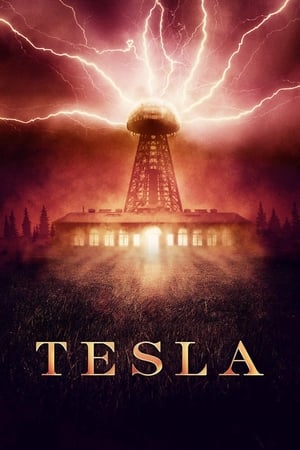
Meet Nikola Tesla, the genius engineer and tireless inventor whose technology revolutionized the electrical age of the 20th century. Although eclipsed in fame by Edison and Marconi, it was Tesla's vision that paved the way for today's wireless world. His fertile but undisciplined imagination was the source of his genius but also his downfall, as the image of Tesla as a mad scientist came to overshadow his reputation as a brilliant innovator.
Experimental educational film reveals the emergence of some ideas of Biophysics in historical, philosophical and methodological aspects. The first film from the Biophysics Cycle (1982-1989).
Documentary footage from various sources, set to music. Showing the whole of human life, from birth to death and beyond.
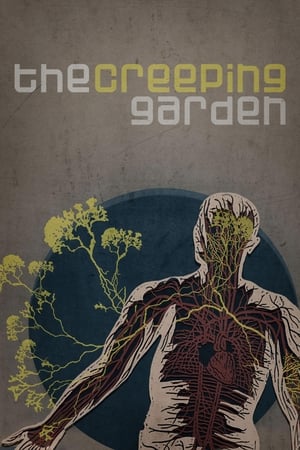
An award-winning feature-length creative documentary exploring the extraordinary world of the plasmodial slime mould through the eyes of the fringe scientists, mycologists and artists. In recent years this curious organism has become the focus of much research in such areas as biological-inspired design, emergence theory, unconventional computing and robot engineering.
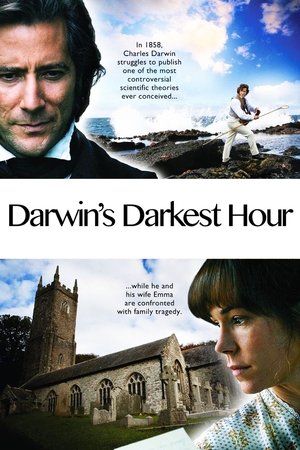
In 1858 Charles Darwin struggles to publish one of the most controversial scientific theories ever conceived, while he and his wife Emma confront family tragedy.
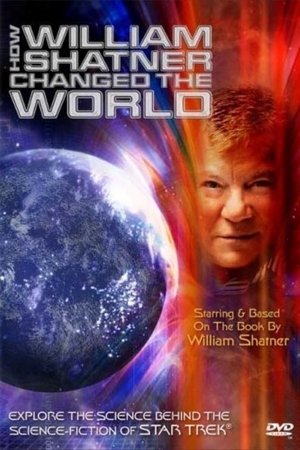
William Shatner presents a light-hearted look at how the "Star Trek" TV series have influenced and inspired today's technologies, including: cell phones, medical imaging, computers and software, SETI, MP3 players and iPods, virtual reality, and spaceship propulsion.
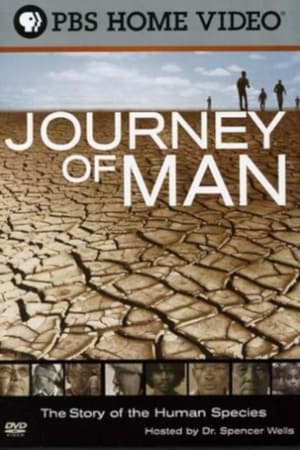
Many geneticists and archaeologists have long surmised that human life began in Africa. Dr. Spencer Wells, one of a group of scientists studying the origin of human life, offers evidence and theories to support such a thesis in this PBS special. He claims that Africa was populated by only a few thousand people that some deserted their homeland in a conquest that has resulted in global domination.