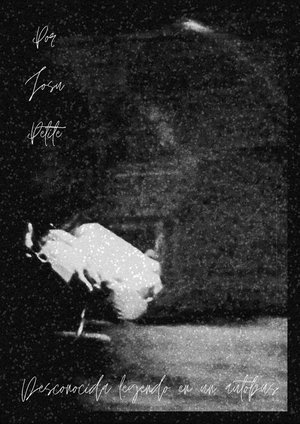
The anguish a woman experienced on the night of September 7, 2017, caused by the 8.2 magnitude earthquake that struck southern Mexico and the danger of another impending disaster.
Mezquite is a large tree with many virtues and is in danger due to the neglect that has been had with its species in recent years.
A man tries to get a group of young people trapped in drugs out through philosophy.
In the 1920s, former coal miner Harry Hoxsey claimed to have an herbal cure for cancer. Although scoffed at and ultimately banned by the medical establishment, by the 1950s, Hoxsey's formula had been used to treat thousands of patients, who testified to its efficacy. Was Hoxsey's recipe the work of a snake-oil charlatan or a legitimate treatment? Ken Ausubel directs this keen look into the forces that shape the policies of organized medicine.
The Road Forward is an electrifying musical documentary that connects a pivotal moment in Canada’s civil rights history—the beginnings of Indian Nationalism in the 1930s—with the powerful momentum of First Nations activism today. Interviews and musical sequences describe how a tiny movement, the Native Brotherhood and Sisterhood, grew to become a successful voice for change across the country. Visually stunning, The Road Forward seamlessly connects past and present through superbly produced story-songs with soaring vocals, blues, rock, and traditional beats.
Ballet by the Lake: The Wilderness Ballet Camp in Ontario's Algonquin Park. Dancing on the Rockies: The Banff School of Fine Arts ballet class practises out of doors.
As technology accelerates, our species' collective imagination of the future grows ever more kaleidoscopic. We are all haunted by temporal distortion, perhaps no more than when we attempt to remember what the future looked like to our younger selves. As the mist of time devours our memories, the future recedes; each of us burdened by the gaping mouth of entropy. Yet, emerging technology provides a glimmer of hope; transhumanism promises a future free from mortality, disease and pain. Does our salvation lie in digital simulacra? We're here to sell you the answer to that question, for the low, low price of four hundred and seventy seconds.
This is a 1991 documentary film about the legendary artist and filmmaker, Joseph Cornell, who made those magnificent and strange collage boxes. He was also one of our great experimental filmmakers and once apparently made Salvador Dali extremely jealous at a screening of his masterpiece, Rose Hobart. In this film we get to hear people like Susan Sontag, Stan Brakhage, and Tony Curtis talk about their friendships with the artist. It turns out that Curtis was quite a collector and he seemed to have a very deep understanding of what Cornell was doing in his work.
New York based artist, Cindy Sherman, is famous for her photographs of women in which she is not only the photographer, but also the subject. She has contributed her own footage to the programme by recording her studio and herself at work with her Hi-8 video camera. It reveals a range of unexpected sources from visceral horror to medical catalogues and exploitation movies, and explores her real interests and enthusiasms. She shows an intuitive and often humorous approach to her work, and reflects on the themes of her work since the late 1970s. She talks about her pivotal series known as the `Sex Pictures' in which she addresses the theme of sexuality in the light of AIDS and the arts censorship debate in the United States.
Talented teen musicians from around the USA spend a week working with Grammy nominated professionals
Adopcja
Marta
Settling of scores among international Marxist revolutionaries. A spirit of Mhedi Ben Barka inspired revolt.
Twenty-five films from twenty-five European countries by twenty-five European directors.
Set to a classic Duke Ellington recording "Daybreak Express", this is a five-minute short of the soon-to-be-demolished Third Avenue elevated subway station in New York City.
On the surface, this collection of shorts by up-and-coming African American filmmakers arrived at a perfect time. The cutting-edge products of the New Black Cinema of the early '90s had disappeared, giving way to embarrassingly stereotypical, scatological fare such as Booty Call and Next Friday. This feature-packed compilation (which includes production notes, interviews with all of the filmmakers, and audio commentary by four) attempts to prove that African American cinema is intent on moving past the lowbrow humor, as six of the seven shorts steer clear of any comedy.
“At which point do you let go?…” – This is the central question of “Vios”, a short documentary that tracks the last days of a dog suffering from terminal cancer and how its owners struggle with the critical decision: whether or not to euthanise her. Shot over a 6-month period by the owners, Wendy and Ler, this intimate documentary is an unfettered access into the lives of the flmmakers, exposing their deepest vulnerabilities in face of this crisis, which had crushed their fnances and strained their relationship. Through their personal story, Wendy and Ler hope to create more awareness for dogs with cancer in Singapore and around the world.
In Nigeria, a young Canadian doctor serves in a local mission hospital and learns much from the experience. Stationed abroad under the Canadian University Service Overseas Plan, Dr. Alex McMahon and his schoolteacher wife find every day a fresh challenge. An interesting study of intercultural help.
Xiara Trujillo is a precocious seven-year-old who moved from the Bronx to Maryland with her mom, Aracelli Guzman, four years ago. Though she seems happy hanging out and playing with her pal Melissa, Xiara becomes defensive and emotional when talking about her father, Harold Linares. As we see and learn, Harold is in jail serving a ten-year sentence for weapons possession; Xiara seems to blame his incarceration on her mother, whom she says "kept calling the police." Xiara, who has always been extremely close to her father, acts out with her mother.
A short documentary to celebrate Hammer Films' 89th anniversary. Discover how Hammer has shaped the horror genre, influenced culture, and what the future holds. Featuring insights from new CEO and Chairman John Gore, candid conversations with legendary Hammer Glamour icons Caroline Munro and Madeline Smith, plus contributions from writer and actor Mark Gatiss. Plus, voices of the horror community — from seasoned critics to influential content creators — discuss the indelible mark Hammer Films has made on the genre.