Avortement, les croisés contre-attaquent
Procreation is the social duty of all fertile women, was the political thinking during the 1960s and 1970s in Romania. In 1966, Ceaucescu issued Decree 770, in which he forbade abortion for all women unless they were over forty or were already taking care of four children. All forms of contraception were totally banned. The New Romanian Man was born. By 1969, the country had a million babies more than the previous average. Romanian society was rapidly changing. By using very interesting archival footage and excerpts from old fiction films and by interviewing famous personalities from that time – gynecologists or mothers who were part of the new society - the director revives this period of tremendous oppression of personal freedom. Many deaths were caused by the mere fact that women, including wives of secret Romanian agents, famous TV presenters, and actresses, had to undergo illegal abortions. Many women were jailed for having them.
Nothing more than Pastor Silas Malafaia talking about homosexualism, abortion and moral depravity, flying saucers and aliens all at once. For 90 minute straight!
The story of famous actor and director Orson Welles is told through his two visits to the Republic of Ireland; first in his youth as a promising young actor and finally in later years as a washed up icon of the silver screen.
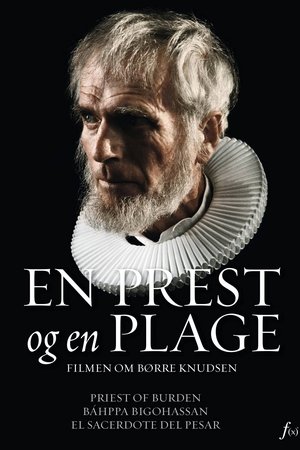
The priest Børre Knudsen is Norway's most infamous anti-abortionist, and much hated for this. He fought for his cause without thinking about the consequences for his family and his children even in the worlds most democratic country.
This was a labour of love combining the work of some incredible artists to bring Máire Mhac an tSaoi’s poetry into the medium of film. Deargdhúil: Anatomy of Passion explores the life, work and sensual poetic imagination of the revolutionary Irish poet Máire Mhac an tSaoi. Born in 1922, her story is set against a backdrop of a tumultuous century in Irish history in which she and her family were centrally involved. At a time when women's voices were being silenced, the native tradition in the Irish language was her stage to explore the depths of female sexuality and experience without shame. Featuring the movement poetry of performance artist Maureen Fleming, interview by Louis de Paor, poetry voiced by Máire Mhac an tSaoi, Ailbhe Ní Ghearbhuigh and Nuala Ní Dhomhnaill, autobiography script voiced by Olwen Fouéré.
What images do we associate with abortion and why? Where do these images and the emotional scripts in our head come from? How do they influence women who (want to) have an abortion, how do they shape the general discussion? Franzis Kabisch’s personal desktop documentary investigates these questions with great precision, clarity and humour (yes, humour, too!).
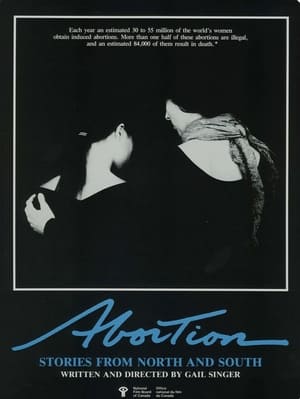
Women have always sought ways to terminate unwanted pregnancies, despite powerful patriarchal structures and systems working against them. This film provides a historical overview of how church, state and the medical establishment have determined policies concerning abortion. From this cross-cultural survey--filmed in Ireland, Japan, Thailand, Peru, Colombia, and Canada--emerges one reality: only a small percentage of the world's women has access to safe, legal operations.
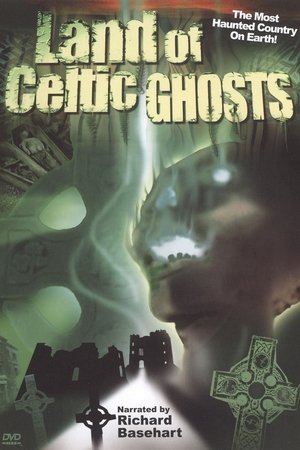
A collection of Irish legends and sightings, featuring eerie ruins of castles. A moody film, very well narrated by Richard Basehart. Rich in folklore and timeless legends, Ireland possesses a history of supernatural phenomena and in fact, may be the most haunted country in the world. This documentary traces the ghostly paths of the spirits that have roamed the Emerald Isle since the beginning of man. Filmed entirely on locations in Ireland, including the city of Dublin and at many other ghostly places such as Killakee House, St. Michan’s Church, St. Patrick’s Cathedral, Carrickmines, Howth Castle, Malahide Castle, Aillwee Cave (Ballyvaughan), Cliffs of Moher, Kilfenora Cathedral, Glenfesk, Muckross Abbey, Kildemock Church, Castlegregory and many more.
Three women intimately share how they faced the world and their own family when deciding to terminate a pregnancy.
Narrated by Oscar-winning actor Jeremy Irons, The Genius of George Boole assembles academics and industry leaders from across the globe to explore the life and importance of one of the world’s greatest unsung heroes.
In 2012, Stephen Vaughan and Kay Ferreter are invited to address the congregation at St. Joseph's Redemptorists Church in Dundalk, Ireland for the Solemn Novena Festival. In a powerful speech, the pair describe their experiences being gay and lesbian in Ireland, feeling excluded by Catholic doctrine, and the importance of a more inclusive church.
The Kabin Studio on the north side of Cork gives teenagers the mic and the confidence to use it. Writing and performing infectious Irish-language rap, they grow from shy beginners into viral sensations—their lyrics pulsing with pride, heritage and the joy of being heard.
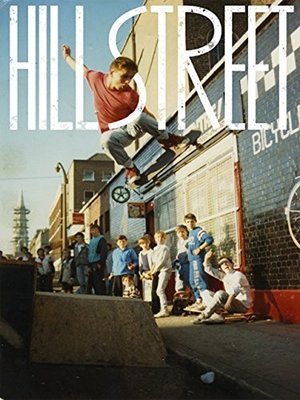
The evolution of skateboarding culture in Ireland since the late 1980s.
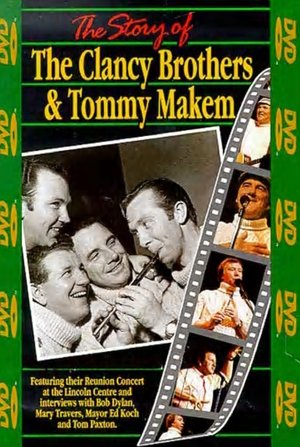
At the forefront of the folk revival movement since the 1950's, the Clancy Brothers and Tommy Makem are a highly influential group of Irishmen. Popularizing the traditional music of their homeland, the Brothers brought Celtic music into America, and remain some of its most avid performers.
Ireland's history is steeped in religion and mystery. Why did its people stop worshipping the earth 5,000 years ago? Did St. Patrick really act alone in converting the Irish to Christianity in the 5th century? Historians, astronomers, and other scientists believe answers to these and other questions lie in the stars. Discover the role that celestial occurrences have played in Irish religious beliefs and practices as we explore ancient hallowed sites and even the heavens above.
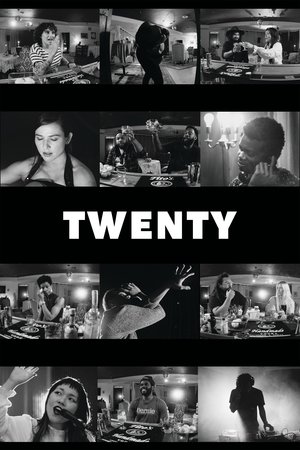
Set in a speakeasy in Atlanta, “Twenty” is a feature documentary about fifteen young people making it through 2020. The film is an observational time capsule that lays bare the raw reflections of a group of people surviving a year that will be seared into our generational memory.
At a public hospital in Nicaragua, Ob/Gyn Dr. Carla Cerrato must choose between following a law that bans all abortions and endangers her patients or taking a risk and providing the care that she knows can save a woman's life. In 2007, Dr. Cerrato’s daily routine took a detour. The newly elected government of Daniel Ortega, a former Marxist revolutionary who converted to Catholicism to win votes, overturned a 130-year-old law protecting therapeutic abortion. The new law entirely prohibits abortion, even in cases of rape, incest, or when a woman’s life is at stake. As Carla and her colleagues navigate this dangerous dilemma, the impact of this law emerges—illuminating the tangible reality of prohibition against the backdrop of a political, religious, and historically complex national identity. The emotional core of the story—the experiences and situations of the young women and girls who are seeking care—illustrate the ethical implications of one doctor's response.
A biography of the poet W. B. Yeats and his contribution to the Irish independence movement as a Protestant nationalist.
El Genocidio Silencioso