Over a dozen students at this school in Quebec were radicalised. To tackle the issue, a pilot project was launched to heal divides within the student body. It's a hybrid cultural model, made up of the many cultures of its students.
"I often say sociology is a martial art, a means of self-defence. Basically, you use it to defend yourself, without having the right to use it for unfair attacks." (Pierre Bourdieu) The world has witnesses who speak out loud what others keep to themselves. They are neither gurus, nor masters, but those who consider that the city and the world can be thought out. The sociologist, Pierre Bourdieu is one such witness." Over a three- year period, Pierre Carles' camera followed him through different situations: a short conversation with Günter Grass, a lively conference with the inhabitants of a working-class suburb, his relations with his students and colleagues and his plea that sociology be part of the life of the city. His thinking has a sort of familiarity, which means it is always within our reach. It is the thinking of a French intellectual who has chosen to think his times.
A local fisherwoman navigates her way through a male dominated environment to work in an industry that has been essential to island life for hundreds of years.
Citoyennes !
Kang Aries and Kang Oca are two cultural observers of Kujang who try to provide a justification perspective on the Kujang Philosophy made by one of the blacksmiths named Abah Jajang, where the general public often considers that Kujang is a sharp weapon. The two of them "Kang Aris & Kang Oca" entered the realm of the trial to defend the essence of Kujang, so as not to be considered misunderstood by the general public.
In 150 years, twice marked by total destruction —a terrible earthquake in 1923 and incendiary bombings in 1945— followed by a spectacular rebirth, Tokyo, the old city of Edo, has become the largest and most futuristic capital in the world in a transformation process fueled by the exceptional resilience of its inhabitants, and nourished by a unique phenomenon of cultural hybridization.
This documentary accompanies the journey of artists who exalt and celebrate ancestry and the orishas in their work. It also offers a manifesto against one of the biggest problems facing Brazil: religious racism. The feature brings together stories from music, theater, fashion, dance and the visual arts to promote reflection on the power and importance of black representation, art and diversity
Writer, journalist, explorer, filmmaker, communist militant, freedom fighter. Truths and lies. A plot twist. Politician. General De Gaulle's shadow. Overwhelmed by the weight of power. The numerous exploits of André Malraux (1901-1976).
Terra incognita
A sock puppet explores a family history told from the perspective of a mother and father.
The film is about inspiration, reminding the power of collective action, the importance of preserving the heritage of Santa Ana, and the boundless potential that lies within the community. It is a story that deserves to be told, a story that will resonate with audiences of all ages and backgrounds.
Forty years after the death of Pierre Mendès France, Yves Jeuland and Alix Maurin reveal another side to this figure: the story of his life, told through the pages of his private notebooks. PMF led a romantic and extraordinary life as a French politician and Jew, both loved and hated.
May 5, 1821. Napoleon Bonaparte, deposed emperor exiled on the island of St. Helena, is about to take his last breath. The son of a Corsican family, he has been close to death on many occasions since, as a young captain in the revolutionary army, he seized Toulon from the royalists in 1793.
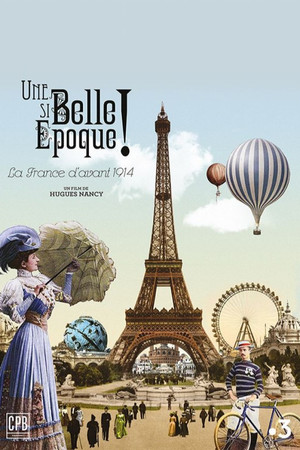
In 1900, the eyes of the whole world are on Paris. The World's Fair welcomed 50 million amazed visitors, and the city celebrated itself in a glamorous era. This period went down in history as the "Belle Époque." Elaborately restored and colorized historical photographs bring to life the exciting life in Paris between the end of the 19th century and the beginning of World War I in 1914. Bicycles, cars, airplanes, moving pictures, newly founded film studios, revolutionary composers and painters, avant-garde ballet performances, fashion houses, summer resorts on the Atlantic coast – life was intoxicating. People celebrate in the variety shows, cabarets, and revue theaters of Paris. Moulin Rouge, Folies Bergères, Bal Tabarin—in Paris, the nights are long and life is too short to sleep through. It is a dance on the volcano, given the political developments in the world.
Fourty years ago, in May 1981, with François Mitterrand's election, some people were letting themselves dream about a better life while others were predicting the coming of soviet tanks upon the Champs-Élysées. If we gladly remember the turning point of austerity in 83, there were also the wage rises, the fifth week of paid leave, the abolition of death penalty, the decriminalisation of homosexuality, or the advent of independent radio stations. Rare archives and accounts by those who were at the heart of this story give an overview of it and shed light on lesser-known aspects.
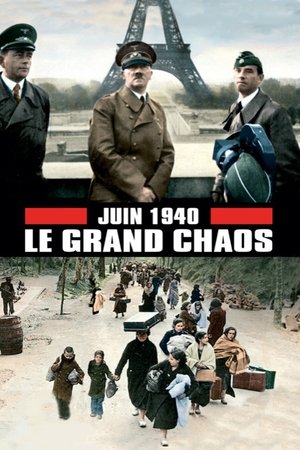
After the defeat of 1940, and faced with the unexpected collapse of French power, all eyes turned to a horizon of both hope and uncertainty: the colonies. France had suddenly become an empire without a metropolis, reduced to two-thirds of its former size. Pétain saw the colonies as a "consoling myth" after the defeat, while de Gaulle considered them essential strategic locations for the Resistance. The two clashed in a propaganda war.
The Tet Offensive during the Vietnam War, the Civil Rights Movement, the May events in France, the assassinations of Martin Luther King and Robert F. Kennedy, the Prague Spring, the Chicago riots, the Mexico Summer Olympics, the presidential election of Richard Nixon, the Apollo 8 space mission, the hippies and the Yippies, Bullitt and the living dead. Once upon a time the year 1968.
The Rainbow Warrior was a Greenpeace ship that was bombed by operatives of the French government, in New Zealand in 1985, while heading to a protest against nuclear testing, tragically taking the life of photographer Fernando Pereira. Edward McGurn’s enlightening and exciting documentary uncovers a tangled tale of nuclear weapons, geopolitical coverups, and attempts to take action against impending environmental collapse. Was Pereira’s death an accident or part of a larger political plot?
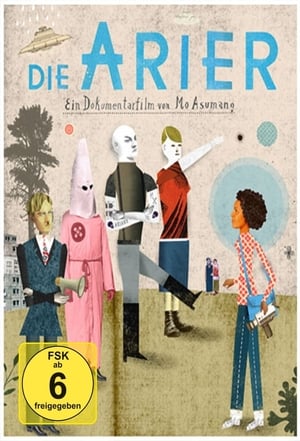
THE ARYANS is Mo Asumang's personal journey into the madness of racism during which she meets German neo-Nazis, the US leading racist, the notorious Tom Metzger and Ku Klux Klan members in the alarming twilight of the Midwest. In The ARYANS Mo questions the completely wrong interpretation of "Aryanism" - a phenomenon of the tall, blond and blue-eyed master race.
The Dawn is Too Far: Stories of Iranian-American Life poetically narrates the story of a community of Iranian Americans who have made the San Francisco Bay Area their home over the past five decades. The film explores Iranian immigration through turbulent histories of dissent, revolution, war, and separation, and the reinvention of identity in a new land and culture. The Dawn is Too Far highlights how Iranian students, activists, and artists have navigated displacement while drawing on and influencing Bay Area culture. This community offers a more nuanced story of the Iranian diaspora—the ways that this community enriches the region where they live, work, and build families. The Dawn is Too Far undermines the tired and overplayed news headlines that are dominated by narratives of enmity and mistrust between the government of Iran and the U.S., to offer a more humane understanding of the how people's lives and the sacrifices they make are part of the larger story of immigration.