The Bridge is a controversial documentary that shows people jumping to their death from the Golden Gate Bridge in San Francisco - the world's most popular suicide destination. Interviews with the victims' loved ones describe their lives and mental health.
A journey into the BBC archives unearthing glorious performances and candid interviews from some of Britain's greatest poets.
At underground film of the 1st Popular Festival of Catalan Poetry filmed in the Proce Theater in Barcelona on May 25, 1970, in solidarity with political prisoners. The participating poets were: Agustí Bartra, Joan Oliver (Pere IV), Salvador Espriu, Joan Brossa, Francesc Vallverdú and Gabriel Ferrater.
The humorous portrait of a female artist. The film follows the career of 24-year-old Janine F. who in 2002 caused a commotion from the rooftop of a Berlin building.
Sylvia Plath Read 18 Poems From Her Final Collection, Ariel, in a 1962 Recording
Mediocre
A personal meditation on Rumble Fish, the legendary film directed by Francis Ford Coppola in 1983; the city of Tulsa, Oklahoma, USA, where it was shot; and its impact on the life of several people from Chile, Argentina and Uruguay related to film industry.
Básnik Pavol Ušák Oliva
"Before I left today, I almost forgot to answer a lot of e-mails."
Dania is 21 years old and grew up in a Christian community in the Faroe Islands’ Bible belt. She has just moved to Tórshavn and is seeing Trygvi, a hip-hop artist and poet locally known as Silvurdrongur (Silver Kid). He comes from a secular family and writes poems and texts about the shadow sides of humanity. Dania herself sings in a Christian band but is fascinated by Trygvi’s courage to write brutally honest lyrics. As she tries to find her place in the world and understand herself, she starts to write more personal texts. Her writings develop into a collection of critical poems called ‘Skál’ (‘Cheers’), about the double life that she and other youths must live in the conservative Christian world.
Cult director Richard Stanley brings Marillion's music to the screen in the 50-minute BRAVE. A teenager believed to be suicidal is discovered wandering near the Severn Bridge. Suffering from severe memory loss, she seeks information about the mysterious events that led to her condition. This work of fiction was inspired from the true story of an amnesiac woman found at the bridge.
It's a sensitive, moving doc chronicling the life of Tétrault's brother Philip , a Montreal poet, musician and diagnosed paranoid schizophrenic. A promising athlete as a child, Philip began experiencing mood swings in his early 20s. His extended family, including his daughter, share their conflicted feelings love, guilt, shame, anger with the camera. They want to make sure he's safe, but how much can they take?
After World War II a group of young writers, outsiders and friends who were disillusioned by the pursuit of the American dream met in New York City. Associated through mutual friendships, these cultural dissidents looked for new ways and means to express themselves. Soon their writings found an audience and the American media took notice, dubbing them the Beat Generation. Members of this group included writers Jack Kerouac, William Burroughs, Allen Ginsberg. a trinity that would ultimately influence the works of others during that era, including the "hippie" movement of the '60s. In this 55-minute video narrated by Allen Ginsberg, members of the Beat Generation (including the aforementioned Burroughs, Anne Waldman, Peter Orlovsky, Amiri Baraka, Diane Di Prima, and Timothy Leary) are reunited at Naropa University in Boulder, CO during the late 1970's to share their works and influence a new generation of young American bohemians.
The fascinating story of the rise to power of dictator Benito Mussolini (1883-1945) in Italy in 1922 and how fascism marked the fate of the entire world in the dark years to come.
Seamus Murphy’s documentary examines Irish writer Pat Ingoldsby’s unique world. Ingoldsby’s poems and candid anecdotes bear witness to a visceral relationship with his beloved Dublin, fellow Dubliners and anything that catches his interest. Personal challenges, a sensitive humanity and a lifetime as a maverick have taught him to harness reality and reach well beyond it to avenge the banal with absurd magic. It heals him as it does us.
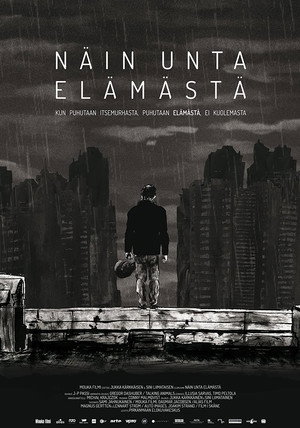
Every day in Finland alone, two people commit suicide. Thousands of people are affected by suicide yearly. Once I Dreamt of Life is a feature length documentary film about suicide. It’s an account about one’s personal relation to suicide, but also studies suicide as social phenomena: The motives, warning signs & consequences. The film follows the journey of a young man, an animated character based on a real person, on his path towards suicide. The journey is described by people who’ve had encounters with suicide – parents who lost their child, young adults who considered or even tried committing suicide. When linked together, these experiences offer a collage of our perception of suicide. They tell about how people cope with the past and find a reason to go on with their lives. The intention is not to romanticize suicide or judge. It encourages people to talk about painful and difficult experiences and reminds us how important it is to be heard.
Using the author's personal estate, current images of places where she lived or were dear to her, and archival images of television and film; using parts of her prose and poetry always with first-person testimonies; from Porto to Lisbon, from Granja to Lagos, from the Atlantic Sea to the Mediterranean, from Greece to 25 April: the passions and disappointments of a life and work dedicated to the search for the real, freedom and justice.
Follows the young people of Selma, Alabama's RATCo (Random Acts of Theatre Company) as they journey to New York City to share their story of hope, resilience, and overcoming.
Born June 8, 1964, Frank Matter films four "twins", born the same day as him, but in other latitudes. Interweaving their life stories with rich archival material, the filmmaker links these Parallel Lives with elements from his own biography, to compose a fascinating fresco where intimate trajectories are part of the advent of the global village.
The cooking show is as old as television itself. But why do we like watching the making of a meal that most of us will never cook, let alone eat? Dirty Furniture’s jam-packed video essay is a rollercoaster ride through the history of the genre, at once a staple of television viewing and a hotpot of shifting perspectives and sociocultural values.