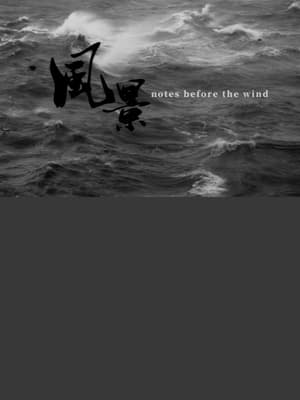
The film is an observational telling of a watchman in an apartment complex in Guwahati, Assam, India. It blends documentary to explore his alienation and raise the question of empathy vis-a-vis his occupation: its existence beyond what may be referred to as a linear time or the time occupied by the privileged. His time is interpreted as existing in an another time characterised by the banal quality of his job. The film attempts to do away with any narrative control where the subject (the spectator) too exercises a reciprocal gaze on the filmer: by becoming an observer to his own filming, the film's own privileged gaze is confronted.
As technology accelerates, our species' collective imagination of the future grows ever more kaleidoscopic. We are all haunted by temporal distortion, perhaps no more than when we attempt to remember what the future looked like to our younger selves. As the mist of time devours our memories, the future recedes; each of us burdened by the gaping mouth of entropy. Yet, emerging technology provides a glimmer of hope; transhumanism promises a future free from mortality, disease and pain. Does our salvation lie in digital simulacra? We're here to sell you the answer to that question, for the low, low price of four hundred and seventy seconds.
A look at the various modes of transportation made for the Expo '86 World Fair in Vancouver, Canada.
An experimental documentary about the spectacle of substance abuse on social media. More than 45 hours of footage, hundreds of pages of blog posts and interviews were distilled and remixed using glitch and cut-up techniques to insure anonymity, transcend the shock factor and unfold this complex, singular and stratified use of social media.
Several Portuguese creators occupy the director's chair in this collective short film shot during the COVID-19 pandemic shutdown in an unfolding of personal perspectives.
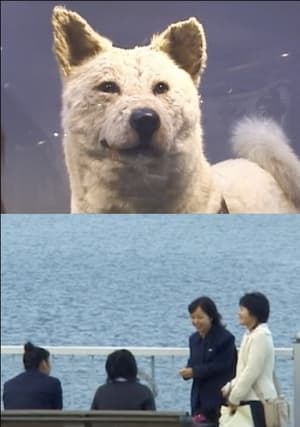
One of the major works by South Korean feminist film collective Kaidu Club, this short is a dynamic, idiosyncratic, and mosaic-like portrait of Korean life, culture, and people who dream of a unified North and South.
In the fall of 1986, Richard Fung made his first visit to his father's birthplace, a village in southern Guangdong, China. This experimental documentary examines the way children of immigrants relate to the land of their parents, and focuses on the ongoing subjective construction of history and memory. The Way to My Father's Village juxtaposes the son's search for his own historical roots, and his father's avoidance of his cultural heritage.
The collective life of the generation born as Jurij Gagarin became the first man in space. Vitaly Mansky has woven together a fictional biography – taken from over 5.000 hours of film material, and 20.000 still pictures made for home use. A moving document of the fictional, but nonetheless true life of the generation who grew up in this time of huge change and upheaval.
Works with sound recordings of Dion McGregor, who became famous for talking in his sleep.
In 1967, experimental filmmaker Jorgen Leth created a striking short film, The Perfect Human, starring a man and women sitting in a box while a narrator poses questions about their relationship and humanity. Years later, Danish director Lars von Trier made a deal with Leth to remake his film five times, each under a different set of circumstances and with von Trier's strictly prescribed rules. As Leth completes each challenge, von Trier creates increasingly further elaborate stipulations.
A 6-year-old Tibetan boy leaves his family and flees to a refugee camp in northern India.
An eight-hour contemplative epic, entirely starring sheep.
Filmmakers use archival footage and animation to explore the culture surrounding nuclear weapons, the fascination they inspire and the perverse appeal they still exert.
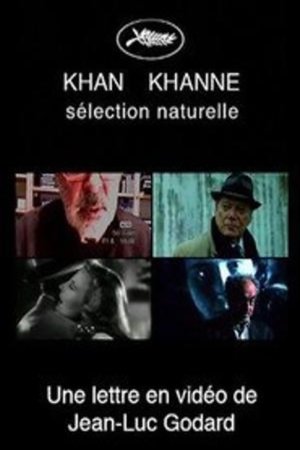
Rather than writing a simple letter to explain his absence from the press conference for his latest Cannes entry, "Goodbye to Language," at the Cannes Film Festival, instead, legendary filmmaker Jean-Luc Godard created a video "Letter in motion to (Cannes president) Gilles Jacob and (artistic director) Thierry Fremaux." The video intercuts from Godard speaking cryptically about his "path" to key scenes from Godard classics such as "Alphaville" and "King Lear" with Burgess Meredith and Molly Ringwald, and quotes poet Jacques Prevert and philosopher Hannah Arendt.
"Ryuta is 5 years old. Even though he is my son, I sometimes wonder what this small person is to me. Even though I see his joys and sadnesses and know the feel of his warmth on my skin when I hold him, there are moments when my feelings for him become vague and blank." - Takashi Ito
Experimental film fragment made with the Edison-Dickson-Heise experimental horizontal-feed kinetograph camera and viewer, using 3/4-inch wide film.
Cinema and painting establish a fluid dialogue and begins with introspection in the themes and forms of the plastic work of a woman tormented by the elongated specters, originating from her obsessions and nightmares.
At various points in its history, tiny St. John's Island was where Singapore's colonial founder Sir Stamford Raffles docked his ship upon arrival, a quarantine centre for immigrants and pilgrims returning from Mecca, a penal colony for political detainees and secret society leaders, and a sleepy holiday resort. Unlike its neighbouring islands, however, St. John's was never fully developed. It occupies an in-between space, the vestiges of its history scattered around the land. Its indeterminacy stands in sharp contrast to Singapore, where land use is meticulously planned to fulfil economic and social functions. In this film, St. John's Island - otherwise known as 'Bukit Orang Salah', a nickname coined by the people who were quarantined there - becomes a site of and for reflection, prompting questions about our history, heritage and identity.
"Adrift" is shot on the arctic island of Spitzbergen and in Norway. It combines time-lapse photography with stop-motion animation of the landscape. Through camera-angles and framing the film gradually dislocates the viewer from a stable base where one loses the sense of scale and grounding.
Engaging themes of love and betrayal, hope, belonging and place, Glad You’re Here documents my nineteen--year journey through building a family life, seeing it suffer the damage of mental illness, grief and separation, and then rebuilding with empathy. A story about an extreme moment of crisis has turned into a documentary that deals not just with the subjective but with the important issue of spousal abuse.