The reception ebbs and flows as the unfamiliar landscape whirls by the window of a plane or train or car. Communication is delayed, fragmented, interrupted. Memories of a distant country.
Two friends walk and draw circles. It is what it is, idizwadidiz, c’est ce que c’est, seskecé. Nice weather.
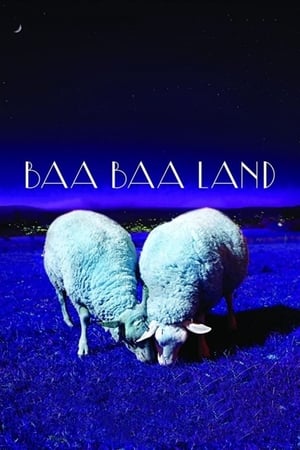
An eight-hour contemplative epic, entirely starring sheep.
Two halves split by the perseverance of a scorpion. Come on, feet.
A small portrait of the volatility of intimacy and of breaking free from abusive cycles: made in response to a year of collapsing relationships and violent accidents that left me broken, dislocated and stuck in my apartment.
The last woman on Earth: Filmed inside Biosphere 2 in Arizona, Urth forms a cinematic meditation on ambitious experiments, constructed environments and visions of the future. The film considers what an endeavor such as Biosphere 2 might mean today and in the near future, in terms of humankind’s relationship with the natural world.
A meditation on the relationship between humans, nature, and technology.
'The angle of the world allows us to see the real as an outer and inner presence at the same time, an opaque otherness, yet capable of becoming an intimate space. These incommensurable lengths and distances of an interior that opens up: The mysterious movement of the clouds, the cadence of the waves against the light, or the silent slippage of a barely identifiable human silhouette, everything seems transfigured, derealized and reinvented by light in a poetic world that evokes the paintings of Turner or Friedrich, the writings of Poe or Baudelaire.’ — Violeta Salvatierra
For us, a thought always presupposes a society, a culture and above all the consciousness of time. We are haunted by immortality, human notion par excellence. As if the world was here to fascinate us. And to disappoint us. The film travels around the bulb like the Earth around the Sun. Light makes the film visible. A fragile film, like our existence. In the orbit of the film tragedy and our reality, the image resists the cruelty of the experiment.
Combining high definition and Super 8 footage, Lampedusa is composed of interwoven narratives based on a series of real events. In 1831, a volcanic island suddenly erupted from the sea a few kilometers off the southern coast of Sicily. An international dispute ensued, as a number of European powers laid claim to this newfound “land”. The island receded below sea level six months later, leaving only a rocky ledge under the sea…
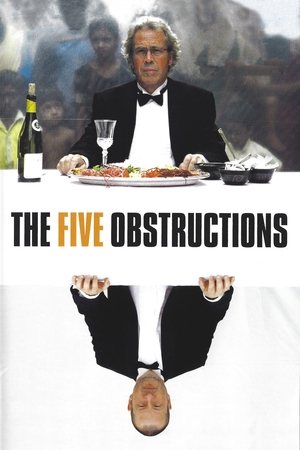
In 1967, experimental filmmaker Jorgen Leth created a striking short film, The Perfect Human, starring a man and women sitting in a box while a narrator poses questions about their relationship and humanity. Years later, Danish director Lars von Trier made a deal with Leth to remake his film five times, each under a different set of circumstances and with von Trier's strictly prescribed rules. As Leth completes each challenge, von Trier creates increasingly further elaborate stipulations.
Experimental educational film reveals the emergence of some ideas of Biophysics in historical, philosophical and methodological aspects. The first film from the Biophysics Cycle (1982-1989).
Faces pass by in quickly edited, split-screen recordings. A 'structuralist' film in which the film material itself plays an important role. Grain, scratches and flickering give the film texture. The music is by Steve Reich.
“Convalescing, when you don't have to participate in the world. Time to read, to dream, to look - the blue, the light of the television, the blue, the book, the patterns the light, the blue. Time to appreciate how much that really is.”
In continuous motion with no end or barrier in its way.
A manufactured memory.
An experimental documentary about the intertwining of bodies and lives in a cattle ranch in Les Avins, Belgium, with cattle of the breed Blanc Bleu Belge, known for its fascinating musculature.
"Adrift" is shot on the arctic island of Spitzbergen and in Norway. It combines time-lapse photography with stop-motion animation of the landscape. Through camera-angles and framing the film gradually dislocates the viewer from a stable base where one loses the sense of scale and grounding.
This film is depicts early lesbian sexuality, using reenacted scenes from the experience of a 12-year old girl as the platform for a meditation on forbidden desire, transgression, and Lacanian psychoanalytic concepts of identity formation. Raw adolescent memories counterpoint staged scenes, exploring mechanisms of power and submission.
A look at the various modes of transportation made for the Expo '86 World Fair in Vancouver, Canada.