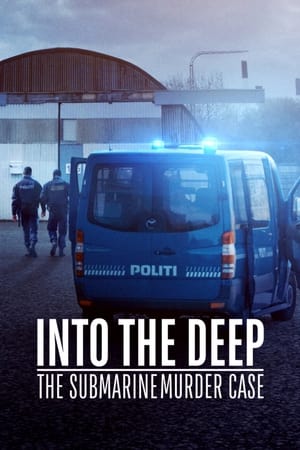
In 2016, a young Austrialian filmmaker began documenting amateur inventor Peter Madsen. One year in, Madsen brutally murdered Kim Wall aboard his homemade submarine. An unprecedented revelation of a killer and the journey his young helpers take as they reckon with their own complicity and prepare to testify.
Le Parti du cinéma
In Japan, there is an informal agreement between mainstream media and the government that is hardly ever questioned: Journalists are not too persistent in their criticism, in turn representatives of the government grant direct access to select information through press conferences. Isoko Mochizuki, reporter for the Tokyo Shimbun newspaper, has established herself as a spoilsport in this system.
They came to Donbass from different countries in search of truth. And they stayed on for the sake of those whose voices were not heard. Dialogues about war and duty, a long search for meaning amidst the ruins, working with tragic footage. This is a film about those for whom Donbass has become a refuge of truth.
When Jennifer Pan calls 911 to report that her parents have been shot, she becomes the primary focus of a captivating criminal case.
When this propaganda film begins the narrator states that before the beginning of World War II, Japan was the only one of thirty-five nations to refuse to sign an anti-narcotics treaty and alleges that this was because the country's leaders planned to use drugs as a weapon of war.
Warsaw's Central Railway Station. 'Someone has fallen asleep, someone's waiting for somebody else. Maybe they'll come, maybe they won't. The film is about people looking for something.
An exploration —manipulated and staged— of life in Las Hurdes, in the province of Cáceres, in Extremadura, Spain, as it was in 1932. Insalubrity, misery and lack of opportunities provoke the emigration of young people and the solitude of those who remain in the desolation of one of the poorest and least developed Spanish regions at that time.
The murder of Dutch filmmaker Theo van Gogh by an Islamic extremist in 2004, followed by the publishing of twelve satirical cartoons depicting the prophet Mohammed that was commissioned for the Danish newspaper Jyllands-Posten, provides the incendiary framework for Daniel Leconte's provocative documentary, It's Hard Being Loved by Jerks.
Heroic Struggle in Snow and Ice is a 1917 Austro-Hungarian propaganda newsreel film produced by Sascha-Film for the Imperial and Royal War Press Headquarters. The film is hand-colored and presented in two parts. It depicts the fighting on the Alpine Front between Italy and Austria-Hungary.
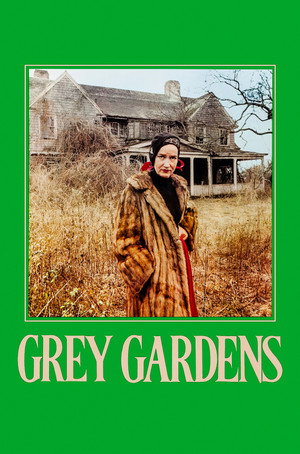
Edie Bouvier Beale and her mother, Edith, two aging, eccentric relatives of Jackie Kennedy Onassis, are the sole inhabitants of a Long Island estate. The women reveal themselves to be misfits with outsized, engaging personalities. Much of the conversation is centered on their pasts, as mother and daughter now rarely leave home.
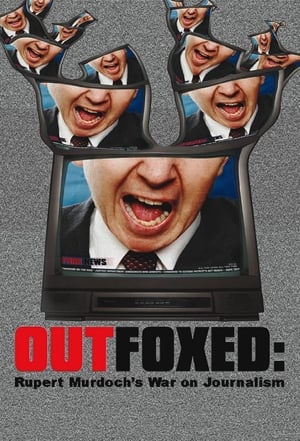
This film examines how media empires, led by Rupert Murdoch's Fox News, have been running a "race to the bottom" in television news, and provides an in-depth look at Fox News and the dangerous impact on society when a broad swath of media is controlled by one person. Media experts, including Jeff Cohen (FAIR) Bob McChesney (Free Press), Chellie Pingree (Common Cause), Jeff Chester (Center for Digital Democracy) and David Brock (Media Matters) provide context and guidance for the story of Fox News and its effect on society. This documentary also reveals the secrets of Former Fox news producers, reporters, bookers and writers who expose what it's like to work for Fox News. These former Fox employees talk about how they were forced to push a "right-wing" point of view or risk their jobs. Some have even chosen to remain anonymous in order to protect their current livelihoods. As one employee said "There's no sense of integrity as far as having a line that can't be crossed."
En première ligne, le reporter au cinéma
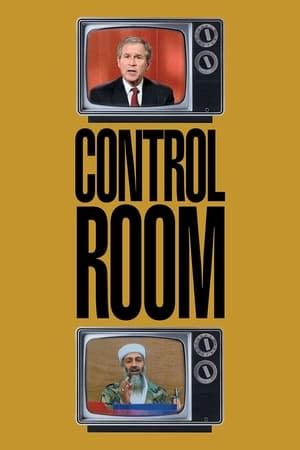
A chronicle which provides a rare window into the international perception of the Iraq War, courtesy of Al Jazeera, the Arab world's most popular news outlet. Roundly criticized by Cabinet members and Pentagon officials for reporting with a pro-Iraqi bias, and strongly condemned for frequently airing civilian causalities as well as footage of American POWs, the station has revealed (and continues to show the world) everything about the Iraq War that the Bush administration did not want it to see.
Rich Peppiatt delivers a satirical dissection of the newspaper trade by turning the tables on unscrupulous editors. Through a series of mischievous stunts and interviews with heavyweights of journalism, comedy & politics, Peppiatt hilariously exposes the hypocrisy at the heart of modern journalism.
It was the biggest escape in the history of the Berlin Wall: in one historic night of October 1964, 57 East-Berliners try their luck through a tunnel into West Berlin. Just before the last few reach the other side, the East German border guards notice the escape and open fire. Remarkably, all the refugees and their escape agents make it out of the tunnel unscathed, but one border guard is dead: 21-year-old officer Egon Schultz.
Leading biblical scholars and religious experts discuss the implications of the Rapture, when prophecies predict that Jesus Christ will return to Earth and his true believers will be transported to meet him.
A revealing and moving portrait of lives compromised by war, filmed exclusively by Ukrainian soldiers with extraordinary access to a tightly-controlled frontline.
In Abby Martin's second feature documentary, Earth’s Greatest Enemy reveals a hidden truth behind the climate crisis: the role of the U.S. military as the world’s largest institutional polluter. Drawing on powerful testimonies from veterans, scientists, and frontline communities, it uncovers how military operations poison ecosystems, accelerate global warming, and sacrifice the future for endless expansion. From Alaska’s melting glaciers to contaminated bases across the U.S. and toxic battlefields abroad, Earth’s Greatest Enemy delivers a provocative and unflinching examination of the untouchable institution playing an outsized role in the climate crisis.
Filmmaker Steve York explores the controversial 2004 Ukrainian presidential election, during which candidate Viktor Yushchenko suffered a near-fatal poisoning and his unpopular opponent, Viktor Yanukovych, was declared the winner. In the aftermath, more than a million people -- including the ailing Yushchenko -- took to the streets of Kiev, protesting the results that contradicted exit polls showing Yushchenko with an impressive lead.