Is it possible to replicate the human brain on a computer? To connect it to machines? Research aimed at understanding the functioning of our biological brain is being matched by spectacular progress in the development of artificial intelligence.
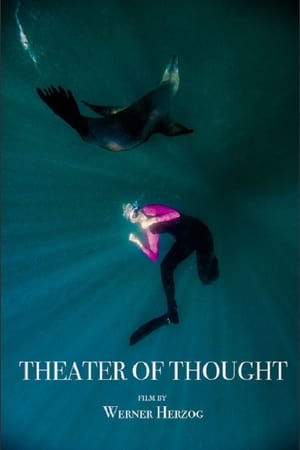
Werner Herzog sets his sights on yet another mysterious landscape — the human brain — for clues as to why a hunk of tissue can produce profound thoughts and feelings while considering the philosophical, ethical, and social implications of fast-advancing neural technology.
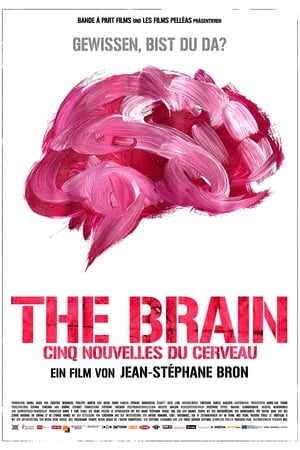
The lastest neuroscience discoveries show surprising results: false memories, distortion, modification, déjà vus. Our memory is affected in many ways, and deceives us every day. The very fact of recalling souvenirs modifies them. The everyday consequences are manyfold. To what extent can we rely on our souvenirs? How much credit can we give them during trials? Even more shocking, scientists have proved to be able to manipulate our memory: creating artificial souvenirs, deleting, emphasizing or restoring them on demand.
In recent years, the brain has become the new playground for top-level athletes and their trainers. At a time of standardized physical training, the brain has become the new frontier of effort and performance. Taming and taming it is a priority today for anyone who wants to become and remain the number 1 athlete. The documentary film "Open Brain - In the Brains of Athletes" takes us to the very limits of the human brain, as seen through the eyes of some of the world's finest athletes. These include basketball player Rudy Gobert, Formula 1 driver Charles Leclerc, surfer Justine Dupont and footballer Pierre Emerick Aubameyang.
An in-depth investigation featuring world renowned philosophers and scientists into the most profound philosophical debate of all time: Do we have free will?
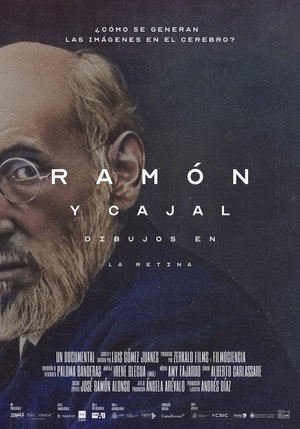
“Ramón y Cajal: drawings on the retina” is a documentary about the Nobel Prize winner that explores, from a contemporary perspective, his fascination with images as a bridge between the reality of the physical world and that created in the brain, with a new integrative approach to his artistic and scientific facets and his legacy, told through the experiences and points of view of researchers, artists, historians, family members, and other experts who consider Cajal a visionary who transcended his own science. In one of the laboratories, a machine answers Cajal's last question: how are images formed in the brain?
In The Doors of Perception (1954), Aldous Huxley wrote that the urge to transcend self-consciousness was "a principle appetite of the soul." He hoped that psychedelics would make the experience of self-transcendence more widely available, and thereby catalyze a transformation in the culture. But experiencing ego dissolution is one thing; integrating it into ordinary life is another. And, as the misadventures of the 1960s attest, building a culture around self-transcendence is a perilous (if inspiring) endeavor. “Unraveling the Dream,” a new film presented by the Waking Up meditation app, explores whether the new science of psychedelics might shed fresh light on Huxley’s vision. Featuring original interviews with Anil Seth, Robin Carhart-Harris, and Shamil Chandaria, the film takes viewers on a sweeping journey to the frontiers of neuroscience and through the rich, turbulent history of psychedelics.
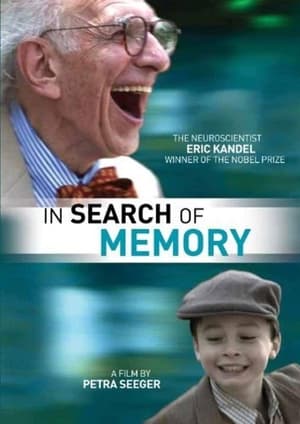
"In Search of Memory" is a very personal portrait of Eric Kandel, the "rock star" of neuroscience and the most important brain researcher of the 20th century. A fascinating documentary about the exciting mystery of the brain which arouses a curiosity in life and learning.
Through interspersed conversation and prose, this experimental documentary follows a poet and a neuroscientist as they explore the definition of love, what it means, and why it matters.
A short doc about how faces are perceived: by scientists, by artists, by animals. How do we remember faces so well if we can barely describe them with words? Why do we see them everywhere? What even are they? What is my face?
Des moines en laboratoire
A look at the state of the global environment including visionary and practical solutions for restoring the planet's ecosystems. Featuring ongoing dialogues of experts from all over the world, including former Soviet Prime Minister Mikhail Gorbachev, renowned scientist Stephen Hawking, former head of the CIA R. James Woolse
Illustrates and explains how the 2018 film Blindspotting was created. Features interviews with all involved in the film.
As Hong Kong's foremost filmmaker, Johnnie To himself becomes the protagonist of this painstaking documentary exploring him and his Boundless world of film. A film student from Beijing and avid Johnnie To fan, Ferris Lin boldly approached To with a proposal to document the master director for his graduation thesis. To agreed immediately and Lin's camera closely followed him for over two years, capturing the man behind the movies and the myths. The result is Boundless, a candid profile of one of Hong Kong's greatest directors and a heartfelt love letter to Hong Kong cinema.
Presented here is a 2001 "cinema lesson" from the Cannes Film Festival, featuring Wong and film theorist and producer Gilles Ciment.
A song is heard in the distance. It comes from the Hekeng village, famous for its ancient earthen buildings, also called tulou. It is where the last original Hakka families live amidst the exodus of those looking for a more modern environment. Among them there is Zhang Zhouyin, an elderly man concerned about the state of the village's temple; or her daughter-in-law, Wei Yi, who spends her entire day guiding tourists through these awe-inspiring houses. And then there’s young Zhang Weibo, her son, who manages to find joy even in the simplest of things... Hekeng: a place frozen in time whose songs have endured for centuries.
Part activist and part globe trekking photographer, Sebastião Salgado is most famous for recording the migration of people and culture around the world. In this extensive conversation, Sebastiao Salgado revisits his adventurous career via the breathtaking images he captured.
One of the greatest comedians of early television, Sid Caesar hasn't had his work shown in perennial reruns, so it's especially gratifying to see a collection of his classic sketches released on video, with Caesar himself introducing the material. Besides being a truly gifted comic, Caesar benefited from having some brilliant supporting players, including Carl Reiner, Imogene Coca, and Nanette Fabray. Some of his illustrious writers, including Neil Simon, Woody Allen, and Mel Brooks, appear in interviews setting up the sketches. The sketches themselves include some all-time classics such as Caesar and company playing the figurines populating a medieval town clock (a brilliant bit partly written by Neil Simon and his brother, Danny, who reminisce after the sketch).
Vienna’s Prater is an amusement park and a desire machine. No mechanical invention, no novel idea or sensational innovation could escape incorporation into the Prater. The diverse story-telling in Ulrike Ottinger’s film “Prater” transforms this place of sensations into a modern cinema of attractions. The Prater’s history from the beginning to the present is told by its protagonists and those who have documented it, including contemporary cinematic images of the Prater, interviews with carnies, commentary by Austrians and visitors from abroad, film quotes, and photographic and written documentary materials. The meaning of the Prater, its status as a place of technological innovation, and its role as a cultural medium are reflected in texts by Elfriede Jelinek, Josef von Sternberg, Erich Kästner and Elias Canetti, as well as in music devoted to this amusement venue throughout the course of its history.
Interviews with the owners and diverse patrons of a Jerusalem gay bar called "Shushan."