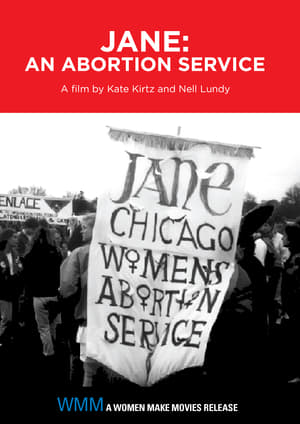
The Feminist Library: A Short Film was made in support of the Save the Feminist Library Campaign, documenting a crucial moment in the library's herstory as it fights for its very survival. Shortlisted for the Women's History Network Community Prize, the film revisits the story of the library's inception and emphasises why feminism remains essential today.
Primavera das Mulheres
A documentary that proposes a conversation about the way children are praised. While girls are often praised solely for their appearance, boys can receive compliments by highlighting their skills. "Rethink the Praise" reflects on the power of words and culture that has brought an imbalance in the way we commend our boys and girls.
Gandhi said: 'Be the change you wish to see in the world.' In this experiential open forum shot at a fringe theater festival, Tasha Diamant, a mother, artist, and educator, models human vulnerability by appearing naked and unscripted. Diamant has bravely chosen to 'be' or embody the humanity we all share: physicality, fragility, mortality. The goal: authenticity, compassion, peace. Engaged audiences connect and participate.
Performance artist Tasha Diamant is the first person in the world to stand naked on the street with the Extinction Symbol, which she started in 2012. This mini-doc was shot in 2019 in Montreal. Her work confronts privilege, capitalism, state oppression, obliviousness, whiteness, to name a few. Ask yourself: why 10 cops?
Documentary consisting of archival footage that depicts the evolving conditions of Italian women during the first half of the 20th century.
Following the death of Amina Filali, a 16 year-old girl who killed herself after she was allegedly forced to marry the man who raped her, a young woman carries a personal investigation into the representation and perception of rape in Morocco. Here rapists are offered to marry their victims as a means to save the "honour" of the family. By liberating the voices of these victims, 475 : Break the Silence gives an unprecedented view of family, the deceit of love, relationships, marriage and honour in urban deprived areas of a country seeking to find its identity between modernity and tradition.
Sisters! follows the work of Southall Black Sisters (SBS). It foregrounds the ongoing activism of the organisation and the daily challenges faced when fighting for social and political change.
Norman Mailer and a panel of feminists — Jacqueline Ceballos, Germaine Greer, Jill Johnston, and Diana Trilling — debate the issue of Women's Liberation.
Two actresses take us through a series of 'raps' and sketches about what it means to be beautiful and black.
Rome, 1968. A football passionate PE teacher formed the first woman team. Thirty eight years later, these women players remember with proud and a tinge of nostalgia how they stood up against all prejudices at a time when a woman wearing shorts was absolutely outrageous.
A group of young women from Ouagadougou study at a girl school to become auto mechanics. The classmates become their port of safety, joy and sisterhood, all while they are going through the life changing transition into becoming adults in a country boiling with political changes. In a country with youth unemployment at 52 percent, jobs are a hot issue. The young girls at a mechanics school in Burkina Faso’s capital Ouagadougou are right in the middle of a crucial point in life when their dreams, hopes and courage are confronted with opinions, fears and society’s expectations of what a woman should be. Using interesting narrative solutions, Theresa Traore Dahlberg depicts their last school years and at the same time succeeds in showing the country’s violent past and present. This is a feature-film debut and coming-of-age film with much warmth, laughs, heartbreak and depth.
To produce speech, a set of mechanisms must be brought together. What is the normal articulation for speech? How to produce the sounds that make it up in the correct way? A physiological analysis of the aspects of speech shows us how: the jaw must move in a certain way; the air must be expelled from the lungs in another. Based on the concepts stated in the film "Normal Speech Articulation" (1965), produced by the University of Iowa (USA), we intend to reflect on the way women have been represented, and consequently educated, over the years, both in film and in the media. Largely composed of archival footage, this film intends to make evident, through a montage inspired by Structuralist movements, the violence of this education.
Deng Xiaoping's economic and political opening in China. Margaret Thatcher's extreme economic measures in the United Kingdom. Ayatollah Khomeini's Islamic Revolution in Iran. Pope John Paul II's visit to Poland. Saddam Hussein's rise to power in Iraq. The Soviet invasion of Afghanistan. The nuclear accident at the Harrisburg power plant and the birth of ecological activism. The year 1979, the beginning of the future.
Shere Hite’s 1976 bestselling book, The Hite Report, liberated the female orgasm by revealing the most private experiences of thousands of anonymous survey respondents. Her findings rocked the American establishment and presaged current conversations about gender, sexuality, and bodily autonomy. So how did Shere Hite disappear?
A real time journey witnessing the rise, fall, and ultimate redemption of the fierce feminist pioneers of American grunge punk: L7.
Interviews and performance footage are used to provide an overview of the women's music scene.
A Woman's Place is the first film about the UK women's liberation movement. Crockford and her co-producers Ellen Adams and Tony Wickert document the movement's first national conference and march and examine its demands. The film records impassioned discussions and speeches, as well as the humour of the marchers. It also includes interviews with members of the public who give their perspective on women's liberation Crockford made the film as an attempt to see 'whether other people could be engaged by what I believed in'.
Mısra and Defne are close friends and duet partners who met each other through synchronized swimming. After failing to qualify for the 2016 Olympics, they set a shared goal, the 2020 Olympics. Not too long after, their esteemed coach Natalie is fired by the federation with no explanation. What follows is an emotional devastation and disruption of scheduled practices, which in turn leads to a decline in their performances. Political tremors in Turkey and the global pandemic lead the duet to make a decision on whether to keep the fight or to find new paths in life.
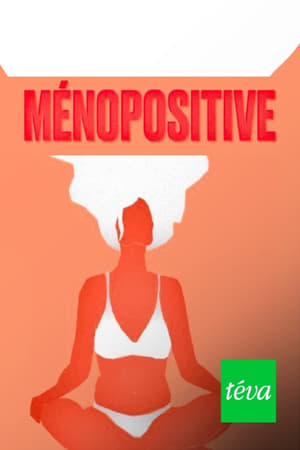
Rosemarie Blank made this film, which focuses on women aged around fifty, in collaboration with the organisation VIDO (Dutch: Vrouwen in de Overgang/Women in the Menopause). An all but invisible group of housewives who have spent their lives putting themselves last to ensure that their husbands and children can reach their full potential.