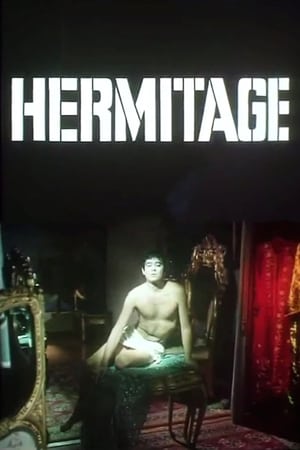
Between a man and his lover lies a wall, between the man and the country he loves lies another wall. Can a one-sided dialouge breaks the walls and expresses the man’s feelings and sentiments? Or does the lover or the country wants the wall to be broken in the first place? This short was inspired by Amy Len’s dance choreography “Wall” and colloborated with Loh Bok Lai. The dance was originally choreographed for a performance in Japan Dance Wave Fukuoka ‘06 - Asian Contemporary Dance Now and later made into an experimental video combining elements of an actor and monologue. The video footages were also used for the dance piece itself in KL.
A bereaved epileptic ditches her pills and follows a mysterious woman to the outskirts of her town, where she slips back into the fearsome yet ecstatic throes of the seizure.
In the final days of the American Civil War, an emigre Hungarian military officer attempts to map the situation of the enemy. Many veterans of the 1848 War of Independence in Hungary fought on the northern side. Experienced Fiala, Boldogh who struggles with homesickness and the reckless Vereczky all experience their enforced emigration in different ways and news of impending peace elicits different reactions from them all.
Ex-convict Dali longs to meet his daughter for the first time. But when a drug raid shatters his chance at redemption, he is hurled into a deadly night that tests his survival and courage.
This is the only feature directed by the famed French painter and sculptor Martial Raysse. In keeping with the revolutionary spirit of the time, the movie has no plot to speak of and appears to have been largely made up on the spot. We follow the cat man into a bizarre fantasy universe presented in negative exposure that reverses color values (black is white and vice versa) and written words. The cat man steals a car and then picks up a young girl he promises to take to “Heaven.” Heaven turns out to be a country chateau inhabited by several more animal mask wearing weirdoes...
Mockumentary experimental film, which shows one day in the life of a young man. The action takes place on the Day of Soviet Cosmonautics, April 12, one of the last years of the USSR. Outside the window, it is gradually getting warmer, the onset of spring is felt, promising hope for the possibility of changes in the country. The hero of the film is fond of space. The young man, who idolizes Gagarin, is engaged in reconstruction, making the uniform in which the cosmonaut walked in the prime of his glory. Our hero is also a film enthusiast. He makes films with stories of space flights and shows them to his friends. The film is stylized as amateur films of the 1980s and was shot on a 16-mm color film made by the company" Svema", made in the Soviet Union. The quality of this film allows the viewer to fully immerse themselves in the atmosphere of the time of the film, which is dedicated to Soviet cosmonautics and Edward D. Wood Jr.
A microcosm of people lost in search of an artificial happiness, which leads them to steal and prostitute themselves for the short ecstasy of a squirt of heroin in the veins. Marco and Pina live in this world of drugs, prostitution and violence, and they must fight for their survival. One day one of their friend dies during a holdup. Marco and Pina are helpless and will do anything to escape, but fate does not want a similar world. Between bites of heroin and sidewalk they are in a deadly trance.
Colossal explores the complexities of grief and the process of grieving as understood through the myth of a Man as he ventures through shifting landscapes ruminating.
At first, there was Tagalog, Gym Lumbera’s short and, to his mind, unfinished narrative about the infidelity that comes between a husband and wife in their twilight years, shot on film and reflecting his own real-life infidelity.. And then there was a storm, a real storm and not a metaphorical one, that flooded his house and submerged, and subsequently damaged, the only copy of Tagalog. This damaged version, entitled English, became the missing piece that completed the film. The new work is named after Taglish, the bastard hybrid, some say corruption, of Tagalog and English, and has become a meditation on love and language and the ways in which we betray and destroy them.
Two men and a woman live quite happily together in a romantic liaison. The woman is probably wealthy anyway, so the trio doesn't worry much about money. One day they decide to take a trip in their beat-up car, managing the whole affair in their own special, insouciant manner. They are followed by a suspicious policeman who thinks there's something fishy about this group.
In the aftermath of a car crash, a man discovers his dreams are tied to a stranger's sleepwalking.
A team of altruistic vigilantes destroy evidence to keep as many people from prison as possible, but when one of their crime scene clean-ups is revisited by the killer, the strength of their convictions is tested.
Matt, a young glaciologist, soars across the vast, silent, icebound immensities of the South Pole as he recalls his love affair with Lisa. They meet at a mobbed rock concert in a vast music hall - London's Brixton Academy. They are in bed at night's end. Together, over a period of several months, they pursue a mutual sexual passion whose inevitable stages unfold in counterpoint to nine live-concert songs.
Fairy-tale thriller, from the 'parallel cinema'. Real characters from Russian folklore come to life in the half-fantastic, half-idiotic atmosphere of a provincial town.
An old man, cut off from his future and his past, brings a young taxi driver into his game. The two meet Karkalou, a crazy prostitute, whom the former once loved madly and the latter will soon love.
A mysterious girl, Pennu, comes to a quiet village, creating a strange chasm among the male folks, breaking marriages and old friendships.
The final 17 years of American singer and musician Karen Carpenter, performed almost entirely by modified Barbie dolls.
Lacking a formal narrative, Warhol's mammoth film follows various residents of the Chelsea Hotel in 1966 New York City. The film was intended to be screened via dual projector set-up.
Born in Los Angeles but a New Yorker by choice, Barbara Hammer is a whole genre unto herself. Her pioneering 1974 short film Dyketactics, a four-minute, hippie wonder consisting of frolicking naked women in the countryside, broke new ground for its exploration of lesbian identity, desire and aesthetic.
Features four distinct, bizarre, existential tales about people whose lives are in transition, who are each asking questions about themselves, their environments, and about God(s).