While searching for her grandmother, the director comes across the story of three brothers who are torn between the fronts of political ideologies in the Third Reich and divided Germany: "the third brother" is the filmmaker's grandfather, who, in confronting her father, tries to overcome decades of speechlessness and, in the process, to understand where in the past her father's sense of family fell by the wayside.
In 2013, three women emerged from a flat in Brixton. They had been held there for decades by Aravindan Balakrishnan, a revolutionary Maoist who controlled the women with brainwashing techniques and tales of a sinister, world-controlling machine he called 'Jackie'.
When Ines died, she left a very particular legacy, 10 books that read 'For my children'; it was the story of her life. Marked by a youth idyllic love, Ines was forced to marry a violent and womanizer man with whom she had 20 children. In the 50s, she managed to get divorce and 20 years after her death, Luisa, great-granddaughter of INES, reads, rescues and makes visible her history.
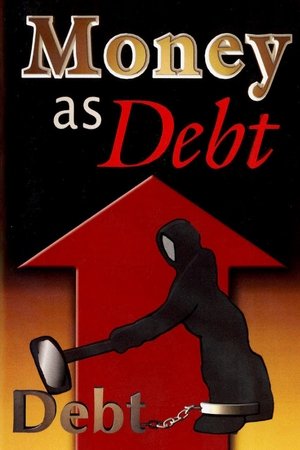
Critical investigation of The World Bank and IMF. Too hot for PBS, but prime time TV everywhere else. Do the World Bank and IMF make the poor even poorer? Are the Bank and IMF democratic institutions? Why do people demonstrate against the Bank and IMF? For the first time, a documentary global investigation of major criticisms of the World Bank and the International Monetary Fund (IMF), two of the most powerful financial institutions in the world. Five country case studies are presented, each concentrating on a different aspect of critics' charges: 1. Bolivia: Debt, Drugs and Democracy 2. Ghana: The Model of Success 3. Brazil: Debt, Damage and Politics 4. Thailand: Dams and Dislocation 5. Philippines: The Debt Fighters. The charges, including those related to structural adjustment, are controversial and provocative. Some go to the heart of the power and policies of these institutions.
Kekaiulu Hula Studio follows the Proclaimed Hula Halau of the same name, showcasing their twist on what the real reason for hula is and what life as a dancer in the halau is really like. Something previously unseen in the public eye.
Fear and fascination arise in Muriel Grey when she remembers the figure of her father, who passed away when she was still very young. Thirty years after his death, Muriel will tell us the story of José Carlos Grey, a Black Holocaust survivor, freedom fighter in the Spanish Civil War and the French Resistance, and one of the only Black men known to have been imprisoned at the Mauthausen concentration camp in Austria.
Echando Raíces
The decades-long debate surrounding reparations is fraught, mired in racial tension and the semantics of restorative justice. While the national conversation remains stalled due to legislative inaction, communities across the country examine their histories and take it upon themselves to arrange their own form of reparations. This detailed investigation of restitution presents accounts of everyday people confronting the past and exploring the possibilities of wealth transfer.
A huge bestseller in its day, the novel Uncle Tom's Cabin championed the abolitionist cause while perpetuating racist prejudices about African Americans. A remarkable analysis of a work steeped in ambivalence, which left a lasting impression on readers.
Brenda’s first memories were of growing up in a loving white foster family, before she was suddenly taken away and returned to her Aboriginal family. Decades later, she feels disconnected from both halves of her life, so she goes searching for the foster family with whom she had lost contact. Along the way she uncovers long-buried secrets, government lies, and the possibility of deeper connections to family and culture.
Emma reviews old tapes on VHS, which show faded family memories of those distant 80s, when she was still a child. While recalling the trips to the coast and the children's laughter, she tries to recompose pieces of a story that he never fully understood, joining the pieces of a forgotten puzzle to discover that things were not what they seemed.
The director explores the birth origins of actress Merle Oberon, traveling to Tasmania and India in search of the truth, but her quest ultimately results in probably more questions than it answers.
Stone Street documents the life and experiences of a Trinidadian diaspora family and their enduring connection to the long standing family home in Port of Spain. Through the intersecting journeys of this extended and extensive family, the filmmaker explores themes of home, belonging and identity in a life defined by the fragmentary nature of a migratory Caribbean culture. This experimental documentary combines a lyrical first person voice with a family archive of home made audio visual artifacts, interviews and events. As the documentary explores the fragmentary nature of Caribbean identity, it simultaneously celebrates the fragments of domestic memorializing found in home movies, videos and photographs. Stone Street uses these various forms to evoke the experience of a complex and diverse Caribbean and Caribbean diaspora identity.
One of the most important events in Brazilian history, the Búzios Revolt of 1798 was led by dozens of black men who rose up to overthrow the colonial government, proclaim independence and establish a democratic Republic, free from slavery. The boldness of these men called on the people to make the Revolution and the conspiracy spread to the city of Bahia. The seizure of power is near. But the movement is denounced, the government sets up a Devassa against hundreds of people and four of them are hanged and quartered.
My mother has died. Her name was Maria. Her children, we, Raúl and Santiago, discover among the objects left by our mother hundreds of photographs from our maternal grandfather, from REGINA -our great-aunt-, from our mother, from our father... And through those photographs, and with the help from an old camera -my grandfather's inheritance-, I, -along several trips to the places where those photographs were taken-, seek to recover and not lose my memory... that of my family. In the end, we will have to think on our memory and on what we have preserved and lost.
Disrupt, reject, destroy, avoid: At the interrupted rhythm of the broken photographs that a granddaughter has rescued from her grandfather’s hands, the last piece reconstructs the memory of an older man who has decided to leave behind his life impulses to surrender to sleep and calm. An essay on the act of joining our memories, the illusion of remembering and the freedom to forget.
Maya is Ayaibex's daughter, an addict in recovery that feels a blame for damages that caused her daughter, Maya decides to remember her mother's childhood experiences in her world of addiction to seek the redemption of the weight that her mother has loaded for 20 years and get both to forgiveness.
A sock puppet explores a family history told from the perspective of a mother and father.
The story of Christina Lau and her relationship with her parents as she recounts the happy and traumatic memories of her childhood and adolescence. She shares the ways in which the tragic demise of her father and mother have affected her and shaped who she is today. Her story is powerful, tragic, and demonstrates the importance of strong family ties when overcoming hardship. The documentary is directed by her eldest daughter, Robyn Mae, and includes stunning animations created by her youngest daughter, Tammy-Ann.
Two men, the hint of a sofa corner and a pile of letters. Using minimalist means, the film tells the story of two brothers caught between exile in a foreign country and resistance in the underground. It takes us back to the time when the revolution seized power in Iran and tells of life between the fronts. Daniel Asadi Faezi sketches the story of his father and his brothers - based on correspondence that has lain in the cellar for 30 years.