Germán Cipriano Gómez Valdés Castillo, a young radio announcer from Cuidad Juárez, succeeds in drawing attention to the pachuco movement through his character Tin Tan, laying the groundwork for a new form of binational and mass linguistic expression: Spanglish. He soon became a leading figure in theater and film on the American Continent. Singled out by critics as a destroyer of the language, he quickly won the approval of the public. His ability to improvise revolutionized the film industry. His talent as an actor, singer, dancer and comedian contributed to the Golden Age of Mexican Cinema. From El Hijo Desobediente to Capitán Mantarraya, from Cuidad Juárez to Havana, from mambo to rock, the legacy of Tin Tan makes him one of the great icons of Mexico today. This film tells his story as it has never been told before.
This short documentary introduces us to a town where no one pays rent: Simoom Sound in central British Columbia, where loggers live on sturdy river craft. Every week there are visitors: the general storekeeper, the flying postman and most importantly, the forest ranger, who is ever alert to the threat of fire.
Màscares
A poetic documentary about the lost film culture in the small villages on the Croatian islands during the SFR of Yugoslavia.
A documentary celebrating 25 years of flemish subsidised cinema.
This documentary captures the sounds and images of a nearly forgotten era in film history when African American filmmakers and studios created “race movies” exclusively for black audiences. The best of these films attempted to counter the demeaning stereotypes of black Americans prevalent in the popular culture of the day. About 500 films were produced, yet only about 100 still exist. Filmmaking pioneers like Oscar Micheaux, the Noble brothers, and Spencer Williams, Jr. left a lasting influence on black filmmakers, and inspired generations of audiences who finally saw their own lives reflected on the silver screen.
For almost a century, the Coast Salish knitters of southern Vancouver Island have produced Cowichan sweaters from handspun wool. These distinctive sweaters are known and loved around the world, but the Indigenous women who make them remain largely invisible.
Handbook of Movie Theaters' History is a documentary about the history, the development in the present days and the future of movie theaters in the city of Turin, Italy. It mixes the documentary language with comedy and fiction, and is enriched by interviews to some of the most important voices of Turin cinematography. The film follows the evolution of movie theaters by enlightening its main milestones: the pre-cinema experiences in the late 19th Century, the colossals and the movie cathedrals of the silent era, the arthouse theaters, the National Museum of Cinema, the Torino Film Festival, the movie theaters system today and the main hypothesis about its future. The mission of Handbook of Movie Theaters' History is to explore and give back to the audience a deep reflection about the identity and the value of movie theater, in its social and anthropological role and as a mass media, and to analyze the experience of the viewer.
Director Mirjam Leuze’s The Whale and The Raven illuminates the many issues that have drawn whale researchers, the Gitga’at First Nation, and the Government of British Columbia into a complex conflict. As the people in the Great Bear Rainforest struggle to protect their territory against the pressure and promise of the gas industry, caught in between are the countless beings that call this place home.
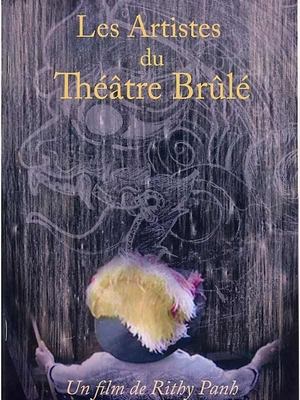
A blend of fact and fiction, based on the actual lives of the actors, the film depicts a troupe of actors and dancers struggling to practice their art in the burned-out shell of Cambodia's former national theater, the Preah Suramarit National Theater in Phnom Penh.
An up-close look into the life of the often misunderstood movie director Grigori Kromanov through the lens of old friends and colleagues.
In 1926, a young couple set off into the British Columbia wilderness in search of an undiscovered mountain. A century later a group of would-be adventurers tries to retrace their steps. They soon find they've bitten off more than they can chew and it will take everything they've got to avoid disaster.
Four lives that could not be more different and a single passion that unites them: the unconditional love for their cinemas, somewhere at the end of the world. Comrades in Dreams brings together six cinema makers from North Korea, America, India and Africa and follows their efforts to make their audiences dream every night.
In the 50 years since he carved his first totem pole, Robert Davidson has come to be regarded as one of the world’s foremost modern artists. Charles Wilkinson (Haida Gwaii: On the Edge of the World) brings his trademark inquisitiveness and craftsmanship to this revealing portrait of an unassuming living legend. Weaving together engaging interviews with the artist, his offspring, and a host of admirers, Haida Modern extols the sweeping impact of both Davidson’s artwork and the legions it’s inspired.
Chico has dedicated his whole life to CINE SAO PAULO. The building, inherited from his father, is now badly deteriorated. Refurbish it, in order to make the old movie theater get back to work, becomes his great obsession.
Stories of personal connections with orcas, beautiful cinematography featuring B.C’s resident orcas, and an evocative soundscape composed by Jeff Rona and Ben MacDougall provide an uplifting contrast to the environmental challenges we face. Inspired by elders including environmentalist and CBC Broadcaster, David Suzuki, whale researchers Alexandra Morton and Paul Spong, totem carver Wayne Alfred, and lifelong resident of the Broughton archipelago Billy Proctor, this film is anchored by Rob Stewart’s invitation to rise up and create the world we dream for ourselves. Viewers will come to understand the importance of the personal choices we make; it becomes clear that what we do to nature, we do to ourselves.
Actress Sally Field looks at the dramatic life and successful career of the superb actress Barbara Stanwyck (1907-90), a Hollywood legend.
Record of the life and work of Luiz Thomaz Reis, a cameraman who accompanied Rondon's expeditions through the interior of Brazil since 1915. He documented, in photographs, the revolutionary movements of the 1920s, especially that of Catanduva. In the montage, iconographic material, old films and filming made at the National Museum of Cinema were used, where some of his cameras are located.
Celebrating the splendor and grandeur of the great cinemas of the United States, built when movies were the acme of entertainment and the stories were larger than life, as were the venues designed to show them. The film also tracks the eventual decline of the palaces, through to today’s current preservation efforts. A tribute to America’s great art form and the great monuments created for audiences to enjoy them in.
Divadlo v Řeznické