Documentary looking at the culture of three motels and their owners who remain untouched by homogenization and corporatism, located in Santa Fe, New Mexico; Florence, Arizona; and the semi-ghost town of Death Valley Junction, California. Everyone has an unusual story to tell.
Margarita Mamun, an elite Russian rhythmic gymnast, is struggling to become an Olympic champion. It is the most important year of her career and her last chance to achieve the ultimate goal, the gold Olympic medal. The film creates a captivating portrait of a young woman who is desperately trying to handle her own ambitions and meet the expectations of the official Russian training system.
The warden of Halden, Norway's most humane prison, tours the U.S. prison system to urge a new approach emphasizing rehabilitation.
The lifestyle, self-styling and political opinions of Chechen dictator Ramsan Kadyrov are examined in this documentary.
After 20 years of living in Berlin, the director Olga Delane goes back to her roots in a small Siberian village, where she is confronted with traditional views of relationships, life and love. The man is the master in the home; the woman’s task is to beget children and take care of the household (and everything else, too). Siberian Love provides unrivaled insights into the (love) life of a Siberian village and seeks the truth around the universal value of traditional relationships.
This documentary focuses on immigrant teens between the ages of 12 and 17 who share the story of their migration and their adaption to life in Canada through theatre. Young but wise, these children describe their experiences with emotion and authenticity.
Les ludions
Documentary about the play Miss Julie and dramatist August Strindberg
Follows the young people of Selma, Alabama's RATCo (Random Acts of Theatre Company) as they journey to New York City to share their story of hope, resilience, and overcoming.
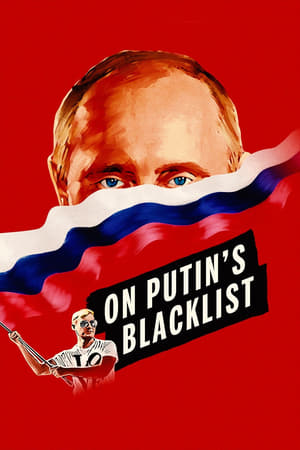
Traces the new Cold War between Russia and the West from the ban on American citizens adopting Russian children to the Kremlin’s anti-LGBTQ campaign, which positions the international marriage equality movement as a national threat.
Fifty years ago, aspiring thespians Terry and Carole Ann Gill arrived in Australia from England seeking fame and fortune. But they never quite made the big time. Instead they stumbled into the curious world of children's pantomimes. Over the decades, they have built a successful business and touched the lives of generations of children; but their own dreams have slowly faded. Now aged in their 70s, with their beloved theatre under threat from a greedy property developer, Terry and Carole Ann's careers appear to be coming to an untimely close. As they battle to remain open, they are forced to reflect on the choices they have made in their lives.
Showcases 3 major events during World War 2 involving both the Europeans & Pacific conflicts. The Raids to destroy Nazi Germany's heavy water production based in Norway, plus the final desperate act to deny them what had already been stockpiled. The Japanese midget submarines role and participation in the attack on Pearl Harbor, December 7, 1941. What they achieved plus what was their ultimate fate. The attacks on United States warships in the Pacific late in World War 2 by the Japanese Kamikaze and Okha Squadrons. The Kamikaze attacks were in whatever planes the Japanese forces were able to gather. The Okha attacks were made in specially built flying bombs that were towed by larger and usually slower aircraft that were not suitable for fighter work.
The golden age of the annual Tony Awards ceremony lasted from 1967 to 1986 — the period during which Alexander H. Cohen and his wife, Hildy Parks, were the producers of the show. This film offers a compilation of performances from Tony Award broadcasts during those years. They are presented with color-corrected footage and digitally re-mastered sound.
At the peak of Perestroika, in 1987, in the village of Gorki, where Lenin spent his last years, after a long construction, the last and most grandiose museum of the Leader was opened. Soon after the opening, the ideology changed, and the flow of pilgrims gradually dried up. Despite this, the museum still works and the management is looking for ways to attract visitors. Faithful to the Lenin keepers of the museum as they can resist the onset of commercialization. The film tells about the modern life of this amazing museum-reserve and its employees.
A provocative and ironic pamphleteering documentary about the making of Christoph Schlingensief’s Nazi-'Hamlet’ (2001). Both a media event and a form of political action Schlingensief let ex-neo-Nazis play themselves. His provocation in so-called Nazi-free Switzerland was not appreciated and when he added fuel to the flames by calling for the local political party SVP to be banned, his media offensive made front-page news far beyond Switzerland.
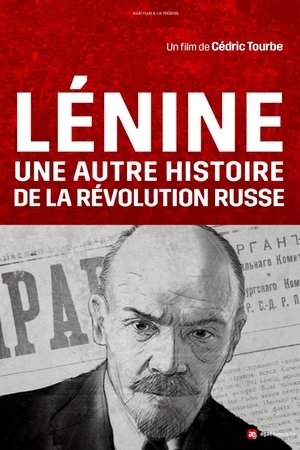
Starting in 1881 this film shows the personal battle between Lenin's Ulyanov family and the royal Romanovs that eventually led to the Russian revolution.
The theatre 7:3 project was conducted at the Tidaholm prison 1998-1999. What started as an artistic experiment, ended up in police killings at Malexander. The process in the prison were filmed during 6 months.
A behind the scenes look at the Broadway production of Jelly's Last Jam, including a tribute to jazz musician and composer Jelly Roll Morton. Gregory Hines and George C. Wolfe, who wrote the book for Jelly's Last Jam, are interviewed. Includes scenes from the show.
Made during the last months of actor Kurt Raab, who died of AIDS in 1988. Raab, who had worked in both theatre and film, most notably with Fassbinder, was in the process of making a series of video sketches for a new production when he learned that he had AIDS. Despite his deteriorating health, and with the caring support of his friend Hans Hirshmuller, he carried on working. This tape is his last testimony.
Volksbühne am Rosa-Luxemburg-Platz 1992-2017. The end of the GDR gave rise to new artistic freedoms in reunited Berlin. Shortly after the fall of the Wall, rebel director Frank Castorf was appointed artistic director of the Volksbühne. His way of working altered the public’s perception of this theater. The chronological history of the Castorf era between 1992 and 2017 is told here in excerpts from the productions and in a series of conversations conducted on the long sofa in the theater's foyer.