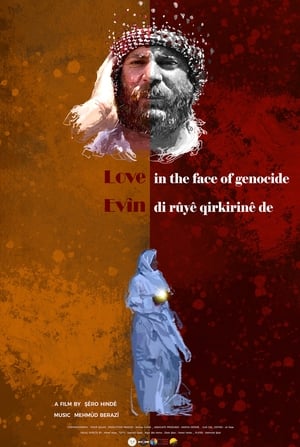
The Ezidîs (Yazidis) in Kurdistan have been the victims of massacres numerous times. This documentary follows their bards, the dengbêj, and examines how their songs tell stories of love and genocide.
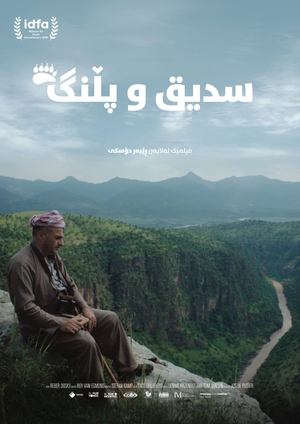
If Sidik manages to spot a leopard in his beloved mountains of Kurdistan, the area can be declared a protected nature reserve. Will that finally bring peace?
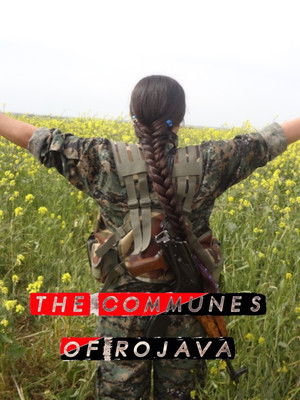
A documentary on Royava's suspended future, while caught in the crossfire between Damas, Ankara, Tehran and Moscow.
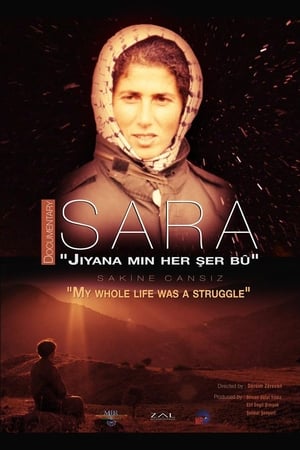
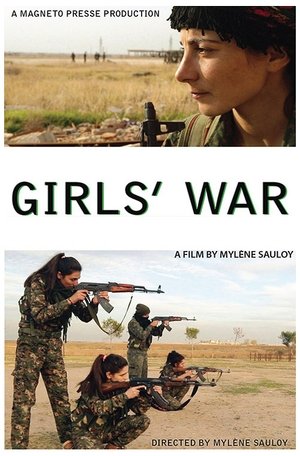
As the forces of ISIS and Assad tear through villages and society in Syria and Northern Iraq, a group of brave and idealistic women are taking up arms against them—and winning inspiring victories. Members of “The Free Women’s Party” come from Paris, Turkish Kurdistan, and other parts of the world. Their dream: To create a Democratic Syria, and a society based on gender equality. Guns in hand, these women are carrying on a movement with roots that run 40 years deep in the Kurdish Workers’ Party (PKK) in Turkey. GIRL’S WAR honors the legacy of Sakine Cansiz, co-founder of the PKK who was assassinated in Paris in 2013, and reflects on the sacrifices made by all of the women in the movement, who have endured jail, rape, war, and persecution in their quest to liberate their lives and sisters from male dominance. With scenes of solidarity, strength, and love amongst these brave women soldiers, GIRL'S WAR is a surprising story of Middle Eastern feminism on the front lines.
Kurdistan, partitioned between Iran, Iraq, Turkey and Syria, could play a major role in a torn Middle East. But who are the Kurds? What influence do they have? Who exactly is Abdullah Öcalan, the leader of the Kurdistan Workers' Party? An enlightening investigation by Luis Miranda.
American Herro is the remarkable story of a young Kurdish girl who comes to America as a refugee from Iraq and lives out the American dream. 30-years later, traveling the globe working for Condoleeza Rice, U.S. Diplomat Herro Mustafa invites her first American friend, filmmaker Kirk Roos, to visit Iraq and retrace her steps to freedom.
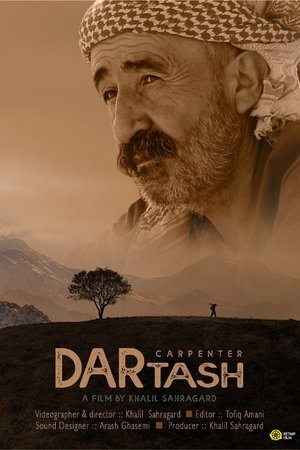
An old Kurdish man Hussein Mahmood who is a carpenter tries to make artificial legs for people who have lost their legs.
Banned since 1993 in France and Germany, does the PKK still represent a danger? A dive into the heart of a complex geopolitical issue, where the fight for freedom, manipulation and pressure are intertwined.
Sivan Encü, a young Kurdish man, provided for his family by "smuggling" through the Turkish-Iraqi border. When he was murdered in the 2011 Robozik (Roboski) Massacre, the responsibility of family's welfare was taken over by his younger brother Sinan, who lost his life in an unfortunate accident. This is the story of their grief-stricken mother Heyam and her resilience. Alongside Heyam's struggle, the film brings the voices of Robozik elders and notables to the forefront, who have experienced first-hand the social, political and economic dimensions of smuggling, which has been the backbone of survival for the locals for many generations.
This Rain Will Never Stop takes the audience on a powerful, visually arresting journey through humanity’s endless cycle of war and peace. The film follows 20-year-old Andriy Suleyman as he tries to secure a sustainable future while navigating the human toll of armed conflict. From the Syrian civil war to strife in Ukraine, Andriy’s existence is framed by the seemingly eternal flow of life and death.
The story puts İlhan Çomak at the center, even though he is not physically present in the film. It focuses on the 21 years that İlhan spent in prison and his family’s experience of those years without him. The narrative is constructed through the letters İlhan wrote and aims to describe his life, his emotions and longings. The film constructs İlhan’s history through a chronology in the prison but refrains from restricting it only to a “prisoner’s quest for justice”, and rather tells a story of the situations he finds himself in over the years and his emotions and their equivalents in life.
The film tells about the experience of Mother Besna who wants to reach her son just like other mothers whose sons are involved in the war that has lasted for many years in Turkey. So, this is a period documentary that describes Mother Besna's struggle for finding her son Enes in her mortally dangerous and trans-border journey.
An animated short documentary crafted by people on the move in the refugee camp of the island of Lesbos (GR), following the story of Orhan, a Syrian Kurd who fled war with his family in 2013, seeking safety in Turkey—only to find that peace was still a distant dream.
Aslı Erdoğan, world-renowned author and activist, has fallen into silence after she fled to Germany. Incomplete Sentences is a feature documentary on her literature and life, leading to exile in Frankfurt, after the Turkish regime’s oppression results in her unlawful imprisonment. Now, she struggles in exile while everybody is waiting for her to write again. Right after getting out of prison Aslı starts telling her story to the director, wandering in the streets of Istanbul she recites parts from her books and explains the stories behind. When Aslı goes to Germany to receive the Erich Maria Remarque Award she cannot return; thus her exile, which she likens to a semi-open prison, begins. As her health deteriorates and keeps her from writing, the tragedy in her books becomes her own reality.
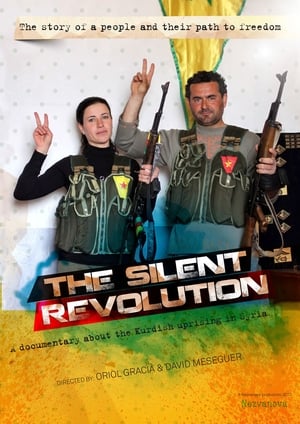
Journey to the heart of the conflict between Kurdistan and the armed group Islamic State. This region that has been neglected and ignored for ages is now one of the key destinations for refugees in the region. This medium-length documentary show the spectator the different groups and communities that are either fighting or residing in the Kurd area.
A look back over nine years of the Syrian Civil War, an inextricable conflict, like a black box, due to the competing interests of the many factions in presence and those of the foreign powers.
"Nû Jîn", New Life, with the slogan ' Woman is life. Life is resistance and resistance is Kobanê', depicts the daily life of women guerillas, Elif Kobanê (18), Vîyan Peyman and Arjîn, joining in the Women's Protection Units (YPJ) in their battle against ISIS. The documentary relates the ISIS assault of 15 September 2014 and the five-month resistance by the YPJ and People's Defense Units (YPG) through the lens of three women fighter
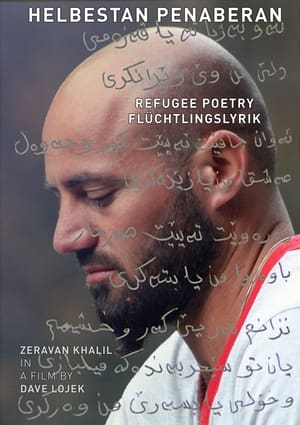
The Kurdish Iraqi poet and actor Zeravan Khalil travels with his dog through an Alpine gorge after fleeing from IS war and genocide. As he remembers the abomination, he writes a poem with the title “You drive me mad” in Kurmanji Kurdish. In his home country, Yazidic Kurds are forbidden to work in his profession. Then he eats his apple and wanders through Europe’s middle with more hope.
When artist Janet Biehl fell in love with radical American philosopher Murray Bookchin in the 1980s whilst editing his ground-breaking opus “The Ecology of Freedom”, she could never have imagined that it would one day take her halfway across the globe. Now, over 40 years later, Janet travels from America to the Middle East to witness something remarkable - how Murray’s ideas have ignited a female-led revolution in North-East Syria, where society is being rebuilt in the wake of victory over ISIS. Janet meets the women who are turning her late partner’s political theories into a modern reality, creating a grassroots communal democracy. Janet draws what she sees, and her illustrations capture the humanity of ordinary people in their struggle to self-govern. Now, at this critical moment for Syria and with this revolutionary project under renewed threat, "Threads of a Revolution" reveals a possible way forward for those prepared to fight for a new way to live.
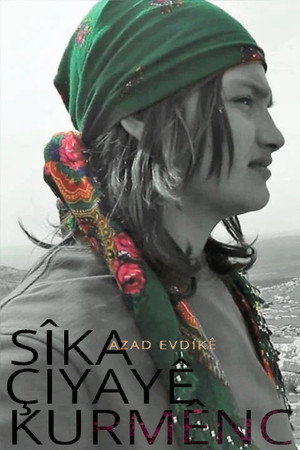
Casimê Celîl was born into a Yezidi Kurdish family in 1908, in a village called Kızılkule, located in Digor, Kars. The village and family life, which he longed to remember throughout his life, ends with the massacre they endured in 1918. During his long road to Erivan, Armenia, he lost all his family members. Left all alone, Casim was placed into an orphanage and was forced to change his name. To remember who he was and where he came from, every morning he repeated the mantra “Navê min Casim e, Ez kurê Celîlim, Ez ji gundê Qizilquleyê Dîgorê me, Ez Kurdim, Kurdê Êzîdî me”, which translates to: “My name is Casim, I am the son of Celîl, I come from the village of Kızılkule in Digor, I am a Kurd, and I am Yezidi”. He clings to every piece of his culture he can find, reads, and saves whatever Kurdish literature or art he comes across. As the year’s pass, Casim finds himself with an impressive collection of Kurdish culture and history.