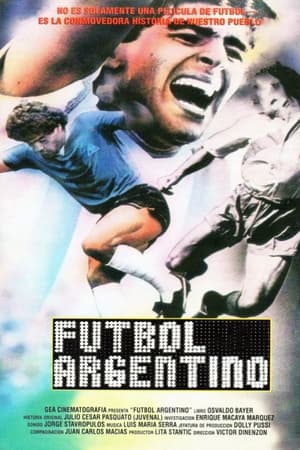
A history of Argentine football, from its origins in the nineteenth century to the victory of the Argentine national team in the 1986 World Cup. The film uses valuable archival footage.
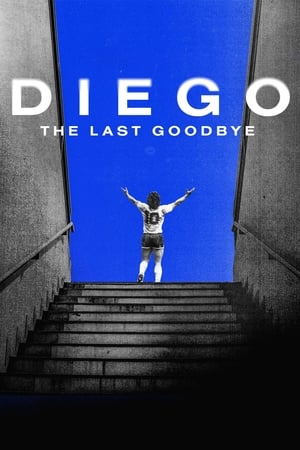
The last year in the life of Diego Maradona told by friends, family and former companions reveals his deep humanity. In the midst of the Covid 19 pandemic, a Maradonian funeral sends him away amid tears, songs and tear gas.
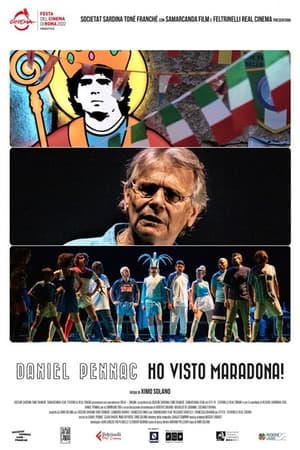
Rehearsals for a play about Maradona in Naples, with Italian actors and an Argentine director. Nothing about Maradona except anecdotes about his figure from the Neapolitans; one of the actors had come to play football. They were all 'touched' by Maradona, as is logical. Pennac is very intelligent, but he has never seen a ball in his life: his fascination comes from the public figure of Maradona, from the totem, from the stupor that invaded him when many friends confessed to having cried at his death. The spectator, Maradonian or not, has an irrepressible desire to travel to Naples and join the song that he sees towards the end of the film, which is moving and overwhelming in its beauty and simplicity. Ideal for theater lovers, or Maradona lovers, or both.
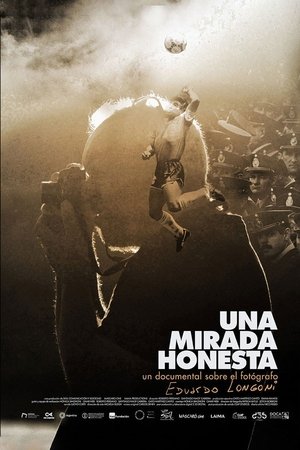
Documentary about Eduardo Longoni, the photographer who captured decisive moments in the last 40 years of Argentine history.
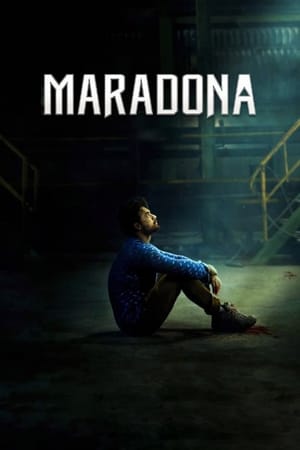
Maradona, a young man, due to some dangerous situations, moves out of his hometown and reaches Bangalore to stay with his distant relatives. However, during his stay there, his situation worsens further.
A young Argentine learns that soccer star Diego Maradona is ailing in a Buenos Aires hospital, and resolves to bring him a tree root he's discovered.
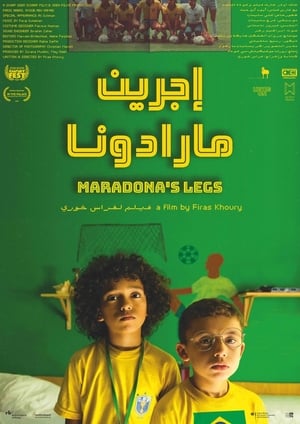
During the 1990 World Cup, two young Palestinian boys are on a quest for “Maradona’s legs”; the last missing sticker that they need in order to complete their world cup album and win a free Atari.
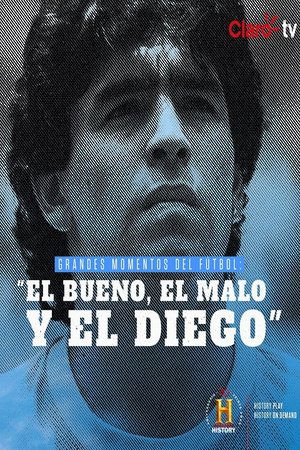
Grandes Momentos del Fútbol: El bueno, el malo y el Diego
Day one of the FIFA World Cup. The residents of Beirut have eagerly anticipated the big event, but for some reason the telecast is interrupted by strange audio waves. Soon they realize that an Israeli attack is in progress, but instead of running away and hiding, they rush to their rooftops where they can witness a much bigger live event.
Robi Watkinson and Emma Hodson travel across Britain and the Netherlands documenting the story of the rewilding movement from its inception, to the return of the beaver, bison and perhaps one day, the lynx to Britain.
This Traveltalk series short visits a few locations where the centuries-old traditions of ancient India are kept alive in contemporary times.
This Traveltalks short visits Cape Town, the legislative capital of South Africa.
This travelogue emphasizes Copenhagen's harmonious residents and tone. We see well-known landmarks and get a quick history of some of them.
This Traveltalk series short takes a trip on the Rhine river, with stops at Cologne, Bonn, and Koblenz.
Made in Paris presents the Institute of Tropical Agronomy in the Bois de Vincennes and its Asian and African monuments.
The episode of Gérard Courant's Carnets filmés, Crime contre le cinéma (December 25, 2006 to December 2, 2006) is divided into four parts: Colas Ricard at Centre Pompidou, Joseph Morder at La Rochelle, the Filmer à tout prix Festival in Brussels, and Michel Nedjar and Jakobois at Centre Pompidou.
This episode of Carnets filmés, Délices lointains, which spans the year 2004, reaches its climax in its last part with my trip to Mexico with the photographer Barbara Peón Solis.
In the 1980s, Nastassja Kinski was an international star and a true sex symbol. In just a few films, she established herself as one of the most talented and promising actresses of her generation. Discovered at age 13 by Wim Wenders and revealed by Roman Polanski at 18, she built her career around the images that directors projected onto her, seeking to break the stereotypes that people wanted to box her into. However, after a 10-year career, Nastassja Kinski disappeared, leaving us with a mystery.
An enlightening investigative report on Rosatom, Russia's powerful atomic energy agency and Vladimir Putin's formidable geopolitical tool for increasing his influence around the world.
Xu Xin’s film “Dao Lu” (China 2012) offers an exclusive “in camera” encounter with Zheng Yan, an 83 year-old veteran of the Chinese Red Army, who calmly relates how he has navigated his country’s turbulent history over three-quarters of a century.Born to a wealthy family in a foreign concession, Yan joined the Chinese Communist Party (CCP) in 1941 because he sincerely believed in the socialist project, and in its immediate capacity to free China from the Japanese yoke and eradicate deep-rooted corruption.