This short documentary profiles the traditional music and pageantry of Polish-Canadians in Manitoba. The heritage and national traditions of Poland were brought to Canada by immigrants and sustained across generations. The colourful traditional dress and lively music of Polish-Canadians is captured by ethnomusicologist Laura Boulton, a pioneering woman in the educational documentary film movement whose goal was to “capture, absorb, and bring back the world’s music.”
An insight into the life of the world's most famous male dancer, Rudolf Nureyev.
After being invited by Benjamin Millepied to a rehearsal for the L.A Dance Project's premiere performance, Oscar-nominated director Alejandro G. Iñárritu was inspired to make a video-exercise that documents movement and dance in an experimental way, with a stream of consciousness narrative. The story takes place in a secluded, dusty space and centers around LADP dancer Julia Eichten who seems to be on an eternal search... for herself.
A documentary about young people with autism, and how arts and creative therapies help them to lead fuller lives.
A man and a woman, both dressed in rough clothing, go around and around, half dancing and half wrestling, until they tumble to the ground in a heap. The Apache dance was named not after the Indians of the American Southwest, but the lower class demimondaines of Paris. Acts like this were popular because they permitted their audiences to go slumming, attending events that looked and seemed risky but in truth were not. Acts like this were part of the reason that public dancing was often seen as disreputable. Polite society restricted their dancing to private parties where dances like the waltz and polka -- which had been shocking half a century earlier -- were performed. It would take the influence of Vernon and Irene Castle and the rise of night clubs during Prohibition to make public dancing respectable again. In the meantime, there's this. It's not very graceful.
This Danish film shows us a young woman doing a dance, which translates to tarantula. According to the brief bio over at the Europa Film Treasures site, this dance was "influenced" by the delirium caused by the bite of a tarantula.
Habana Shakes takes us on a rhythm-filled odyssey spanning ten vibrant days in Havana, a pulsating island city teetering on the edge of transformation. Infused with a lyrical heart, this is not just an homage to Cuba's spirited culture but also provides an intimate window into the dynamic worlds of Cuban youth. Through the eyes of a skater, a tattoo artist, an actor, a ballerina and an electronica DJ, we find ourselves asking: What aspirations do these young Cubans hold for their nation and future, and how might these differ from or echo the dreams and hopes of their parent’s generation?
Chantal Akerman followed famous Choreographer Pina Bausch and her company of dancers, The Tanzteater Wuppertal, for five weeks while they were on tour in Germany, Italy and France. Her objective was to capture Pina Bausch's unparalleled art not only on stage by behind the scenes.
Savo from Kikinda (Serbia) and his brother recall how they called communal service few years back to empty the septic tank in their backyard. As careless servicemen weren't coming for days, Savo staged his death by drowning in the hole. Communal service sent three trucks while Savo was looking at them from the attic. A story of a small man who fought the system and won, only to become a huge YouTube hero afterwards.
Joan Denise Moriarty doggedly followed her dream of bringing ballet to every corner of Ireland. A pioneer of early 20th century Irish dance, she dared to create a uniquely Irish form of ballet inspired by her love of nature and Irish folklore. Her life's work has been largely overlooked since her death.
In the film "You Don't Need Feet to Dance," African immigrant Sidiki Conde, having lost the use of his legs to polio at fourteen, balances his career as a performing artist with the almost insurmountable obstacles of life in New York City, from his fifth-floor walk up apartment in the East village, down the stairs with his hands and navigating in his wheelchair through Manhattan onto buses and into the subway. Sidiki struggles to cope with his disability and to earn a decent living, but he still manages to teach workshops for disabled kids, busk on the street, rehearse with his musical group, bicycle with his hands, and prepare for a baby naming ceremony, where he plays djembe drums, sings, and dances on his hands.
A retrospective of Chita Rivera's film, television and stage career, including interviews with Dick Van Dyke, Ben Vereen, Carol Lawrence and others. Originally aired as Episode 2 of Season 43 of the PBS series Great Performances.
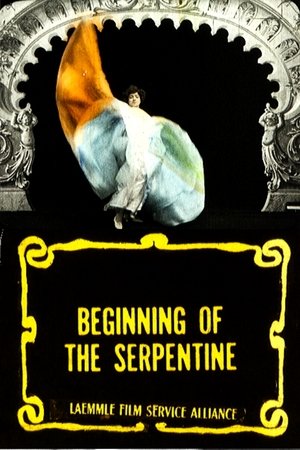
A woman in a white gown performs a skirt dance, using her arms to produce circles and other patterns within the folds of her costume. Her legs and feet appear to be bare. (Library of Congress)
Serpentine dance.
A woman wearing dragonfly wings performs a romantic dreamlike dance.
A Victorian couple dancing.
Two children, Ploetz and Larella, perform an Italian peasant dance.
“A scene representing Southern plantation life before the war. A jig and a breakdown by three colored boys.”
Three young women with dark, curly hair stand on a stage with a black background and patterned carpet or tile underfoot. They wear tights, ballet shoes, and frilly dresses to the knee with multiple petticoats and ruffled drawers. They begin by raising their right legs up by their heads, and then perform a dance with a variety of kicks and leg movements, their hands either in the air or pulling up their skirts. The sisters also grab their right legs again and hop in a circle, then do cartwheels and land on the floor in the splits. Jumping back to their feet, the women twirl in circles and around each other in circles in what appears to be a type of pirouette, while holding up their skirts and showing their bloomers in a manner similar to the cancan.
Why do we do incredibly difficult things that have no practical application? Is there a parallel between geographic and artistic exploration? Fram is a documentary and travel film about two friends journeying to the end of the earth, in order to make a dance film in the arctic wilderness of Svalbard. En route, they explore the history of our ideas of the Arctic, along with the grand questions of life, art and our place in the world. Sharing their love of discovering new geographic and artistic frontiers, choreographer-dancer-filmmakers and outdoor enthusiasts Thomas Freundlich and Valtteri Raekallio take the viewer on an engaging journey to a place where few have been and even fewer have danced.