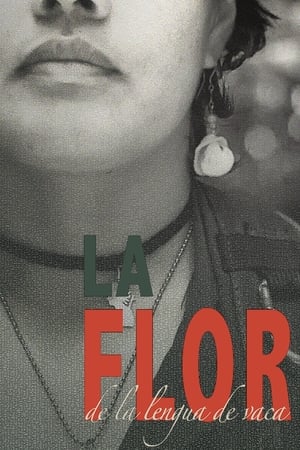
Camila lives her last days in the jungle as a guerrilla of the FARC-EP at the crossroads between an uncertain future of peace and the lingering memory of a childhood severely punished. Sent to a war hospital in the middle of the jungle, Camila begins a journey into her past, to the depths of an old wound that needs to be healed. A journey that ends up leading her to an unexpected reunion with her friend Ricardo, a young guerrilla recently amputated due to a mine.
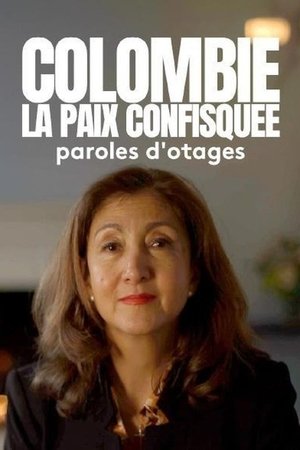
Ingrid Betancourt was the world’s most famous hostage. On February 23rd 2002, Ingrid, a presidential candidate in Columbia’s elections, was kidnapped by the left-wing FARC rebel group along with her assistant and friend Clara Rojas. She was held for over six years in the jungle. This is the first documentary account of what happened in the jungle in her words and those of fellow hostages. In a truly remarkable interview Ingrid relives stories of escape and betrayal, love and hate, terror and extraodinary courage.
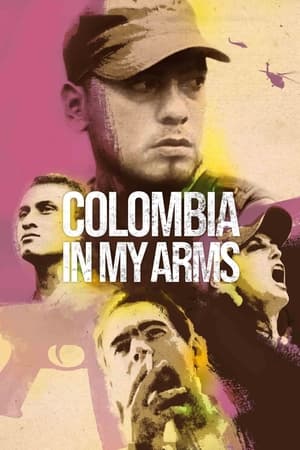
After 52 years of armed conflict the FARC guerrillas are about to hand over their arms in exchange for political participation and social inclusion of the poor. Ernesto is one of them. The much celebrated Colombian peace agreement throws Ernesto and the polarised society around him into chaos in which everyone is afraid of the future and their own survival.
Colombie : la paix confisquée - Paroles d'otages
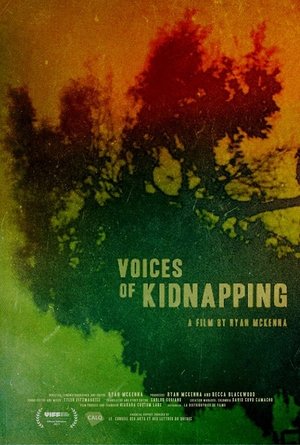
Ghostly images of Colombia’s jungle landscapes are set to radio transmissions sent by family members to their kidnapped loved ones—heartrending messages of grief, support, and, against all odds, hope.
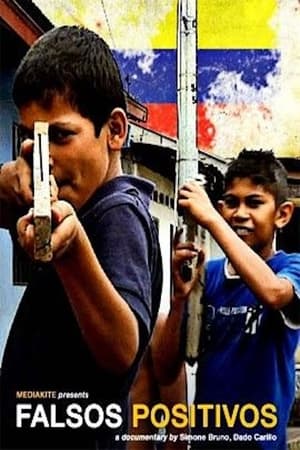
The "Falsos Positivos" scandal that exploded on October 2008 revealed how and why ranks of the Colombian Army started to kill innocent people. Lured by money prizes given by the President Uribe's policy called "Seguridad Democratica", the Colombian Army dressed the bodies in military fatigues to claim the rewards for the fight against the FARC guerrilla. "Falsos Positivos" follows the trip of two families to retrieve the rests of their beloved, along with shocking interviews to activists, a former General, political analysts and witnesses of this huge scandal.
In 1998, the President of Colombia dared to demilitarise a zone to carry out peace negotiations with the FARC-EP guerrilla group, but chaos erupted. A pivotal 2000 attack shifted the tide. Crafted solely from news archives, this film presents the atrocious event that changed the country's destiny.
A documentary about the making of The Turin Horse, the last film directed by Hungarian master Béla Tarr.
An extraordinary film about memory, and specifically the fading memory of an 86-year-old political activist who has fought tirelessly against historical amnesia and for justice in Argentina. The director’s grandmother, Laura Bonaparte, was one of the founders of the Mothers of the Plaza de Mayo, formed during the 1970s by women whose children and family members had been disappeared by the Videla military dictatorship. Laura herself lost three children and their partners, including the director’s parents. Today, after a lifetime battling that the disappeared never be forgotten, Laura faces her own struggle to remember.
Neuropsychologist Paul Broks travels America in search of the soul of legendary jazz guitarist Pat Martino who was brutally silenced by memory stripping brain surgery. Tracing his remarkable ascent from the depths of amnesia, back to the peak of artistry, Broks explores the nature of memory, self, creativity and the brain systems underlying personal identity. Filmed throughout the US in 2006 and 2007 the film features Delmar Brown, Red Holloway, John Patitucci, Les Paul, Joe Pesci, Carlos Santana and Pete Townshend.
Diana Mariscal reached a moment of fame in the sixties, when at just 18 years of age she was the lead actress of the movie Fando and Lis by Alejandro Jodorowsky. The moment seemed to trigger a promising career, but her public image faded little by little until disappearing. Forty years later the traces of her existence have not been entirely erased.
At the beginning of 2012 the so called war against crime, led by the Mexican Federal Government brought, as consequence, a number of nearly 50,000 casualties and a social climate of violence and distrust. How was this experienced by the men and women who fight this violence from the trenches of science? To the End of Reckoning tells through the eyes of the Jalisco Forensics Institute the development of this engagement, in one of the most violent states in the Country.
During 1950, Miguel Contreras Torres led a group of filmmakers to officially denounce William O. Jenkins' monopoly on film theaters, which was built throughout the country upon crime and corruption. Ever since, Uncle Miguel was ridiculed and eventually forgotten, but it is certain that his proclaim announced the separation of Mexican cinema and its audience. Discoveries may be found in the films made by Miguel, and bringing back to life these moving pictures might recover this history that was never told, a story that is almost lost and that Contreras Torres himself tried to pass on through his writings in The Black Book of Mexican Cinema.
In an unfair country women work day and night far from home while their children learn to survive between loneliness and emptiness. They grow to become teenagers, locked down in one of many low income neighborhoods made up of identical small houses, outlined by overcrowding and scarcity. Their mothers, mostly workers in transnational factories, go in and out in buses that take them to a work place where they carry out twelve hour shifts two hours away from home, while their children muddle through their upbringing in tiny houses of 40 square meters. In spite of everything, they look for a way to move ahead and chase their illusions. This is a story full of youthful aspirations set in a context of difficulties and shortages.
The story of a trade that is dying out, and the strength of those who view this way of life, passed from father to son for generations and now doomed to disappear, with nostalgia and place their hopes for its survival in someone they would never have imagined.
Openland is an art film guided by issues surrounding micro states and its derivative definitions. Through intertwining interviews, meta-narratives, and digital landscapes, Openland unfurls a dialogue between consciousness, individuality and collectivity.
For its reproduction, the megaloprepus dragonfly specifically relies on periodic puddles in tree holes and bromeliacea in tropical rain forests. Territorial males tenaciously defend these resources. Females lay their eggs in the water holes of the territorial males and are guarded by them. Any satellite male - i. e., one without a territory - who tries to grab a female is driven away by the territorial male.
The top-secret military testing facility Dugway lies in the barren desert of Utah. This is where the U.S. Army are rehearsing the wars of tomorrow.
A chronicle of China's Disabled People's Performing Art Troupe, as the group's various members train for the 2008 Paralympics in Beijing.
In this film by Clemens Millauer, the various aspects of snowboarding are being showcased, with a fun and appealing approach, paired with progressive riding in the backcountry, the park but also in urban environment.