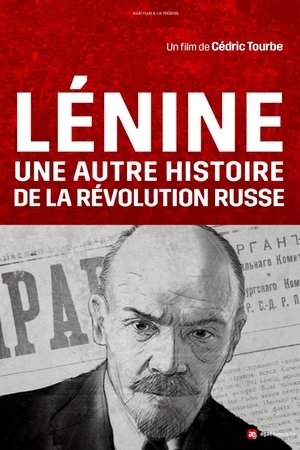
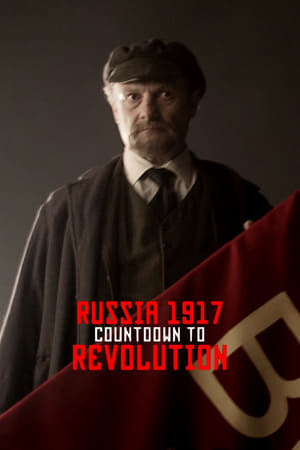
Russia, 1917. After the abdication of Czar Nicholas II Romanov, the struggle for power confronts allies, enemies, factions and ideas; a ruthless battle between democracy and authoritarianism that will end with the takeover of the government by Vladimir Lenin and the Bolsheviks.
Corée : Vues de Séoul et du port de Chemulpo
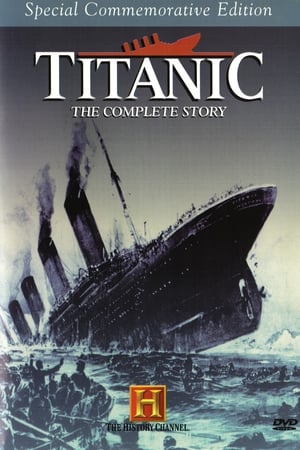
The "unsinkable" Titanic was a dream come true: four city blocks long and a passenger list worth 250 million dollars. But on her maiden voyage in April 1912, that dream became a nightmare when the giant ship struck an iceberg and sunk in the cold North Atlantic. More than 1,500 lives were lost in one of the greatest disasters of the 20th century. Now, using newsreels, stills, diaries, and exclusive interviews with survivors, Titanic: The Complete Story recounts the sensational history of the premier liner. In Part I: Death of a Dream, the largest ship ever built is christened in Ireland before a cheering crowd of 100,000. Witness the disaster this trek becomes as numerous iceberg warnings go unheeded and the ship sinks in the icy North Atlantic. In Part II: The Legend Lives On, over-packed lifeboats edge away from the crippled liner as a futile SOS signals flare into the night--leaving 1,500 passengers to a watery grave.
This film records the vast public response to the early death of Vera Kholodnaya, the first star of Russian cinema.
The movie depicts the events from July until September of 1914 which led to the defeat of the German troops at the Marne. While Sebastian Haffner explains and comments on operations and decisions on the basis of situation maps, key scenes are depicted by actors. A main focus is thereby placed by Haffner onto the controversial mission of lieutenant-colonel Richard Hentsch who is said to have, during a war patrol to the various army high commands, contributed to the abortion of the operations significantly.
First there was ‘Picnic at Hanging Rock’, then ‘My Brilliant Career’, and now best of all ‘The Getting of Wisdom’. It is incomparably moving and powerful.
How can the masses be controlled? Apparently, the American publicist Edward L. Bernays (1891-1995), a pioneer in the field of propaganda and public relations, knew the answer to such a key question. The amazing story of the master of manipulation and the creation of the engineering of consent; a frightening true story about advertising, lies and charlatans.
The epic life story of Alice Guy-Blaché (1873–1968), a French screenwriter, director and producer, true pioneer of cinema, the first person who made a narrative fiction film; author of hundreds of movies, but banished from history books. Ignored and forgotten. At last remembered.
In April 1918, a disease of unknown origin swept across the five continents. In 18 months, millions of lives that had not been taken by the war were swept away by a virus that would cause the worst pandemic in history: the Spanish flu.
A documentary about World War I with never-before-seen footage to commemorate the centennial of Armistice Day, and the end of the war.
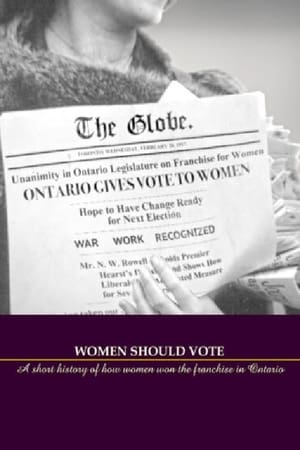
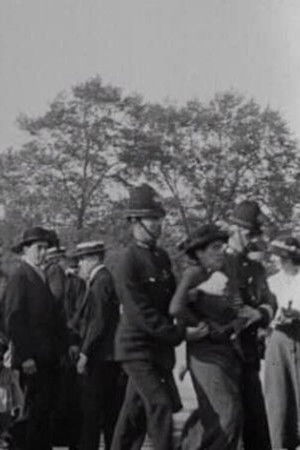
The story of the struggle for the women's vote is much more than just the account of the exploits of Emmeline Pankhurst or the tragic fate of Emily Davidson. Lucy Worsley puts herself at the heart of the drama, alongside a group of astonishing young working class suffragettes who decided to go against every rule and expectation that British Edwardian society (1901-1910) had about them…
A look back at Charlie Chaplin's early life and career, from his rough childhood and music hall success in England to his early Hollywood days and the development of his enormously popular character, the Little Tramp, also called Charlot.
Winston Churchill, one of the most revered men of the twentieth century. Adolf Hitler, one of the most hated leaders in contemporary history. Between 1940 and 1945, these two enormously contradictory personalities faced each other in both politics and war. A clash of giants whose story begins in the trenches of the World War I and ends with the debacle of the World War II.
A fictionalised documentary that tells the story of María Lejárraga, writer and pioneer of feminism in Spain during the 1920s, whose work was produced under the name of her husband, the theatre impresario Gergorio Marinez Sierra. Lejárraga was the most prolific Spanish female playwright of all time. She is the author of works such as "Cancion de cuna", as well as a member of parliament for the Second Republic and founder of pioneering projects for women's rights and freedoms.
Based on diaries, records and eyewitness accounts, this is the story of the two Battles of the Somme from the perspective of British and German soldiers. It shows how the major lessons learned by the British Army leadership after the disastrous first attacks of July 1916 were turned into victory at the second attempt in September 1916, arguably the turning point for the First World War.
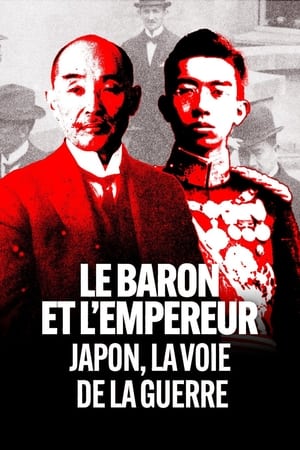
Le Baron et l'Empereur : Japon, la voie de la guerre
Ils étaient tirailleurs, voix oubliées de la Grande Guerre
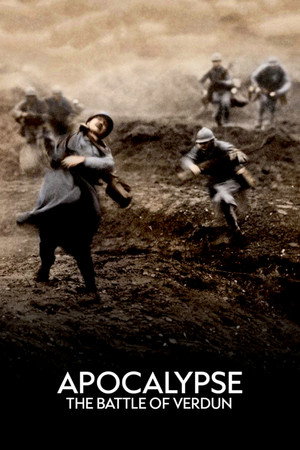
A detailed account of one of the bloodiest battles of World War I. Between February and December 1916, the French and German armies relentlessly fought in the devastated camps around the village of Verdun.
The 1916 Battle of the Somme remains the most famous battle of World War I, remembered for its bloodshed and its limited territorial gains. What is often overlooked, however, is the literary importance of the Somme: more writers and poets fought in it than in any other battle in history. Narrated by Michael Sheen, War of Words: Soldier-Poets of the Somme details the experiences of the poets and writers who served in the battle. The work of Siegfried Sassoon, Robert Graves, David Jones, Isaac Rosenberg and JRR Tolkien (who arrived at the Western Front with ambitions to be a poet) was informed and transformed by the battle. Taken together, their experiences allow us to see this dreadful historical event through multiple points of view. The film uses animation, documentary accounts, surviving artefacts, battalion war diaries and the landscape itself to reconnect this literature to the events that inspired it.
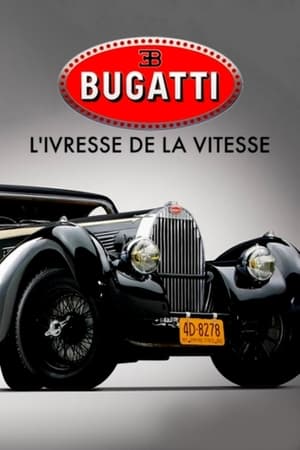
The story of the Bugattis of Milan and Molsheim, the eccentric family behind the brand: Carlo, the patriarch and furniture designer; Rembrandt, the troubled sculptor; Ettore, the gifted engineer; Jean, the unfortunate heir. Art and design. Beauty and luxury. The fastest cars. Races. The need for speed.