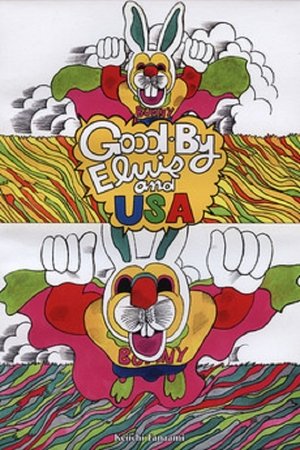
A trippy pop-art collage of phallic objects, naked women and American icons, most notably Elvis Presley.
A duo of street performers learns how sound and picture work together to create amazing cinema experiences.
A story of an artist entertainer who swallowed razors, glasses, records, light bulbs, nails, forks and everything else hard to swallow. Cannibalism and auto-cannibalism included.
A experimental animated film featuring moving shapes and lines.
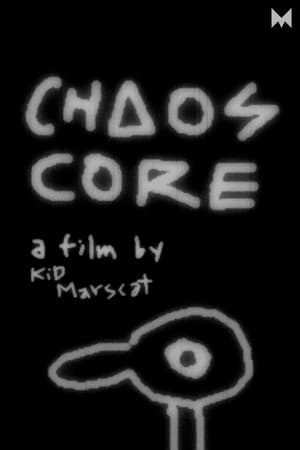
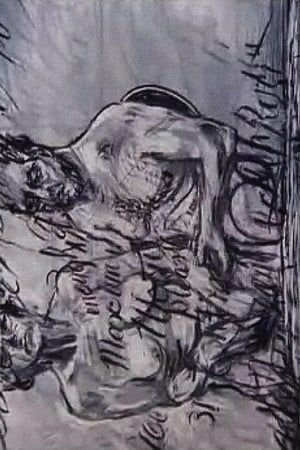
Doodles keep dripping down from the mouth of an idiot.
This is a story of love seen from a square, in which a couple gets united, separated and rearranged again. A special kind of puzzle.
A short movie about a guy living in his own world.
La Maison en Petits Cubes tells the story of a grandfather's memories as he adds more blocks to his house to stem the flooding waters.
An experimental short from Oskar Fischinger
A short film advertising the newspaper Sztandar Młodych (The Banner of Youth), noteworthy for its abstract elements painted directly onto film stock. An attempt at showing the complexity of the world in a capsule, the film reflects the new policy of the openness to the West during the Thaw of the late 1950s in Poland.
Filmmakers use archival footage and animation to explore the culture surrounding nuclear weapons, the fascination they inspire and the perverse appeal they still exert.
Inspired by the Greek myth of Prometheus, a Titan who created the first mortals from clay and stole fire from the gods, Prometheus' Garden immerses viewers in a cinematic universe unlike any other. The dark and magical images of this haunting film unfold in a dreamlike stream of consciousness revealing an unlikely cast of characters engaged in a violent struggle for survival.
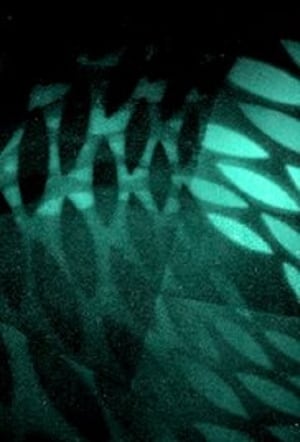
A meditation on the relationship between humans, nature, and technology.
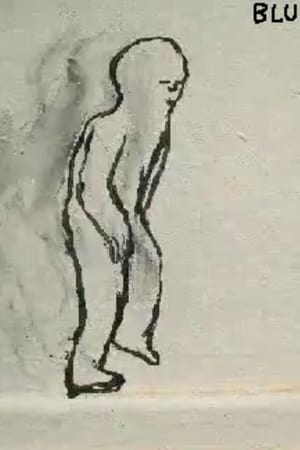
Bill struggles to put together his shattered psyche.
The Philosophy of Horror is a seven-part abstract adaptation of Noël Carroll’s influential film theoretical book of the same title (published in 1990), which is a close examination of the horror genre. The film uses hand painted and decayed 35mm film strips of the classic slasher movie A Nightmare on Elm Street (Wes Craven, 1984) and its sequel A Nightmare on Elm Street 2: Freddy's Revenge (1985).
Jankovics's adaptation of the eponymous play is divided into multiple parts, and depicts the creation and fall of Man throughout history.
“Apotheosis, which is developed from images made in the radiation treatment of human cancer, is the most beautiful and the most subtly textured work in computer animation I have seen.” – Roger Greenspun, N. Y. Times Award Foothills-1973.
Three memories that become one. An attempt to merge heterogeneous materials: a film sequence shot in Rome, a photo from the 1930s, a noisy soundtrack. Fragmented lines, exploding bass frequencies and flickering.
An abstract animation about people and organs of the body in and out of drawers.
A surrealistic fantasy based on the 15th century woodcuts of the dance of the dead. A film experiment that deals with the photoreality and the surrealism of life. A collage-animation that cuts up photos and newsreel film and reassembles them, producing an image that is a mixture of unexplainable fact (Why is Harpo Marx playing a harp in the middle of a battlefield?) with inexplicable act (Why is there a battlefield?). It is a black comedy, a fantasy that mocks death ... a parabolic parable.