Oda Nobunaga and Nōhime were originally married to mend a hostile relationship between neighbouring regions. Unfortunately, they were like oil and water, making for a somewhat unhappy marriage. When Oda's enemy, Imagawa Yoshimoto, attacks Owari with his vast army, Oda is devastated by the overwhelming gap in military strength. However, Nohime encourages him not to despair, and the pair draw up a tactical plan that will allow them to overcome the odds.
Nagasaki at the end of the Edo period had the taste of a criminal paradise, where, despite the exotic, dangerous work was always in demand. Here, three wandering samurai who earn their living by killing get to know each other. Soon they learn that government officials will be transporting a large cargo of gold and decide to steal it.
In the middle of the Edo period, when the finances of the shogunate were in a desperate situation, the shogunate sent its shadow spies to each clan, who secretly planned the abolition of the clans and the seizure of their territories. The Inami clan has mastered the essence of making weapons, thus breaking the law. To protect the clan, its elders hire three "Shadow Hunters"... TV movie based on the popular manga by Takao Saito.
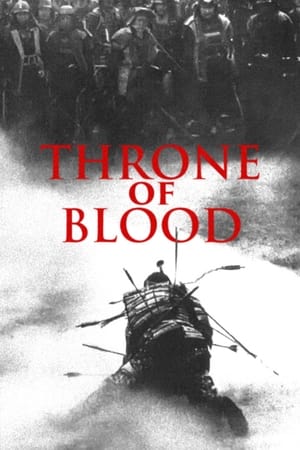
Returning to their lord's castle, samurai warriors Washizu and Miki are waylaid by a spirit who predicts their futures. When the first part of the spirit's prophecy comes true, Washizu's scheming wife, Asaji, presses him to speed up the rest of the spirit's prophecy by murdering his lord and usurping his place. Director Akira Kurosawa's resetting of William Shakespeare's "Macbeth" in feudal Japan is one of his most acclaimed films.
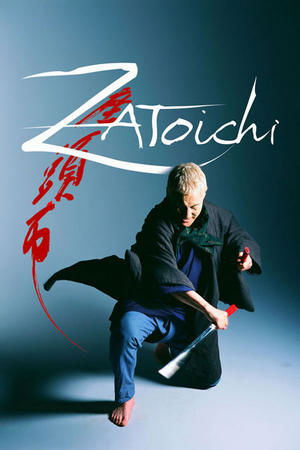
Blind traveler Zatoichi is a master swordsman and a masseur with a fondness for gambling on dice games. When he arrives in a village torn apart by warring gangs, he sets out to protect the townspeople.
Chronichles the story of the Forty-seven Ronin.
Kondo Isami, the “Devil” commander of the Shinsengumi was one of Japan’s greatest national heroes and a peerless swordsman who devoted his life to protecting the shogun and fighting on the side of the Tokugawa. This tells the story of the Shinsengumi starting at the moment of their greatest triumph through the final battles as the Tokugawa shogunate was brought down.
A samurai answers a village's request for protection after he falls on hard times. The town needs protection from bandits, so the samurai gathers six others to help him teach the people how to defend themselves, and the villagers provide the soldiers with food.
Set in the Edo period, the film deals with two brothers falling in love with the same girl. Sadly, only 12 minutes of footage survive.
The life, adventures and exploits of warlord Date Masamune the One-eyed Dragon: his early youth as an aggressive warrior, the battles he won until subduing almost all his enemies, the lonely comprehension of knowing that he actually can not take over the whole country because he was born too late.
Japan, 1701. A group of samurai become rônin after their lord is forced to commit seppuku for assaulting a court official, who will become the target of a merciless revenge.
Four people recount different versions of the story of a man's murder and the rape of his wife.
Nathan Algren is an American hired to instruct the Japanese army in the ways of modern warfare, which finds him learning to respect the samurai and the honorable principles that rule them. Pressed to destroy the samurai's way of life in the name of modernization and open trade, Algren decides to become an ultimate warrior himself and to fight for their right to exist.
The story is set in the Sengoku period. A rounin called Nanashi saves a young boy Kotarou at an abandoned temple. Kotarou has no family, is pursued by a mysterious militia organization from China and hires Nanashi as his bodyguard.
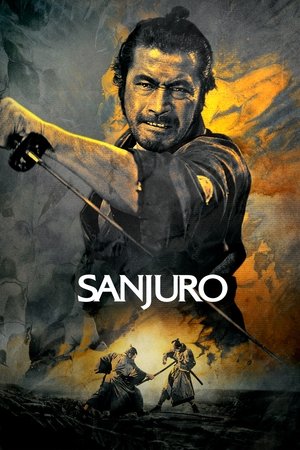
In this companion piece and sequel to "Yojimbo," jaded samurai Sanjuro helps an idealistic group of young warriors weed out their clan's evil influences, and in the process turns their image of a proper samurai on its ear.
Akira Kurosawa's lauded feudal epic presents the tale of a petty thief who is recruited to impersonate Shingen, an aging warlord, in order to avoid attacks by competing clans. When Shingen dies, his generals reluctantly agree to have the impostor take over as the powerful ruler. He soon begins to appreciate life as Shingen, but his commitment to the role is tested when he must lead his troops into battle against the forces of a rival warlord.
A nameless ronin, or samurai with no master, enters a small village in feudal Japan where two rival businessmen are struggling for control of the local gambling trade. Taking the name Sanjuro Kuwabatake, the ronin convinces both silk merchant Tazaemon and sake merchant Tokuemon to hire him as a personal bodyguard, then artfully sets in motion a full-scale gang war between the two ambitious and unscrupulous men.
As Japan’s Tokugawa shogunate nears the end of its rule, Edo North Magistrate Toyama no Kinsan is called upon to judge the most difficult case of his career. In a masterfully woven tale, he has to face the truth about his estranged father’s possible involvement in a nefarious plot to take over rule of the Hizen Shimabara clan by assassinating the rightful lord, his son, and install one of Shogun Ienari’s offspring as daimyo.
O-Kiyo (Mitsuko Mito), who had escaped from her boss, Shoden, who controlled the Sensoji Temple district, was desperately contemplating suicide when she was rescued by ronin Kojuro Tozawa (Kazuo Hasegawa), who hid her in a dilapidated apartment building. The Shoden clan desperately searched for O-Kiyo, but Kojuro found a huge sum of 50 ryo and ransomed O-Kiyo. Unable to accept this outcome, the enraged Shoden clan attempted to win the favor of constable Jinnosuke Nakayama (Kusuo Abe), seeking to demolish the dilapidated building and transform the area into a pleasure district. However, Kojuro thwarted their plans, bringing joy to the poor residents of the building. After demonstrating his remarkable skills, Kojiro revealed his true identity - he was a prominent hatamoto.
Taking its title from an archaic Japanese word meaning "ghost story," this anthology adapts four folk tales. A penniless samurai marries for money with tragic results. A man stranded in a blizzard is saved by Yuki the Snow Maiden, but his rescue comes at a cost. Blind musician Hoichi is forced to perform for an audience of ghosts. An author relates the story of a samurai who sees another warrior's reflection in his teacup.