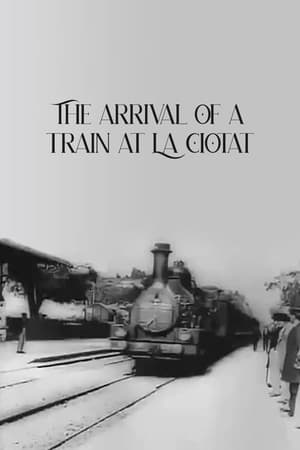
A group of people are standing along the platform of a railway station in La Ciotat, waiting for a train. One is seen coming, at some distance, and eventually stops at the platform. Doors of the railway-cars open and attendants help passengers off and on. Popular legend has it that, when this film was shown, the first-night audience fled the café in terror, fearing being run over by the "approaching" train. This legend has since been identified as promotional embellishment, though there is evidence to suggest that people were astounded at the capabilities of the Lumières' cinématographe.
A day in the city of Berlin, which experienced an industrial boom in the 1920s, and still provides an insight into the living and working conditions at that time. Germany had just recovered a little from the worst consequences of the First World War, the great economic crisis was still a few years away and Hitler was not yet an issue at the time.
This documentary features about 20 minutes of footage of and from North Korea's aging rolling stock - steam trains being used quite in earnest rather than for the historical interest of kids and hardcore train geeks - and then about six minutes of footage of Pyongyang's subway and trams.
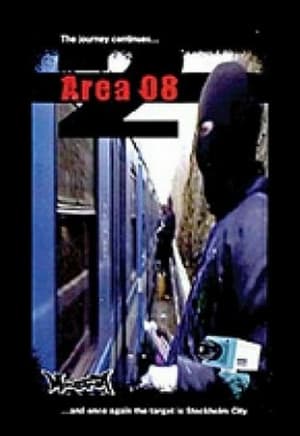
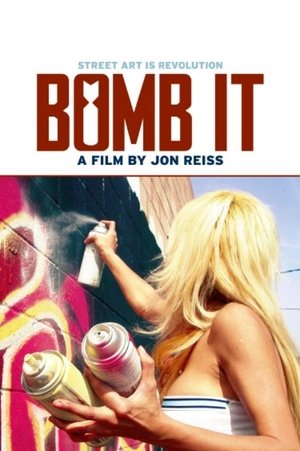
Through interviews and guerilla footage of graffiti writers in action on five continents, the documentary tells the story of graffiti from its origins in prehistoric cave paintings thru its notorious explosion in New York City during the 70’s and 80’s, then follows the flames as they paint the globe.
Could our mounting modern problems have ancient solutions? Travel to the depths of China to find out.
This incredible journey features the famous steam trains that power through the spectacular San Juan Mountains of southwestern Colorado. From Durango to Silverton, see the forested wilderness, and its beautiful lakes, waterfalls, and rivers. Be amazed at the route that travels over narrows passes, high bridges, and steep cliffs!
Inside the train from Wengen to Lauterbrunnen, the snow-covered landscape and the darkness of the tunnel, three windows offer serene yet ever-changing impressions.
Kolem republiky
Bypass - Quale futuro?
La saga du rail
The British Railways modernisation programme of the 1960s radically changed the rail network, and the British Transport Films unit and the TV news were there to capture it. Compiled here is never before released colour footage of Southern steam at Waterloo (with Nine Elms depot), all the major London stations, The Blue Pullman and early diesels, The Golden Arrow and Night Ferry service, goods and mail, steam on the Metropolitan Railway and building the Victoria Line.
This documentary follows the lives and careers of a collective group of do-it-yourself artists and designers who inadvertently affected the art world.
Built in 1923, the Flying Scotsman was the first steam locomotive to run at 100 miles an hour and to star in its own feature film. This is the untold story of the iconic Flying Scotsman-the very best in the engineering of its time.
A look at the feud between graffiti artists King Robbo and Banksy.
"I especially hope to inspire young women, because I often feel like so much emphasis is put on how beautiful you are, and how thin you are, and not a lot of emphasis is put on what you can do and how smart you are. I'd like to change the emphasis of what's important when looking at a woman." Filmed in San Francisco in 2000, Margaret Kilgallen (1967-2001) discusses the female figures she incorporated into many of her paintings and graffiti tags. Loosely based on women she discovered while listening to folk records, watching buck dance videos, or reading about the history of swimming, Kilgallen painted her heroines to inspire others and to change how society looks at women. Three of Kilgallen's heroines—Matokie Slaughter, Algia Mae Hinton, and Fanny Durack—are shown and heard through archival recordings. Kilgallen is shown tagging train cars with her husband, artist Barry McGee, in a Bay Area rail yard and painting in her studio at UC Berkeley (source: Art21).
Short documentary about artist Keith Haring, detailing his involvement in the New York City graffiti subculture, his opening of the Pop Shop, and the social commentary present in his paintings and drawings.
One of the least well-known areas of Britain, we travel to the Cumbrian Coast by means of two different trains. Firstly, we board a North West Regional Railways Express (class 156) which traverses the former Furness Railway via Grange-over-Sands and Ulvertston to Barrow-in-Furness. There we change to a class 153 for the most scenic section of the route along the coast from Bootle to Maryport, filmed in what can only be described as 100% perfect weather - not a cloud in the sky! Apparently you only get one day a year like that along the coast and we were there! As signalling expert David Allen says in his script; "this line is a mecca for semaphore signalling enthusiasts". Filmed in 1997.
Sinfonías de ciudad nº 3. Amor.
Canadian Pacific II is designed as a companion piece to Canadian Pacific I. Shot from a window two storeys higher and in the building adjacent to the artists’s studio of the previous year, one enters into a dream state… an involvement with a vocabulary of seeing and feeling by subtle transitions of the passage of time
Banksy is a graffiti artist with a global reputation whose work can be seen on walls from post-hurricane New Orleans to the separation barrier on the Palestinian West Bank. Fiercely guarding his anonymity to avoid prosecution, Banksy has so far resisted all attempts to be captured on film. Exit Through the Gift Shop tells the incredible true story of how an eccentric French shop keeper turned documentary maker attempted to locate and befriend Banksy, only to have the artist turn the camera back on its owner.