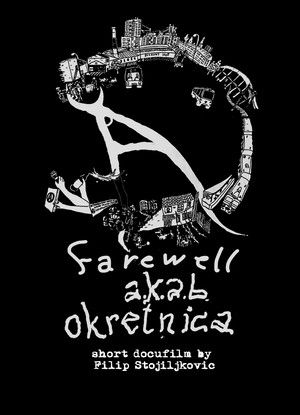
For a long time they were an integral part of our society, today they live neglected in our cities and are deemed a problem. The pigeon is a relic of the past that still affects us today.
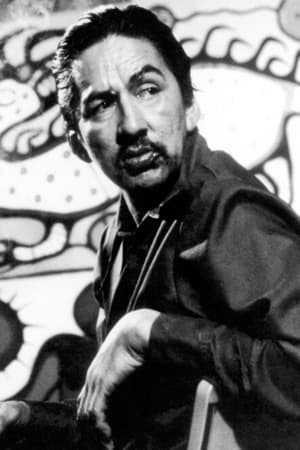
A document that summarizes images of the energetic Mexican muralist's most significant works, using rhythmic montages that reflect the prevailing mood of each of his pictorial periods and a complex soundtrack composed of effects and various orchestral and choral interventions. Devoid of narration and didactic rigidity, this short film focuses its resources on the pure enjoyment of Orozco's work.
Centro cultural Santo Domingo
Stanley Kubrick’s first color film, commissioned by the Seafarers International Union to promote the benefits of union membership. Shot inside the union’s Atlantic and Gulf Coast District facilities, it features scenes of ships, machinery, cafeteria life, and meetings, highlighting the daily routines and camaraderie of seafarers. Thought lost for decades, the film was rediscovered in 1973 and preserved by the Library of Congress.
A tomato is planted, harvested and sold at a supermarket, but it rots and ends up in the trash. But it doesn’t end there: Isle of Flowers follows it up until its real end, among animals, trash, women and children. And then the difference between tomatoes, pigs and human beings becomes clear.
Set in a leper colony in the north of Iran, The House is Black juxtaposes "ugliness," of which there is much in the world as stated in the opening scenes, with religion and gratitude.
As with so many early films by Sokurov, this film has two dates: the first is the date of its creation (the film was then banned), the second is the date of the final edition and legal public screening. The film consists of German and Soviet archive footage of the World War II — to be exact, from the end of the war. An attempt to make a large–scale documentary on this subject had been undertaken in the Soviet cinema of the 1960s: the film — “Ordinary Fascism” — by the outstanding Soviet film–maker Mikhail Romm had become a classic retrospective investigation of fascism. But Sokurov uses the expressive power of the documentary image in an absolutely different way. He does not amass materials for a large–scale picture of Nazi crimes.
Through a powerful visual metaphor, Camille Vigny gives a first-person account of the domestic violence she suffered. The images and text interact with remarkable precision to convey the devastating impact of the cataclysm. It's a political gesture, brimming with courage, an icy cry that takes your breath away.
Rae Ripple, a welder from the outskirts of West Texas transforms neglected metal into works of art and in the process finds healing from her traumatic past.
Mónica Calle is fighting with her theatre company to remain an actress, a woman, in a society where the place of art is constantly challenged. She draws this strength from Zona J, a district in the periphery of Lisbon, where she has set up her new place of creation, surrounded by former prisoners.
Solarmax is a 40-minute giant-screen documentary that tells the story of humankind's struggle to understand the sun. The film will take audiences on an incredible voyage from pre-history to the leading edge of today's contemporary solar science.
A visually expressive documentary about salt mining and its perils - done in a style that most subversively evokes a certain then-current official Spanish cinema, made to sell the fascist nation as a holiday paradise. The final image of some boys with a fighting cock is more devastating than hopeful.
Guadalupe Amor, un ensayo mitológico
Algo sobre Jaime Sabines
Andy Warhol directs a single 35-minute shot of a man's face to capture his facial expressions as he receives the sexual act depicted in the title.
Behind The Jugular is a short animated documentary, featuring an ex-abattoir worker describing his experiences within the slaughterhouse. The film gives a raw account of the restricted and often ignored industry, intended to prompt the audience to consider, and reconsider, their ethical beliefs and values, and how they implement these morals in life.
Stanley Kubrick’s debut documentary, following Irish-American middleweight boxer Walter Cartier on April 17, 1950—the day of his bout with Bobby James. The film traces Cartier’s quiet morning rituals, training, and anxious hours before the match, culminating in his swift victory that night in Newark. Opening with a brief history of boxing, Kubrick’s tightly crafted short captures the discipline, isolation, and tension behind a fighter’s daily routine.
Stanley Kubrick’s short documentary about Father Fred Stadtmueller, a Catholic priest serving a vast 4,000-square-mile parish in rural New Mexico. To reach his scattered congregation, he pilots his own Piper Cub aircraft, the Spirit of St. Joseph. Over two days, Kubrick follows the “flying padre” as he conducts Mass, mediates between quarreling children, attends a funeral, and airlifts a sick child to medical care—capturing both the challenges and quiet heroism of his daily mission.
220 million years ago dinosaurs were beginning their domination of Earth. But another group of reptiles was about to make an extraordinary leap: pterosaurs were taking control of the skies. The story of how and why these mysterious creatures took to the air is more fantastical than any fiction. In Flying Monsters 3D, Sir David Attenborough the world’s leading naturalist, sets out to uncover the truth about the enigmatic pterosaurs, whose wingspans of up to 40 feet were equal to that of a modern day jet plane.
Wilhelm II. returns from his trip to Bethlehem