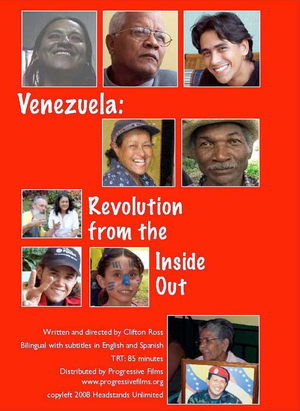
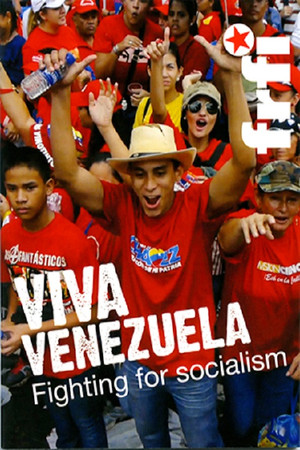
We live in a world dominated by crisis, imperialist war and exploitation. We're told there is no alternative to cuts, privatisation, hunger and homelessness. The Bolivarian Revolution illustrates what can be achieved when governments and people working together, put human need before capitalist profits. Despite Chavez's death in 2013, the process is being built every day by President Maduro and millions of Venezuelans working to create a society built on collective socialist organisation and production. Venezuela provides an inspiring example of how the fight against austerity can develop into a fight for socialism. This film takes you on that journey through the barrios, universities and workplaces to meet the political activists, students and workers who are changing their future. Alongside the achievements of socialist Cuba, Venezuela shows that not only is another world possible, but this world is being built today in Latin America.
Three centuries of Venezuela's history as a Spanish colony are considered from economic, political and social standpoints; evocations of the past are compared to the present. Based on the ideas and research of Federico Brito Figueroa, Alfredo A. Alfonso, Miguel A. Saignes, Josefina Jordan, and Thaelman Urgelles among others.
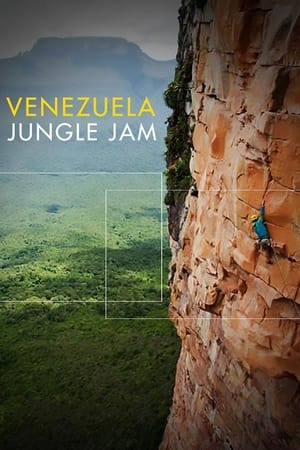
The latest film from the Belgian climbing team, following Asgard Jamming and Vertical Sailing Greenland, Venezuela Jungle Jam features Sean Villanueva O'Driscoll, Nico Favresse, Stephane Hanssens and Jean-Louis Wertz as they attempt a new free climb on the overhanging 500m wall of Amuri Tepul in the Venezuelan Jungle.
Music documentary about Billo Frómeta by director Rafael Marziano Tinoco from Venezuela.
In the midst of economic prosperity, when Venezuela welcomed millions of migrants, this documentary narrates different realities of the country.
In a run-down South American town, four men are paid to drive trucks loaded with nitroglycerin into the jungle through to the oil field. Friendships are tested and rivalries develop as they embark upon the perilous journey.
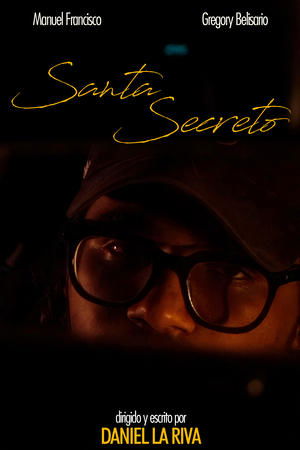
Santa Secreto
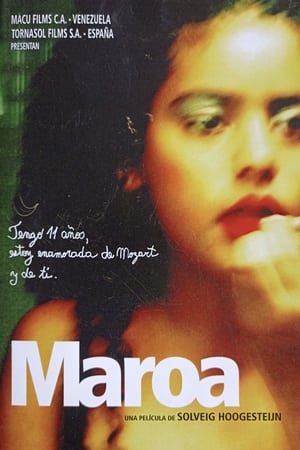
Eleven-year-old petty criminal Maroa lives with her violent grandmother Brigida in Caracas. After her boyfriend Carlos is involved in a shooting, Maroa is arrested and sent to a school where Joaquin conducts the youth orchestra, and he asks the naturally talented Maroa to join. Days now revolve around the classes that Joaquin, the shy and unconventional teacher, gives her. He is immediately interested in this talented young girl, who lacks all notion of discipline. Joaquin, the only person to offer hope in the midst of her rejection, finds that through Maroa, his world has also changed forever.
The Sykora family are only four people out of millions of Venezuelans that have recently escaped their collapsing country. They land in the Czech Republic, the country where Grandpa Jan was born, but also a place utterly strange to them. In a matter of months their savings have almost gone and job seeking becomes a nightmare. Again, the dream of just having a normal life starts to vanish. Will the family manage not to crumble along the way?
It’s Karla’s first birthday away from home. And music will be her way back.
Two decades ago, Venezuela's power trio Dermis Tatú released their only album, "La violó, la mató y la picó" ("Raped her, killed her and cut her"). The band was an offspring from the separation of Sentimiento Muerto, and was formed by Carlos "Cayayo" Troconis (voice and guitar), Héctor Castillo (bass) and Sebastián Araujo (drums). The record is still considered by many as the most influential in the Venezuelan rock scene. Twenty years later, Castillo and Araujo remember the stories behind the recording, as a group of the current generation of Venezuelan rockers, not only explain its influence and impact, but also play all the songs from the album, making them their own.
A young film director returns to Venezuela, inspired to make a film based on his father's life in the Amazon jungle (La Fortaleza, Jorge Thielen Armand). He casts Father to play himself. What starts as an act of love and ambition — filmmaking to more deeply understand the self, and the other — spirals into a process which confronts Father’s struggles with addiction and his life devoid of his son. EL FATHER PLAYS HIMSELF holds a steady lens to the way the act of cinema unearths, binds, heals and destroys.
Andrés and Julissa now parents to a seven year old Carlitos struggle to live happily as a family despite being fervent fans of rival teams and of Vicente's (Julissa's father) disapproval.
Two brothers fight to escape a violent and poor neighborhood in Caracas by playing soccer. Daniel wishes to play professionally while Julio supports the family with dirty money. The opportunity of a lifetime comes when a talent scout invites them to the Caracas Football Club. The boys' mother dies in a shootout forcing each brother to decide what it is more important to them:family, revenge, or achieving their dreams.
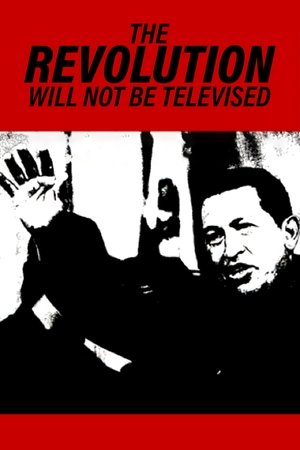
Hugo Chavez was a colourful, unpredictable folk hero who was beloved by his nation’s working class. He was elected president of Venezuela in 1998, and proved to be a tough, quixotic opponent to the power structure that wanted to depose him. When he was forcibly removed from office on 11 April 2002, two independent filmmakers were inside the presidential palace.
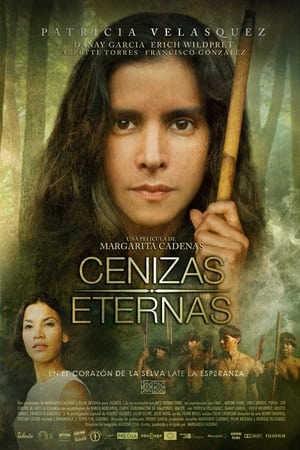
ETERNAL ASHES tells the story of a mother, Ana and her daughter, Elena. Although they are separated, in the space and time they remain united forever. The people and the millenarian culture of Yanomami are the framework of this story about the unbreakable bonds of filiations. After an accident in the furious flow of the mythical Orinoco River, in the fifties, Ana was considered dead. Elena as an adult and facing the negligible possibility that her mother is alive decides to leave to the Amazon to search her. ETERNAL ASHES is a story of filiations, poetry, wisdom and especially of humanity.
Gael is an 80-year-old photographer whose passion for the sea and whales takes him on an emotional journey in which he faces the reality of his age and the limits it imposes on his freedom. As he struggles to capture the essence of the sea once again, he is hindered by his overprotective but distant son, Míchel.
Más allá del viaje
In 2016, Venezuela introduced the CLAP program to provide essential food items during the economic crisis. However, Armando.info journalists discovered that the powdered milk included was deficient in calcium and high in sodium. Investigations revealed Alex Saab, a government contractor, was behind the overpriced imports. Journalist Roberto Deniz exposed Saab’s corruption and fled to Colombia due to threats. From there, he uncovered Saab's money laundering for Maduro and bribes to opposition members. Saab was arrested in Cape Verde and extradited to the US. Saab must choose to collaborate with US authorities or face trial, while Deniz, in exile, continues his reporting despite personal risks.
Caracas, las 2 caras de la vida