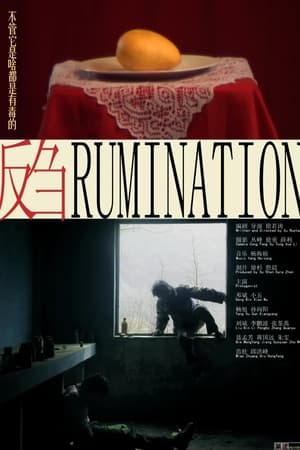
An exploration of the Cultural Revolution that depicts both its chaotic later years – through the story of a squad of Red Army guards running amok in the countryside – and its continuing legacy in today’s China.
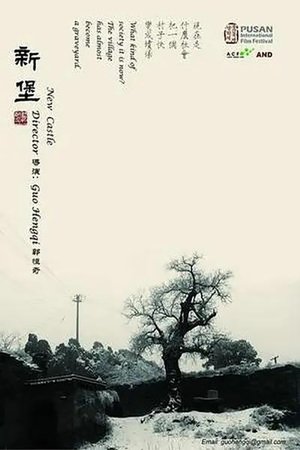
New Castle is a remote rural village where houses and mountains have been distorted due to excessive mining. Under the "New Village" campaign, all the villagers will be moved into the nearly completed Luxury Buildings. The documentary depicts the life of two groups of people, miners and villagers. The miners who are from all over the country, lost their jobs because of the Olympic Games in Beijing - the mine was shut down to make the air less polluted. The villagers had no better luck. Granny Fan lost two sons and two grandsons in a mining accident. Old Han and Old Wang are still farming. Some youngsters are gambling in the house of Han Bin, who was crippled in another mining accident. In the film, you can also see the village election, the service of local Christians, and people worshipping for a better year to come.
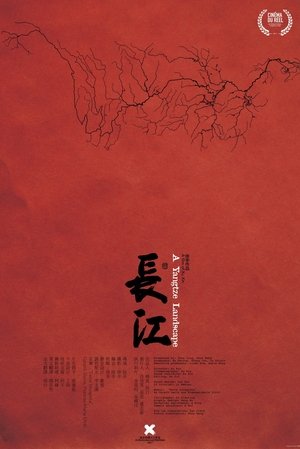
A Yangtze Landscape utilizes a non-narrative style, setting off from the Yangtze's marine port Shanghai, filming all the way to the Yangtze River's source, Qinghai/Tibet - filming a total distance of thousands of kilometers. Experimental music and noise recorded live on scene are used in post-production, painstakingly paired with relatively independent visuals, creating a magically realistic atmosphere contrasted with people seeming to be 'decorative figures' right out of traditional Chinese landscape scrolls.
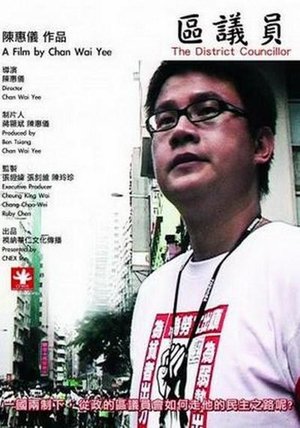
The year 2003 is a rather turbulent period for Hong Kong – the economy was in recession, the government constantly implemented futile policies, the SARS outbreak, and, on July 1st, 500,000 people went on strike opposing the adoption of Article 23 of the Basic Law. It was against this political atmosphere that YIN Zhao-Jian gave up his social worker job, a 10 year long and steady career, and joined the political circle and participated in the district councilor election, which he had no idea about.
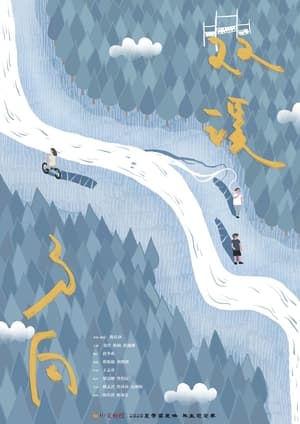
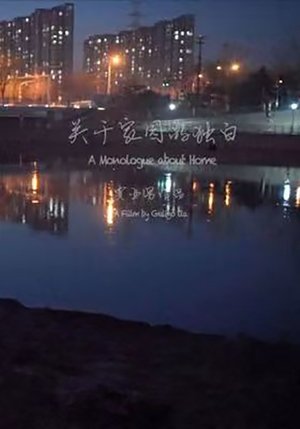
Yang Xin dropped out of school and returned to his hometown, but felt uncomfortable with the popular culture represented by live broadcast/ Douyin culture gradually becoming the mainstream of society. I wanted to return to my familiar hometown to find a sense of identity, but found that my hometown is no longer the same as in the past. The social atmosphere of my hometown and my own memories are all different. The only similarity that can be found is the river in the hometown, but the river that has been flowing has maintained its original consistency.
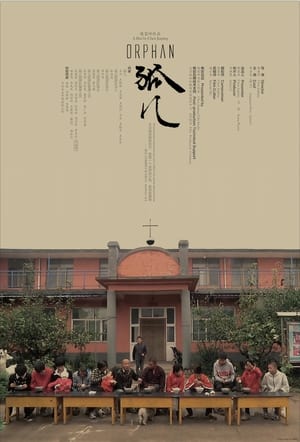
Early in the morning, the priest read in the church at the disabled orphanage. At dawn, the villagers entered the funeral ceremony during the prayer ceremony. In disabled orphanages, there are babies in the youngest children. Two children attending school together did not attend the class normally. More children with reduced mobility can only be dazed and crawl on the ground. But they are also God's people and attend worship services in the church. The autumn mist was hazy, and a new cathedral was being built in the village. Insects, kittens, puppies, orphans, villagers who worship, all life is safe. At night, the tired priest went to sleep after finishing writing. In his dream, he reached a graveyard and remained silent with his dying mother. Seasons are changing, rainy days, winter snow, orphans wear thick winter clothes, making movement more difficult. The cathedral was built, and people celebrated the biggest Christmas day of the year.
A film about death and memory. A long farewell. A killer takes the life of a poor writer in the morning. Then they go through a journey consisting of a boy, a woman, watches, oranges, roses and old bicycles. At the end of that night, he realizes that the person who was once loved will never leave ......
Yu Tian (played by Hu Tian) is a senior this year. He hasn't returned home for a few years while studying in a big city. The estrangement between him and his mother (Lin Jiehua) is somehow getting bigger and bigger. He is immersed in his artistic dreams and is not practical, but his mother, who has always been conservative, does not understand. His friends remained the same, still the same young people in the small town. Friends booed that he would be the most promising one among them, but he himself was convinced. He told his sister (played by Sun Nan) that he would go to the big city to make a fortune.
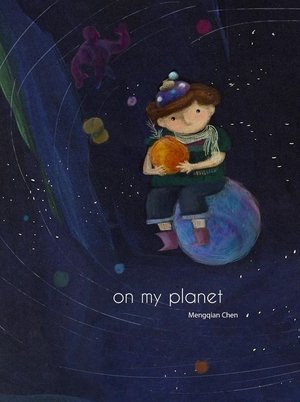
“On my planet” is a short love story. The concept is that everyone owns a little planet. The main character of my story is little boy called blue who owns a big blue planet but lives a very lonely and boring life. Until one day he found out an orange planet where a little girl lives on it , however it would only come every 72 years. This is the story about how he use every methods to attracts the girl’s attention and how he mange to pursuit his love.
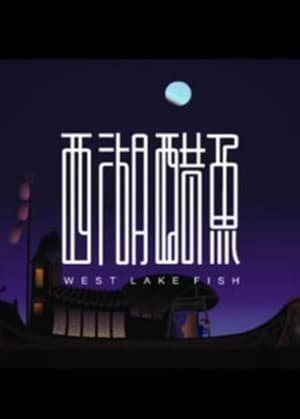
The emperor's southern tour, where the place is full of hospitality, needless to say, local food attractions need to taste the tour. West Lake Moonlight Night, quiet and distant, the emperor sat in the boat and tasted the famous West Lake vinegar cooked by famous chefs. Even though the taste of the world's famous dishes, the emperor is still attracted to the delicious taste of this dish, for a time completely disregard the image, big. The so-called music is very sad, and the bones of the fish are stuck in the throat, and the pain is unbearable. The chef tried his best, and it was hard to see the results. He was also raised by the emperor who was angry and angry. At this time, the calm prime minister is coming out...
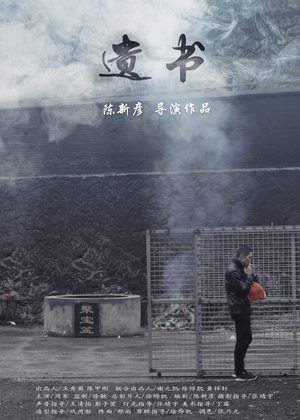
Liu Ziying was imprisoned three years ago for drug trafficking. He performed well in prison and had a high cultural quality. He was arranged to write a suicide note to the death penalty inmates. Before he was released from prison, Xu Xiaolong, the death penalty prisoner, wanted Liu Ziying to write a suicide note to him and told him that if he helped him fulfil his will, he would give Liu Ziying a sum of money. After Liu Ziying was released from prison, he acquired money by helping the death penalty prisoners fulfil their will. After tasting the sweetness, he embarked on a road of self-redemption.
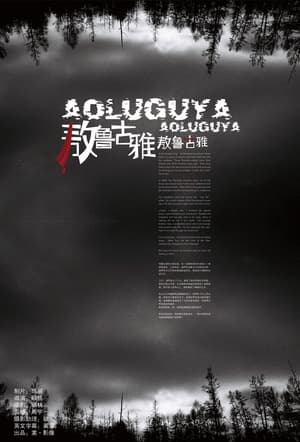
Aoluguya, Aoluguya is the first film in Gu Tao’s Ewenki Trilogy. A tale that unfolds in the Aoluguya forest, featuring such unique characters as a mother who dulls her sadness over the absence of her son, Yuguo, with alcohol; her brother; and Maria, the tribal chieftain who watches over them.
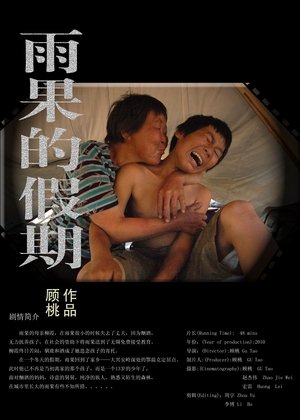
Yuguo, from Mongolia, lost his father when he was very young. His mother Liuxia was not able to raise him as a heavy drinker. With social support, she sent Yuguo to Wuxi for free education. Liuxia is depressed all day long, and she finds sustenance of missing Yuguo in reindeer and wine. One winter holiday after many years, Yuguo returns to his hometown, the Evenki settlement deep in the Greater Khingan mountains. At that time, he is no longer the boy who just left home, but a thirteen-year-old teenager. Facing alcoholic mother, poetic uncle, pure people from the tribe, familiar yet strange forest, Yuguo, who grew up in the city, doesn’t know what to do. In the snow-laden mountains of Aoluguya, northeast of Inner Mongolia, the film chronicles their brief time together. Yuguo and His Mother is the second documentary of Gu Tao’s Evenki trilogy.
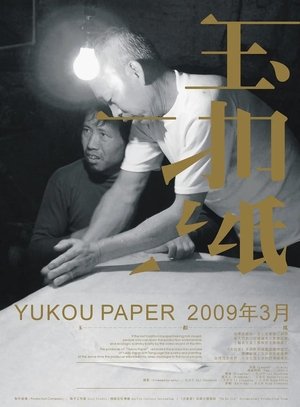
As a kind of traditional handmade paper in the area of Ninghua in western Fujian Province, Yukou paper is named after its soft and delicate quality as well as white and jade-like color. It is the best of handmade papers and needs to go through several complicated and elaborate processes. In a small village deep in the Wuyi Mountains, Xikeng, there were once more than five hundred paper mills, but now only one remains, still struggling to survive. The film crew focused their camera on the paper maker Hu Lanshan's family, quietly recording the process of making Yukou paper, the joys and sorrows of the paper maker’s family, and the changes of the whole era...
A Jian, Zhang Chiand Gou Zi took the train from Beijing to Tongliao. They made a promise that no one could speak during the trip, and who broke the rules should be punished. But it's still necessary to pick up some phone call, ask the way after you get off the train...For educated decadents, life is as if always in a state of intoxication, without goal or objective.
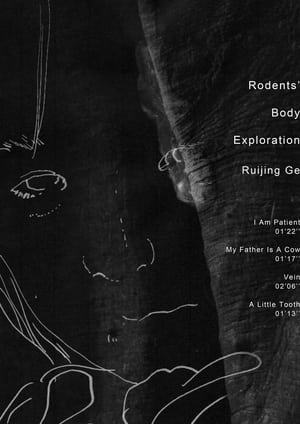
The artist works around the different individual experiences which consolidates the different changes in the body while examines intimate relationships under the structure of the disease, all by making her experience visible and public. Within the realms of Ruijing’s discussions, she hopes for the work to push the boundaries of the marginality of the body, for the work to allow oneself to look at their and others’ body in an objective manner that escapes the ontological. She further wished for the experience of living and the reflection on the mass would help the discovery of the self and its connection with society, while reflecting on life itself by doing so.
After the outbreak of the war in Ukraine, I reached out for a Ukrainian who studies in Beijing. Born in Russia, his father was Russian and his mother is Ukrainian. As the war escalates, his hometown was also bombarded, and his family breaks apart while his mom seeks for asylum in Bulgaria and his stepdad staying at home. He is about to leave China, feeling lost about his next destination. Gradually Mark and I have more resonance. And the pain caused by war started to strike me too.
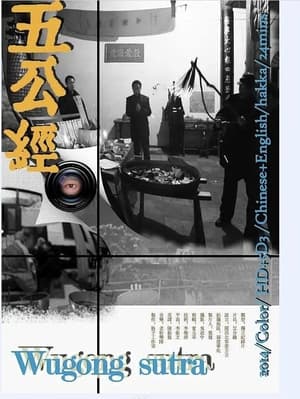
The "Wugong sutra" is also known as "Transfer to the Sky". A prophecy written by the people since the Five Dynasties Northern Song Dynasty is said to be the proverb of the Tiangongshan Zhigong, Huagong, Yigong, Tanggong and Baogong Wugong Bodhisattvas. The salvation people were robbed at the end, often used by rural secret social organizations, and also banned by the imperial court rulers. The belief in the "Five Annals" in the rural society of northwestern Yunnan has abandoned the function of politics, and only pays attention to the practical effect of the Wugong sutra curse on treating and saving people and protecting one side. This film is a field survey of the Wugong sutra as a folk belief in rural society in northwestern Yunnan.
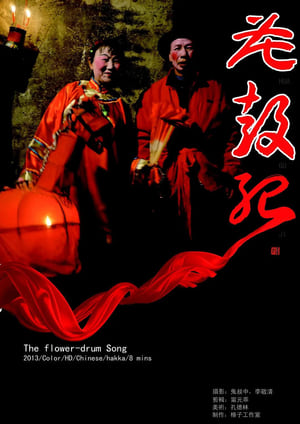
The arrogant Hua Pozi, the first-time brother who is full of joy. Even the seemingly greasy, exaggerated, and gaudy drum art seems to be unrelenting in the villages and villages.
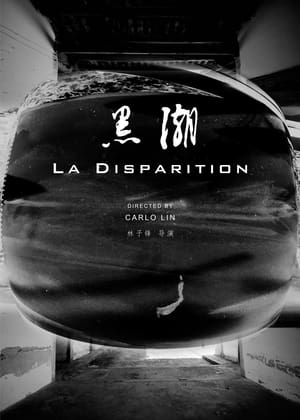
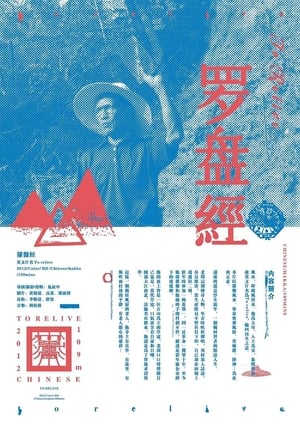
Geomancy is to say hinding winds to gain water. The earth is mother , burial brings peace to the deceased, symbolizing reincarnation. So the name of this story in English is “Revive”, which means getting into the cycle of reincarnation. The documentary is going to tell a story contains several elements such as Geomancy of compass, Hakka funeral and interment culture, General om teach, Seance. Moreover, it also porse deeply on the floating life with fleeting time- the sanguine life of a wise man in countryside. This is an old man whose life is full of hardships, he possesses real learning and stories, owns peace after overcoming severe difficulties, and has the special graciousness as being in such an age…