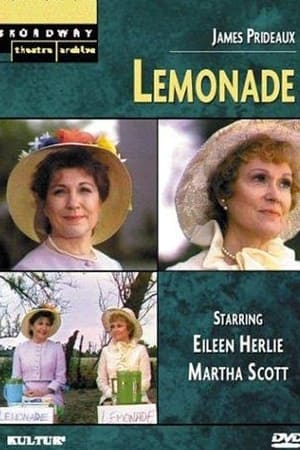
An aging Southern Belle makes life horrible for her ambitious son and crippled daughter because of her dreams of what life should be.
The last vestiges of a family that has gone from cherry season to sorrow... Madame Ranevskaya is a spoiled, aging aristocrat who, upon returning from a trip to Paris, must face the loss of her magnificent Cherry Orchard estate after defaulting on her mortgage. In denial, she continues to live in the past, deluding herself and her family, while the magnificent cherry trees are chopped down by the new owner Lopakhin, her former serf, who has his own agenda.
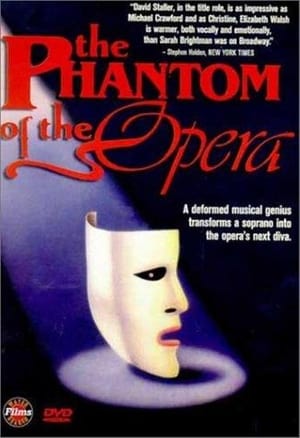
A comedy musical stage version of the Phantom of the Opera, filmed live on-stage during a performance in Florida.
Weller Martin and Fonsia Dorsey, two elderly residents at a nursing home for senior citizens, strike up an acquaintance. Neither seems to have any other friends, and they start to enjoy each other's company. Weller offers to teach Fonsia how to play gin rummy, and they begin playing a series of games that Fonsia always wins. Weller's inability to win a single hand becomes increasingly frustrating to him, while Fonsia becomes increasingly confident. While playing their games of gin, they engage in lengthy conversations about their families and their lives in the outside world. Gradually, each conversation becomes a battle, much like the ongoing gin games, as each player tries to expose the other's weaknesses, to belittle the other's life, and to humiliate the other thoroughly.
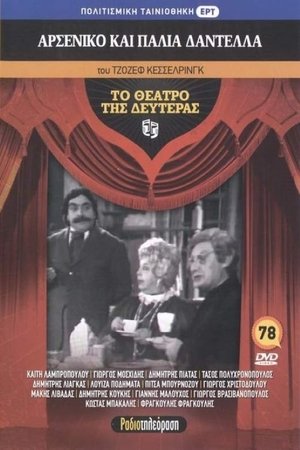
Members of an otherwise typical New York Brooklyn family are "tortured" by a kind of hereditary madness. In the meantime, the adopted nephew Mortimer tries to do everything to protect his two aunts, who indulge in a variety of dangerous acts, such as poisoning lonely and homeless elderly people, and burying them in the basement of their house. When another niece, Jonathan, arrives, the situation will spiral out of control. The play was released on DVD by Radiotileorasi magazine in December 2010 (78th DVD of the "ERT Cultural Film Archive" series).
Tío Vania
In their songs, comedy and exuberant music, a travelling theatre company give a fiercely polemic account of Scottish history, from the aftermath of Culloden to the oil boom. Their production before a live audience is intercut with filmed reconstructions of the Highland Clearances and the Victorian obsession with hunting stags.
Paul and Adèle were once lovers and separated but are still good friends, one year after everything seems to take them away from each other. The key of E may be the key of true friendship, but it is Mozart that pushes them apart.
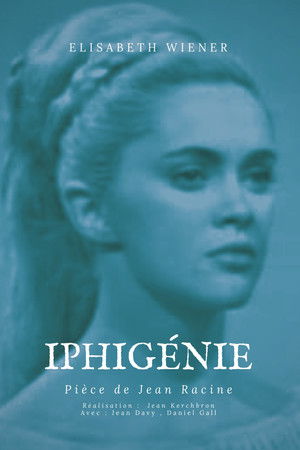
On the shores of Aulis, the Greeks prepare to attack Troy. But their ships are unable to set sail because the gods are holding back the winds necessary for departure. Agamemnon consults the oracle. The solution is tragic. To appease the goddess Artemis, whom he had offended, he must sacrifice his own daughter.
Le Médecin malgré lui
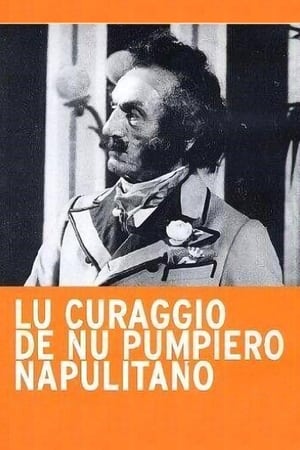
Sofia, Don Saverio's sister, confesses to her brother that she was the victim of a fateful event: while she accompanied her brother to Rome, while he was resting at a hotel, a terrible storm broke out during the night, accompanied by thunder and lightning. Frightened, she left her room to seek refuge in her brother's, when, after the lights went out, she accidentally entered a stranger's room in the darkness and fainted from fear of a violent clap of thunder. The unknown individual seized the opportunity and took advantage of her. From that turbulent encounter, Don Felice Sciosciammocca was born, Sofia's illegitimate son, now engaged to Marietta, Don Saverio's daughter.
A staging of Florian Zeller's play "The Father" by Ladislas Chollat.
Each is dependent on the other. He breaks into the passport office to get a passport. He is surprised and ends up back in prison, where he is trained in military drill. After his release, he once again lodges with relatives, his sister and brother-in-law. Wearing a second-hand captain's uniform, he first takes over a guard unit and uses it to occupy Köpenick town hall, where all the employees of the town council submit to the supposed captain. The mayor is promoted to Berlin and Voigt presents himself to the authorities a few days later. At first, everyone present laughs at the prank, but then Voigt is made aware of the legal consequences. He is sent back to prison, but shortly afterwards he is pardoned by the Emperor.
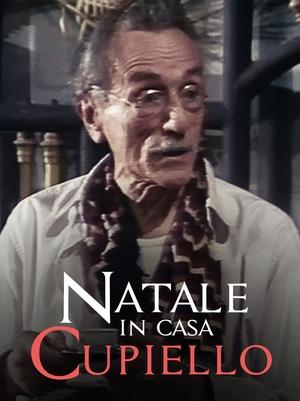
Luca Cupiello, like every Christmas, prepares the crib, amid the disinterest of his wife Concetta and his son Tommasino. Ninuccia, the other daughter, writes a letter to her husband in which she communicates that she leaves him for her lover. The letter happens in the hands of Luca who hands it over to his son-in-law, who thus learns of his wife's betrayal. During lunch on Christmas Eve, the two rivals, who were confronted by Luca's carelessness, clash violently.
Unabridged production of Goethe's Faust Ⅰ by Peter Stein's Faust Project.
An aging King invites disaster, when he abdicates to his corrupt, toadying daughters, and rejects his loving and honest one.
A struggling actress is cast in her last off (off) Broadway show - a modern take on “A Christmas Carol” - before giving up her dream and moving home. Instead, she finds romance with her director and a renewed passion for her craft and the city. But when the historic theater loses its lease and the show is set to fold, she and her cast mates are need of a Christmas miracle.
The tale begins when a brother and sister are separated in a shipwreck, but survive to be washed up on the shore of Illyria. The sister, Viola, disguises herself as a man and takes service with Duke Orsino, who has fallen in love with Lady Olivia. Entrusted with pleading on her master's behalf, Viola is utterly disconcerted to find that Olivia has fallen in love with her. Thus begins the confusion of this delightful comedy.
Mise-en-scène, at the Comédie-Française, of La Vie de Galilée by Bertolt Brecht. This is the last staging by Antoine Vitez.
A Kuwaiti play talks about the life of Kuwaitis in the years of poverty experienced by Kuwaitis before the economic boom in the seventies, and discusses work in a comic framework of economic and social problems, including poverty, education, and health, by dealing with the stories of work heroes.