All There Will Be
Xu Xin’s film “Dao Lu” (China 2012) offers an exclusive “in camera” encounter with Zheng Yan, an 83 year-old veteran of the Chinese Red Army, who calmly relates how he has navigated his country’s turbulent history over three-quarters of a century.Born to a wealthy family in a foreign concession, Yan joined the Chinese Communist Party (CCP) in 1941 because he sincerely believed in the socialist project, and in its immediate capacity to free China from the Japanese yoke and eradicate deep-rooted corruption.
Before the Flood is a study of the final weeks of a dying city, as thousand-year-old Fengjie on the Yangtze River is reduced to rubble and its inhabitants uprooted to make way for the new Three Gorges Dam that will flood the entire valley.
Six-year old Lin resides in an isolated fishing village with her brother and their widowed mother. When the family gets an opportunity to start a new life, Lin has a startling revelation. A melancholic tale inspired by real events.
A small rural township called Red White was seriously devastated by the May 12th Earthquake in China 2008. A 62-year-old Taoist survived even though his temple was largely torn by the disaster. This documentary tells the story of how the Taoist practices the widely believed Chinese traditional religion and the local people’s daily life during the township’s post-quake reconstruction.
Andy is a novelist who works from home. One day, a girl mysteriously appears in his toilet. She claims to be from the future and needs his help. Her name is Pomegranate.
The father tells his daughter Nunu a lie that there is a cow in her milk cup. She believes it and drinks up milk, but there isn't any cow. Her father tells her a variety of lies, which Nunu finds increasingly difficult to believe.
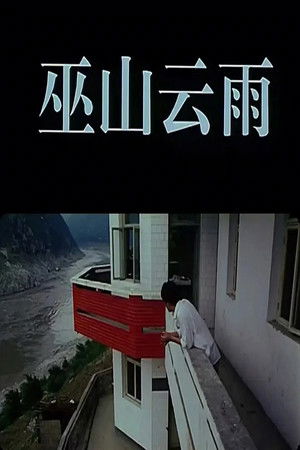
Zhang Ming went back to his hometown Wushan to record the last images before it being changed forever by the upcoming Three Gorges Dam.
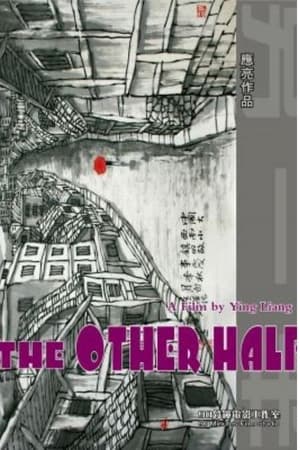
Luo Liang, a young man trying to meet the expectations of family and work, has come to town looking for something better but is unsure of his lot in life.
"Mazu" or "The Sea God" has been the most important religious belief of ordinary people in my hometown for four hundred years. Along the coast of China and even in the Nanyang region, there is at least one temple dedicated to Mazu in various seaside cities-this geographical and historical distribution coincides with the contemporary economic or industrial area of Chinese society. It is frustrating that rapid economic development has led to global warming. The factories located on the coast of southern China from all over the world will eventually cause flooding and inundate these temples dedicated to Mazu. This is indeed a very ironic discovery for our civilization, "We", not only Chinese or all human beings, now or in the past, how can we Chinese avoid this upcoming tragedy?
Chinese film directed by Zhang Ming,
Filmed over three years on China’s railways, The Iron Ministry traces the vast interiors of a country on the move: flesh and metal, clangs and squeals, light and dark, and language and gesture. Scores of rail journeys come together into one, capturing the thrills and anxieties of social and technological transformation. The Iron Ministry immerses audiences in fleeting relationships and uneasy encounters between humans and machines on what will soon be the world’s largest railway network.
Where there's an up, there's a down. That's how things go.
Fishermen couple Ah Shing and Mei-wah, having lived from boat to shore, stayed together for most of their lives. After their son grew up, they have different visions towards the rest of their days. Ah Shing insists on fishing amid the decline of the local fishing industry. Mei-wah works as a factory worker and wishes for a more stable life. Even when there are subtle and profound changes in their relationships due to the different views, their affections for each other never stopped and they still support each other. This story is based on the real-life experience of the director's parents, and they play their own character in the film.
The player of Jia Zhangke's early film "Xiao Wu" and the famous independent film activist Wang Hongwei talked about Chinese independent films at the IFF Independent Film Forum.
I just watch the news of war in a distant country on my mobile. My fingers go back day by day to the day the war broke out and pose to see comments posted on the Facebook News Feed that I follow. Outside, I have friends who participated in anti-war rallies.
In this talk, Li Hongqi reviewed his transition from fine art to cinema, and his aesthetic and philosophical exploration from his early 'So Much Rice' to recent 'The The'. Dir. Li Hongqi also shared his strong anxiety of his existence(born with melancholia), his thought on cinema art (actually, I don't think there's any movie worth making), his epistemology, his religious view, his consideration on contemporary cinema, and what he learned about living in seclusion.
Due to his history of theft in the past, Lin Kuan is falsely accused of stealing from his high school classmate. To prove his innocence, Lin enlists his friend Xiao Bing to make a plan that will clear his name. However, heir seemingly perfect plan takes a turn that pushes Lin to a dangerous edge.
Follow the lives of the elderly survivors who were forced into sex slavery as “Comfort Women” by the Japanese during World War II. At the time of filming, only 22 of these women were still alive to tell their story. Through their own personal histories and perspectives, they tell a tale that should never be forgotten to generations unaware of the brutalization that occurred.
Originally conceived as the film for government propaganda but couldn't pass the censorship. Five punks found Dong Jianguo, a millionaire wearing the dog chain being trapped in the trunk. They kidnapped the millionaire and started to konw the love story between Dong Jianguo and a woman called Bobo.