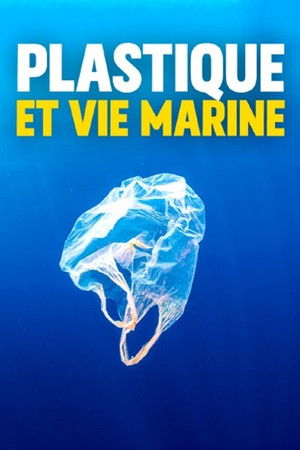
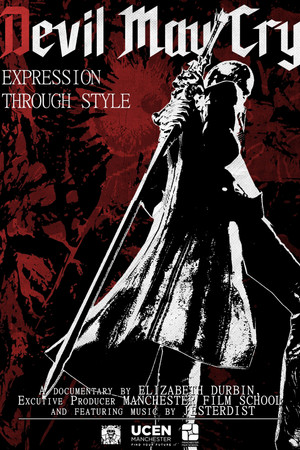
Le rêve de Léonard : Les secrets du vol dans la nature
Ruée vers les métaux stratégiques : Les entrailles de la Terre
Directed by one of the pioneers of the cinematic industry, James Williamson, The History of a Butterfly - A Romance of Insect Life is an intriguing look at the life cycles of butterflies and moths. Caterpillars are seen hatching, feeding and ready for pupation and with three caterpillars changing into chrysalis and the birth of a peacock butterfly, this black and white silent film is an early example of British natural history filmmaking.
During WWII, the Japanese army developed experimental balloons able to cross the Pacific Ocean and reach the West Coast of North America in 3-6 days. Armed with explosives, they were given the code name fu-go, or fusen bakudan (“fire balloons,” or balloon bombs) in an attempt to instill a culture of fear like that caused by the far more deadly American firebombing of Japanese cities. The U.S. responded by enacting a censorship campaign, requesting newspapers avoid reports of fu-go landings or sightings. Living near the remains of a fu-go launch site in Fukushima Prefecture, Takeuchi mimics their flight take-off using a drone camera, and, traveling to North America, follows their arrival across the shoreline and rural landscapes, using a bat’s echolocation as narrative device to place fu-go and Fukushima as echos across history.
The official Rocky Mountain National Park Centennial film. The stunning cinematography will take you on a journey into Rocky Mountain National Park’s spectacular landscapes. This film includes historic images and interviews with national park rangers who share their heartfelt insights on the value of national parks to our generations and those to come.
Galapagos: Beyond Darwin is a 1996 documentary narrated by actor Roscoe Lee Browne. It premiered on the Discovery Channel on Sunday, August 18, 1996.[1] It was directed by Al Giddings.
Planète Terre, le triomphe de la vie
Terre, la vie cachée d'une planète
A feature documentary that explores the influence of the Commodore Amiga and how it took video game development, music and publishing to a whole new level and changed the video games industry forever.
Follow Kelvin Peña across America as he explores the country's natural wonders, meeting interesting individuals and various wildlife along the way.
A young man recalls different moments of his life, reflecting the preservation of memory, the enigma of time and the inevitability of death
The history and art of ikebana, a centuries old Japanese art of flower arrangement and a look inside the Sogetsu School of Ikebana, where the director's father Sofu Teshigahara worked as the grand master of the school.
Experimental film directed by Dmitry Frolov, shot in the midst of perestroika in the USSR. February 1991. Starring the drummer for the MEANTRAITORS Vladislav Lyashchuk - a very peculiar musician played without bass drums and Toms.
The film is a trip to the planet Muscovy - an upside-down twin city of Moscow in space. As the title of the work suggests, the journey also takes us back in time. Gliding over the surface of the planet, we look down and see historic architectural styles fly by - the exuberant Socialist Classicism, aka Stalinist Empire, the austere and brutish Soviet Modernism, and the hodgepodge of contemporary knock-offs and revivals of the styles of the past. An essential companion to this journey through time and space are Hymnic Variations on the Soviet anthem.
Intact ecosystems provide the best defense against climate change! The ecosystem of a small creek is complex and diverse – the shocking reality is that in Central Europe only one in a thousand is still intact, today. What happened to our streams and brooks? What does the future hold? The film ‘One in a Thousand’ portrays the diverse wildlife inside and alongside a stream, explains the importance of this habitat and identifies the sources of its destruction. A blue-chip wildlife film that carries an important message.
Africa obscura
Some occurrences themselves are forgotten and being got rid of any copyrights. What’s more these occurrences were created and shared by people in a certain place. Although these occurrences are worthless, they are still meaningful for reservation. When the places that something occurred have changed gradually, will occurrences themselves die out soon? As an individual, I may record something.
Embark on a global odyssey to discover the largest and least explored habitat on earth. New ocean science and technology has allowed us to go further into the unknown than we ever thought possible.
Dino Bird is a visually spectacular one-hour film that explores the life of the endangered southern cassowary through the eyes of matriarch Bertha, as she and her family strive to survive in the tropics of northern Queensland in the oldest rainforest on Earth. Over the course of one tumultuous season, Bertha, her partner and her chicks battle fearsome predators and formidable rains, but also play an invaluable role in sustaining life in this ecological hotspot. Dino Bird is an intimate and rarely seen portrait of one of Australia's last remaining southern cassowaries.
The Danube Delta in Romania - the 'Last European Sanctuary’ - is a UNESCO World Heritage Site. While major efforts are made to protect biodiversity, the plight of local communities is largely overlooked. Social scientists claim that the traumatic nature of the swamp bears heavy on the villagers' lives. But is Nature really to blame? Swamp Dialogues is based on an extensive field-research in the Danube Delta Biosphere Reserve. Through a careful ‘argument montage’ built entirely on cinematic language the film represents an anthropological analysis formulated in image and sound.