A man finds some glasses on the ground. When he puts them on he is transported into a Sámi world.
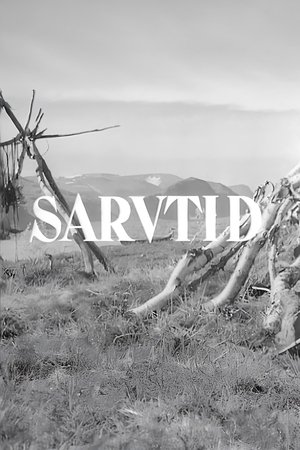
In the film about "the land of eternal light and eternal darkness" we meet some women who talk about their lives. The women have all grown up in reindeer herding families and as children they lived in kotas, moved with reindeer and lived a life in nature. Their own children, on the other hand, have grown up in "normal" Swedish society. None of them have lived like their parents. The film addresses Sami culture, language, school. How modern technology has affected the lives of the Sami.
The Persian ruler Shah Nadir has only one daughter. Princess Lindagull is kind-hearted, but feels trapped in her palace life. The vengeful King Bom-Bali sends a Lappish witch disguised as a tiger to kidnap the beloved Princess.
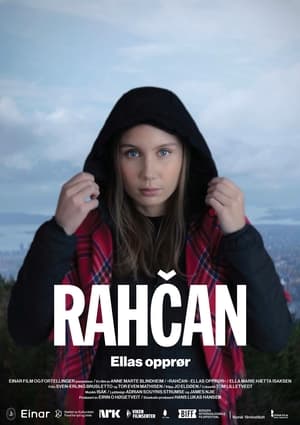
A young woman struggles to defend her Sámi heritage in a world where xenophobia is on the rise, climate change is threatening reindeer herding, and young people choose suicide in the face of collective desperation.
Mot vinden
The movie takes place during World War II and depicts the true story of Jan Baalsruds amazing escape from the German army from the coast of Northern Norway and across the border to the neutral country Sweden.
Religious and cultural reawakening inspires rebellion in a 19th century Norwegian village.
Sami reindeer herders win a Supreme Court victory against Europe’s largest wind farm - but when the state refuses to act, their fight reveals a deeper crisis of justice and trust.
When Mats' grandfather dies the family opens a wooden box containing evidence of the family's Sami heritage. Why has this been kept secret? Why did they stop being Sami? And why do they know so little about their history?
A drama about the manager Håkan Dahlin who has just been discharged from a clinic where he was treated for his alcoholism. In an outbreak of jealousy, Dahlin abuses his wife Inga and after that he is forcibly interned again. Inga is a nurse and she is now moving to a mountain village to work at a district clinic. During an emergency visit, she encounters her childhood sweetheart, the doctor Gunnar, and old feelings between them begin to flare up again.
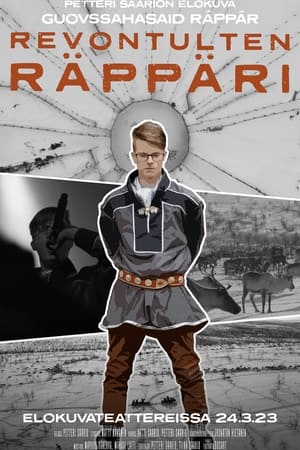
The documentary Rap and Reindeer follows the life of 18-year-old Sámi rapper Mihkku Laiti, who lives in the northernmost corner of Sámiland. The film is a coming-of-age story, following Mihku on his journey towards a career as a musician and rise to stardom in the midst of varying expectations. He’s charmed the crowd on Talent Suomi and proudly wears the Sámi clothing he has styled himself. He raps and yoiks in harmony, designs his own brand on his computer but also masters the skill of laborious reindeer herding. Above all, he sees his own unique roots and the Sámi language as his greatest strength. The future makes him wonder: to follow his father’s footsteps or to reach for his dreams.
Two parallel stories are gradually unfolding the everyday life of two very different persons - that of 86-year-old Sara and 7-year-old Mihka - both residing in Guovdageaidnu - Kautokeino, in the middle of the Norwegian arctic tundra, through the drastic change of the arctic seasons and the passage from the long winter’s darkness to the never-ending light of the summer season.
During summer 1979, Ester moves to Alta in Northern Norway to begin teaching at an elementary school. Like many Sámi at the time, she is ashamed of her heritage and conceals her ethnicity. Ester goes to great lengths to fit in, even joining in with the derogatory jokes. When her cousin Mikkhal takes her to a camp by the Alta River, where people are demonstrating against the building of a dam, Ester learns how the fight for the river is also a revolt against the years of brutal racism and discrimination against her people. After a major confrontation with the police, Mikkhal and some other Sámi decide to go to Oslo to hunger strike in front of the Parliament. Knowing what is at stake, Ester realises it is time to make a stand…
Elvira, a confident Sámi teenager, firmly believes that her lesbian single mother conceived her at a Danish fertility clinic. She often daydreams about her father, envisioning him as a charismatic movie star. However, her world is turned upside down when her real biological father unexpectedly steps into her life.
Documentary about the priest and joiker Johan Märak and the artist Lars Pirak, and their friendship.
Loving someone of the same gender is frowned upon in Sami communities. Sparrooabbán (Me and my little sister) shows what it’s like to be a minority within a minority. Suvi describes how her little sister Kaisa wishes to be accepted as she is. Like her sister, Kaisa is a Sami, but also in a relationship with a woman, and she also works as a deacon. There are obviously more constricting communities in the film than only one.
Iida, an elderly Sámi woman, who has abandoned her roots under the pressure of forced Finnishization, is conflicted between selling her old homestead and hiding her cultural heritage from her niece, as the rural way of life she has suppressed begins to creep back in.
Birte from Aursfjord, a strong-willed young woman with extraordinary psychic abilities, falls in love with a Sámi, but is forced to marry a local man.
Sámi artefacts from the Finnish National Museum are returning home to Sápmi, while the holy drums of the Sámi people are still imprisoned in the basements of museums across Europe. The returning objects symbolise the dignity, identity, history, connection to ancestors and a whole world view that was taken from the Sámi people. Director Suvi West takes the viewer behind the scenes of the museum world to reflect on the spirit of the objects, the inequality of cultures and the colonialist burden of museums.
Examines the extraordinary lifelong friendship between Skolt Sámi storyteller Kaisa Gauriloff and the Swiss-Russian author Robert Crottet through the eyes of Gauriloff’s great-granddaughter Katja.