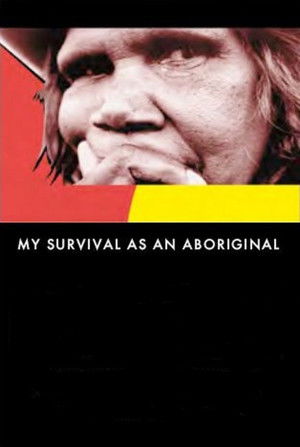
Essie Coffey gives the children lessons on Aboriginal culture. She speaks of the importance of teaching these kids about their traditions. Aboriginal kids are forgetting about their Aboriginal heritage because they are being taught white culture instead.
In her second film, MY LIFE AS I LIVE IT (1993), Essie Coffey returns to her home in Dodge City where she and the A-Team are running in the shire elections. Inter-cutting between 1993 and 1978, the film presents the fascinating contrasts of a society in transition. Some of the kids we met in the earlier film now have families of their own and are involved in education, art and sports. Others are drifting, trying to cope with alcohol and depression. Most significantly, community programs offer the possibility of dignity and self-determination. In this film, Essie shows us the Community Development Employment Program (CDEP) making a real difference. Although the CDEP has now come under attack from the Federal government, MY LIFE AS I LIVE IT portrays the CDEP as providing meaningful work and services to an impoverished remote community.
An examination of the connection between relentless government intervention since colonisation to the trauma and disadvantage experiences by Indigenous Australians - the two key drivers of incarceration.
From the remote Australian desert to the opulence of Buckingham Palace - Namatjira Project is the iconic story of the Namatjira family, tracing their quest for justice.
For both Aboriginal and non-Aboriginal Australians, Captain James Cook is a figure of great historical significance.
An observational documentary which looks at Sydney’s first community Aboriginal radio station, 88.9 Radio Redfern. Set against a backdrop of contemporary Aboriginal music, 88.9 Radio Redfern offers a special and rare exploration of the people, attitudes and philosophies behind the lead up to a different type of celebration of Australia’s Bicentennial Year. Throughout 1988, 88.9 Radio Redfern became an important focal point for communication and solidarity within the Aboriginal community. The film reveals how urban blacks are adapting social structures such as the mass media to serve their needs.
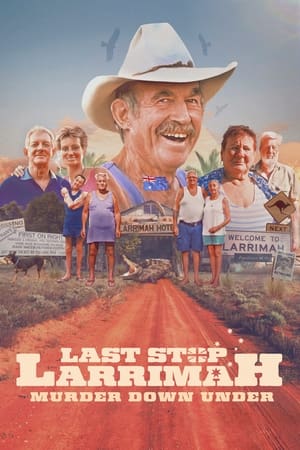
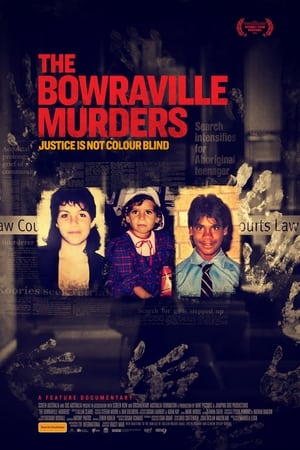
The epic David vs Goliath battle for justice waged by the families of three Aboriginal children murdered in a small rural town 30 years ago, the system that failed them, and what it reveals about racism in Australia today.
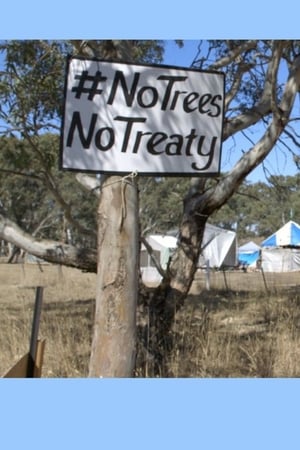
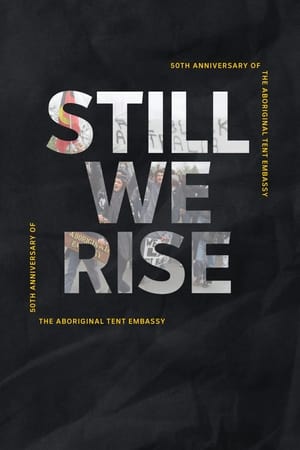
50 years on, the Aboriginal Tent Embassy is the oldest continuing protest occupation site in the world. Taking a fresh lens this is a bold dive into a year of protest and revolutionary change for First Nations people.
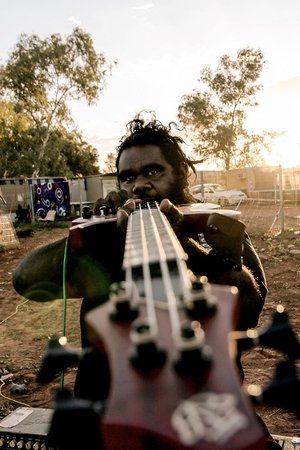
A short documentary that follows an Australian band through their journey from jamming at a backyard party to a national tour across the country.
Young Aboriginal people who are traditional custodians in Victoria explore the Treaty process with questions, concerns and their opinions. Sharing their insights into what has been happening and what needs to happen.
Blind from birth, Dr G Yunupingu found his identity through song and the haunting voice that has already become legend. His debut album introduced Australia to the Songlines and culture of his Elcho Island community, but now Dr G Yunupingu finds himself increasingly torn between city and country, present and past, self and the community to which he owes so much.
Australian documentary filmmaker Ian Darling re-examines the incidents that marked the final 3 years of Indigenous footballer Adam Goodes' playing career. Made entirely from archival footage, photos and interviews sourced from television, radio and newspapers, the film reviews the national conversation that took place over this period.
A new songline for 21st century Australia - a fresh look at the Cook legend from a First Nations' perspective - the songline tells of connection to country, resistance and survival and features the cheeky, acerbic and heartfelt showman - Steven Oliver and a host of outstanding, political Indigenous singer/songwriters.
A feature documentary about opera singer Tiriki Onus who finds a 70-year-old silent film believed to be made by his grandfather, Aboriginal leader and filmmaker Bill Onus. As Tiriki travels across the continent and pieces together clues to the film’s origins, he discovers more about Bill, his fight for Aboriginal rights and the price he paid for speaking out.
Meet Lanz Priestley, a charasmatic homeless man, who owns nothing but a phone and a Facebook page. When Lanz discovers taps have run dry in drought-stricken outback Australia, he raises the money to deliver drinking water himself.
Anindilyakwa man, Steve 'Bakala' Wurramara is afflicted with a profound hereditary neurodegenerative disorder. While modern medicine looks for answers, the stories of an ancient curse and black magic still permeate this remote Aboriginal community in far northern Australia. Bakala enlists the help of his daughter to search for a cure from the traditional bush medicines in the land, desperate to find an answer before she too is diagnosed. As his desperation grows and his disorder takes an ever greater hold, Bakala realises he must fight this ancient curse to unlock the secrets of his Ancestors.
In 1945, at the age of seven, a young Joe Eggmolesse was diagnosed with Leprosy. He was immediately removed from his family and home and transported under police escort over a thousand kilometres to be confined on an island for the treatment of the disease. For the next ten years, a leprosarium for Aboriginal people became his home. A lush tropical idyll off the north east coast of Australia, Fantome Island was the home to a close knit community of indigenous 'lepers' who made the most of their existence as people living on the fringes of the marginalised. Now as a 73 year old Joe reflects on his indelible Fantome years. His incredible, poignant story offers a profound insight into one of Australia's hidden histories.
Not only has she got pink extensions, painted on eyebrows, glitter stockings and superman hotpants, Starlady’s a youth worker in some of Australia’s most remote and challenging places. And she reckons that hairdressing can improve people’s lives. Like a real life Priscilla, Starlady takes us on a Queen of the Desert journey to Areyonga, an indigenous community in Central Australia, where she’ll work with a group of curious and cheeky young people.
Australia’s El Dorado was found by Lewis Harold Bell Lasseter – if we believe his claims in the late 1800s to have discovered a vast gold deposit in central Australia. This mysterious place has never again been found, and many believe it doesn’t exist. But one thing is certain: Lasseter was a larger-than-life character. Seen by some as an eccentric conman, he was ridiculed for his extravagant assertions, which he held until his tragic end. But Lasseter remains the embodiment of the Australian folk hero, who lived a life full of incredible adventures, tall tales and outrageous claims – including a possible faked death and his insistence that he designed the Sydney Harbour Bridge.
WORLD PREMIERE: It is the 70th anniversary of the first nuclear test in indigenous Australian territory and the aboriginal communities call on activists from all over the world to carry out a 200 km anti-nuclear walk through the desert. Among them, the directors of this documentary join to record this walk, which seeks to end the extraction of uranium, the mineral with which atomic bombs are produced. What attitude will we take as humanity in the face of the possibility of creation and destruction