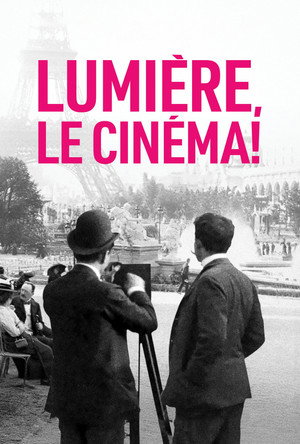
In one of those wonderful coincidences of history, lumière, the French word for “light,” was also the last name of brothers Auguste and Louis, whose brilliant invention, the cinematograph, helped to inaugurate the most beloved art form of the last 130 years. Institute Lumière director Thierry Frémaux uses Lumière, Le Cinema! to guide the viewer through over a hundred shorts—some famous, some forgotten, some never before seen—directed by Lumière and company. In the process, Frémaux illuminates how the brothers employed the camera as a creative instrument as they (and their operators) mastered framing, staging, and subject selection for quotidian and exotic microdocumentaries as well as the first ever fictional motion pictures. The result is not only a glorious re(telling) of the genesis of cinema but a profound meditation on the beautiful world captured—and the mysterious world imagined—by the Lumières.
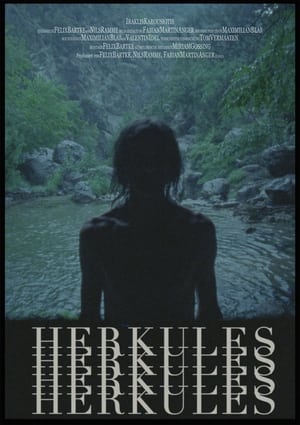
Hercules travels by bicycle from Krefeld on the Lower Rhine to Olympus, the throne of ancient deities. The Hercules myth, as a primal myth of male power, is questioned through biographical reflections and the staging of mythological echoes. The dramaturgical structure of the hero's journey disintegrates in a multi-material perspective into questions about male identity, ideals and remorse.
A woman narrates the thoughts of a world traveler, meditations on time and memory expressed in words and images from places as far-flung as Japan, Guinea-Bissau, Iceland, and San Francisco.
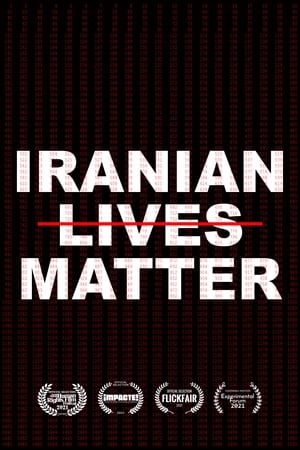
Made with virtually no budget during COVID-19 quarantine in 2020, IRANIAN LIVES MATTER abstractly recounts the true story of what occurred in Iran during the November 2019 protests, sparked by a surprise hike in gasoline prices, which quickly spread across the entire nation and was subsequently crushed by the dictator's iron fist, resulting in the death of approximately 1500 protesters, as reported by Reuters. IRANIAN LIVES MATTER is an experimental documentary, an audio-visual endurance test that audibly takes its audience through the chaos in the streets of Iran as the brutal regime cracks down on Iranian protesters, while visually showing the hands of the dictatorship as it crosses out 1500 lives one by one to further emphasize the scale of the massacre and show to a world desensitized to news of mass killings in the Middle East what the term "1500 dead" truly means.
Two gay men in Japan discuss the end of their respective relationships.
A pleasant tasting summer film made in New York and Searsmont, Maine. With poems by Daniel Shapiro (age five), performances by Dana Reitz, Yoshiko Chuma and Wang Pint; music by Duke Ellington and Gamelon of Bali.
Jo; or The Act of Riding a Bike is Zefier's third film.
A theoretical exercise can stem from a physical one: using the camera as if it was the vibrating device placed on the olive trees for the harvest of its fruit, the final result is a series of original and intriguing images. The camera shakes, gets in and out of focus, and we don’t exactly know what is happening. At first this is a strange disorientation, but then you get used to it through the cyclical mechanical noise that joins the images. The words of a peaceful female voice allows you to frame the film: a visual exercise after all can also be free.
Outtakes, commentary from Zefier's third film: Jo; or The Act of Riding a Bike.
This film was made out of the capture of a live animation performance presented in Rome in January 2005 by Pierre Hébert and the musician Bob Ostertag. It is based on live action shooting done that same afternoon on the Campo dei Fiori where the philosopher Giordano Bruno was burned by the Inquisition in 1600. A commemorative statue was erected in the 19th century, that somberly dominate the market held everyday on the piazza. The film is about the resurgence of the past in this place where normal daily activities go on imperturbably. The capture of the performance was reworked, shortened and complemented with more studio performances.
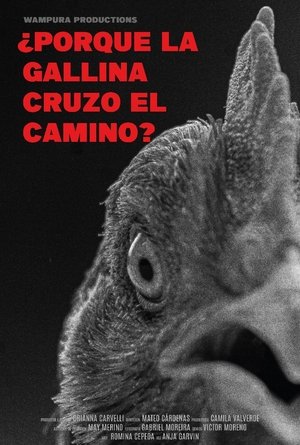
A hen questions the meaning of her life on a farm.
Las Preguntas que Perdimos
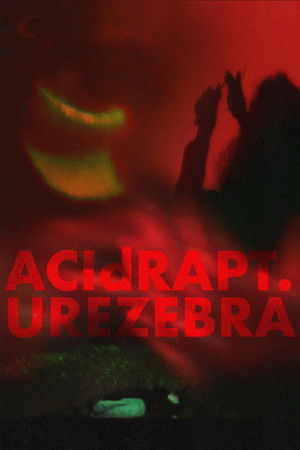
ACIdRAPTURE ZEBRA
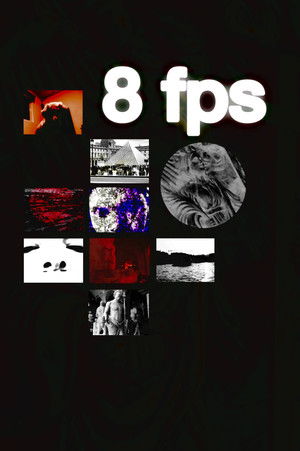
Pictures taken between France and Mexico running at 8 frames per second.
A new type of cinema you can perceive with your butt hole.
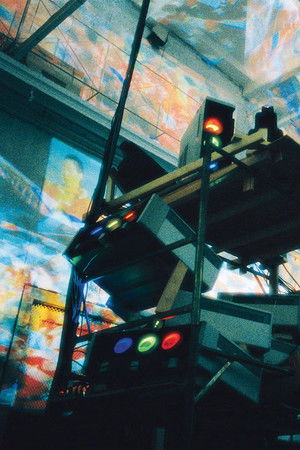
Sistine Chapel is an audio-visual collage of new footage and samples from Paik’s past videos, which featured many of his friends, collaborators, and public figures. It was Paik’s own way of summarizing his artistic career with video. The film installation consists of fast-paced and overlapping images that completely cover the gallery walls and ceiling—one of the most under-appreciated parts of architecture, according to Paik. With its electronic visuals and booming audio, interspersed with periods of silence, the immersive installation stands in stark contrast to the experience of its namesake.
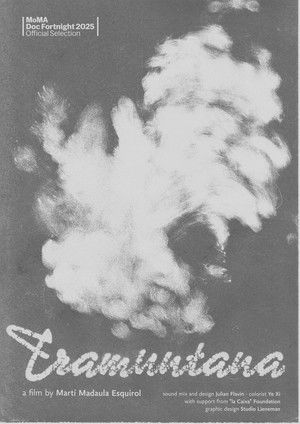
In a remote area of northern Spain, the wind has a name: Tramuntana. Tramuntana takes what it wants—clothes, trees, boats, and the people of the landscape who live with the endless threat of being carried away by its force. This film is a lyrical portrait of this furious wind, woven from the stories passed down by local villagers.
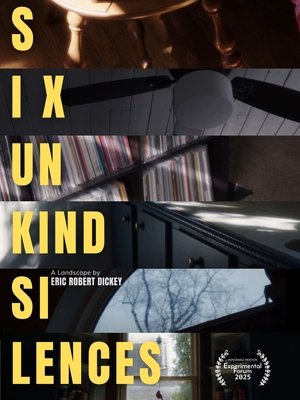
A Landscape documentary about the silent voids the living inhabit after everyone they love has gone.
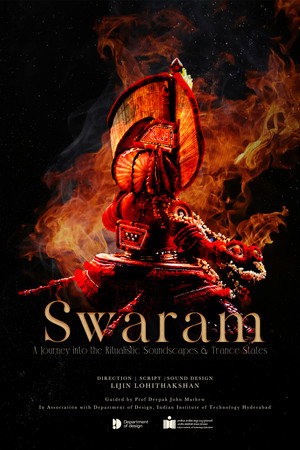
SWARAM is an experimental cinematic documentary film that explores the transformative power of music and sound. Through vivid field recordings and intricate depictions of sacred rituals, it immerses viewers in the profound connection between sound and the human experience. At its core, SWARAM looks into Kerala’s ritualistic art forms—Thottam Pattu, Pulluvan Pattu, and Kalamezhuthu Pattu—examining how rhythm and sound evoke trance states and facilitate spiritual transformation. It also blends ancient traditions with contemporary sonic explorations. Structured as a visual research publication, the film adopts the format of an academic paper, with distinct sections such as Backdrop, Abstract, Introduction, Case Studies, Conclusion, and Expert References. This unique approach seamlessly blends research with cinematic storytelling, offering viewers both an academic exploration and an immersive cinematic experience.
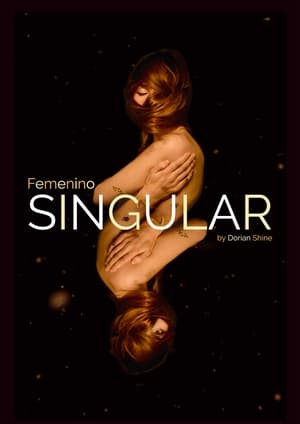
A documentary featuring 30 Argentinian women aged between 4 and 80, sharing their stories of resilience, strength, and unique perspectives on womanhood through performance art.