Iran in the early 1960s: The world is still a big dream of freedom, exuberance and Technicolor, at least in the eyes of sixteen-year-old Atieh (Saina Rohanie in an impressive debut). Together with her mother, she visits Rassoul, a longtime friend of her late father, in his small village and, upon her arrival, meets his fourteen-year-old son Kamran (new discovery Mahdiar Shahmohammadi). Kamran is immediately enraptured by Atieh's charisma, and it doesn't take long for the two teens to become close. Kamran takes Atieh into the previously unknown world of cinema, whose heroes, villains and adventures he is already passionately addicted to. A magical summer takes its course - at the end of which waits a shattering decision that will change both of them forever.
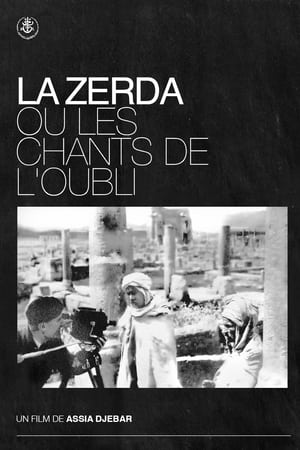
“La Zerda and the songs of oblivion” (1982) is one of only two films made by the Algerian novelist Assia Djebar, with “La Nouba des femmes du mont Chenoua” (1977). Powerful poetic essay based on archives, in which Assia Djebar – in collaboration with the poet Malek Alloula and the composer Ahmed Essyad – deconstructs the French colonial propaganda of the Pathé-Gaumont newsreels from 1912 to 1942, to reveal the signs of revolt among the subjugated North African population. Through the reassembly of these propaganda images, Djebar recovers the history of the Zerda ceremonies, suggesting that the power and mysticism of this tradition were obliterated and erased by the predatory voyeurism of the colonial gaze. This very gaze is thus subverted and a hidden tradition of resistance and struggle is revealed, against any exoticizing and orientalist temptation.
After a single, career-minded woman is left on her own to give birth to the child of a married man, she finds a new romantic chance in a cab driver. Meanwhile, the point-of-view of the newborn baby is narrated through voice-over.
Founding a social Muay Thai project in the North Zone of Rio de Janeiro, Mestre BG and his competitors face the adversities of an underfunded project and fight to win their place on the podium. The challenges intensify when one of the students, Raíssa Pacheco, secures a spot to compete in a South American championship in Uruguay.
Bridget Jones is still dating her new love, barrister Mark Darcy, for a perfect six weeks. However, while on assignment in Thailand with her disreputable ex, Daniel Cleaver, claiming to be reformed, Bridget questions if she has everything she's ever dreamed of having.
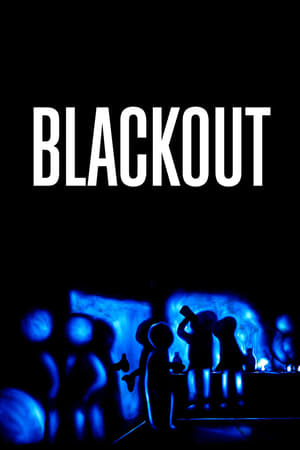
Blackout is a short, animated documentary about the 2003 power failure in much of the eastern seaboard of the U.S and Canada for up to 4 days.
What if, instead of bombs, we dropped watermelons? Dreamy and hopeful, this animated short sweeps us up into a colourful world where layers of reality and creativity intersect. Our protagonist navigates through it all seamlessly, and in the process shows us the importance of imagination.
A young teenage werewolf is torn between honoring her family's secret and her love for a man.
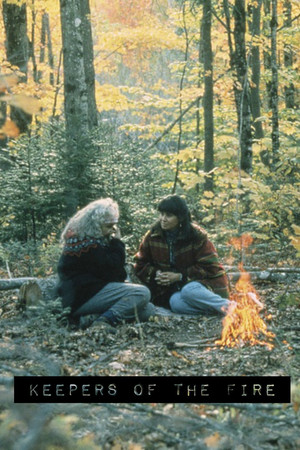
This film is an album of Native womanhood, portraying a proud matriarchal society that for centuries has been pressured to adopt different standards and customs. All of the women featured share a belief in the importance of tradition as a source of strength in the face of change.
"Taking its title from John Keats’s early 19th-century poem, this highly personal melodrama finds Dulac interrogating the archetype of the femme fatale. La belle dame sans merci follows a famous actress who was once seduced and abandoned by a rich man and subsequently resolved to become a “merciless woman,” forever scheming to hurt others (men in particular) in a ruthless yet captivating manner. Dulac challenges the Romantic archetype embodied in Keats’s poem by way of symbolist mise en scène, self-reflexive narration, and her typically associative approach to editing, locating a modern ambiguity within the stereotypical figures of 19th-century art." - Film Society of Lincoln Center
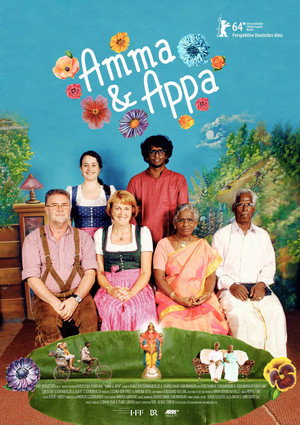
When Franziska announces her engagement to her boyfriend, Jayakrishnan, her parents journey from Bavaria to India to meet Jay's mother and father. But coming to terms with their children's plans forces each couple to question their cultural bias.
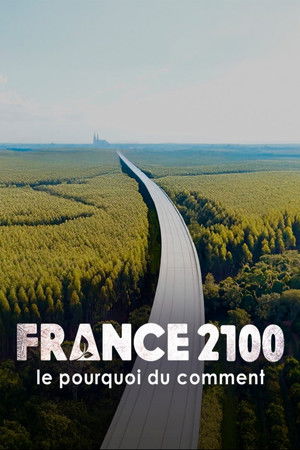
France 2100, le pourquoi du comment
For half of a millennium, First Nations women have been at the forefront of aboriginal peoples' resistance to cultural assimilation. Today, Native women are still fighting for the survival of their cultures and their peoples--in the rain forest and the city, in the courts and the legislatures, in the Longhouse and the media. Keepers of the Fire profiles Canada's Native 'warrior women' who are protecting and defending their land, their culture and their people in the time-honoured tradition of their foremothers.
On learning that her infant niece, Maya, is dying of a rare disease, newly pregnant Sharon decides she must return home to Buffalo, N.Y., to help out -- but instead, she steps into a hornet's nest of family turmoil. While Maya deteriorates, another crisis erupts when Karen -- Maya's mother -- becomes pregnant with the child of a former gang member in this cinema verité-style portrait of a family on the brink.
The semi-biographical The Extremists' Opera follows the everyday and inner struggles of a women-only alternative theater group delivering explosive and politically controversial explosive stage performances under the control of tough mannered director Naoko.
A young woman arrives in Paris where she finds a job as a waitress in bar next on Avenue Montaigne that caters to the surrounding theaters and the wealthy inhabitants of the area. She will meet a pianist, a famous actress and a great art collector, and become acquainted with the "luxurious" world her grandmother has told her about since her childhood.
On the evening of April 30, 1971, a standing room only audience of local literati and feminists packed New York City’s Town Hall to watch Norman Mailer, who had just written “The Prisoner of Sex,” grapple with a panel of passionate feminists. The subject was Women’s Liberation, an issue on which Mailer seemed like the devil’s own advocate.
A documentary chronicling the adolescent years of Elie Wiesel and the history of his sufferings. Eliezer was fifteen when Fascism brutally altered his life forever. Fifty years later, he returns to Sighetu Marmatiei, the town where he was born, to walk the painful road of remembrance - but is it possible to speak of the unspeakable? Or does Auschwitz lie beyond the capacity of any human language - the place where words and stories run out?
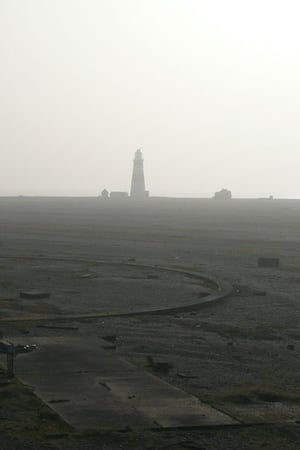
Construed in the time of running clouds, a panoramic and another examination of vacant buildings on the British shore (Orford Ness), a deserted place on Earth, place of non-specificity as a base for an open course of events that shape the sense, consisting in interaction between the image and the viewer.
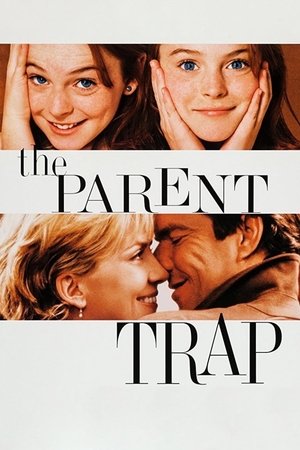
Hallie Parker and Annie James are identical twins who were separated at a young age due to their parents' divorce. Unbeknownst to their parents, the girls are sent to the same summer camp, where they meet, discover the truth about their relationship, and come up with a plan to switch places in an effort to reunite their mother and father.