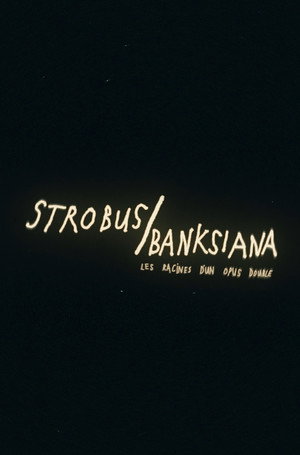
A first look at Strobus / Banksiana: a musical and visual work supported by two important protagonists of the Quebec forest: the white pine and the jack pine. Duu's second album, first double album : each half is distinguished by its sonic palette, its writing style, and the type of conifer that surrounds it. This short documentary offers an intimate glimpse into the creator's journey through the paths that led him to conceive this personal diptych, where he embraces his duality in this visceral desire to celebrate nature every day.
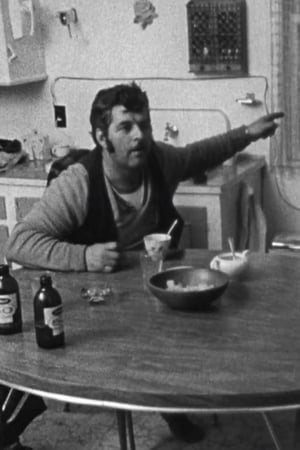
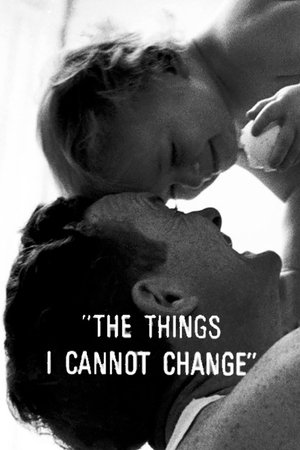
"This feature documentary is considered to be the forerunner of the NFB's Challenge for Change Program. The film offers in inside look at 3 weeks in the life of the Bailey family. Trouble with the police, begging for stale bread, and the birth of another child are just some of the issues they face. Through it all, the father tries to explain his family's predicament. Although filmed in Montreal, the film offers an anatomy of poverty as it occurs throughout North America." - NFB
Life is a movie.
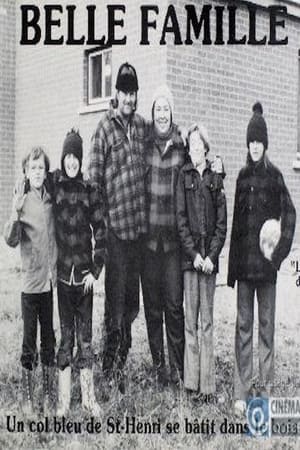
A working class family leaves St-Henri quarter in Montréal to build a new home in the countryside.
"Montréal under the snow and the cold winter. It is the period of the year when the garage owners strike it rich. The automobile at the service of man? This small opus would rather show the contrary. This is one in a series of eight films titled “Chronicle of Everyday Life,” a project that filmmaker Jacques Leduc took four years to realize, and whose goal was to revisit Direct Cinema at a moment when it was already heavily “contaminated” by mainstream TV." - Anthology Film Archives
"This film is one of the first French Unit productions of the “Société Nouvelle/Challenge for Change” program. When an old area of Montréal is to be demolished to make way for a new low-income housing development, is there anything the residents can do to protect their own interests? The film documents such a situation in the Little Burgundy district of Montréal and shows how the residents organized themselves into a committee that successfully influenced the city’s housing policy." - Anthology Film Archives
A documentary about direct-cinema from its very beginnings (Nanook of the North) to the fake-direct-cinema of the Blair Witch Project. All the important direct-cinema filmmakers are portrayed and/or interviewed: Leacock, Wiseman, Maysles, Pennebaker, Reisz and others.
Feature-length documentary as part of Pierre Perrault's Abitibian Cycle. The filmmaker questions the past and present of Abitibi and draws up, face to face, the promises of colonization in the 1930s and the great disappointment caused by the closing of the land in the 1970s. There are witnesses to the heroic era, including the cultivator Hauris Lalancette, as well as extracts from films by Father Maurice Proulx (1934-1940).
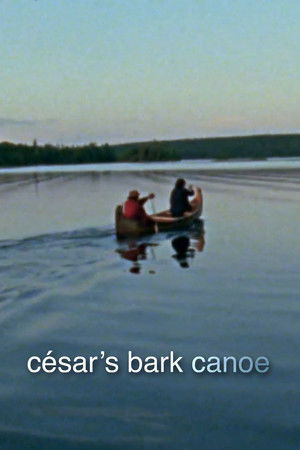
"This documentary depicts a canoe being built in the traditional manner. Cesar Newashish, a 67-year-old Attikamek of the Manawan Reserve North of Montréal, uses only birchbark, cedar splints, spruce roots, and gum. With a sure hand he works methodically to fashion a craft unsurpassed in function or beauty of design. Building a canoe solely from the materials that the forest provides may become a lost art, even among the Native Peoples whose traditional craft it is. The film is free of spoken commentary but text appears on the screen in Cree, French, and English." - Anthology Film Archives
Images of love and freedom personified by a man who like to travel, a man who has made a profession of doing nothing and who constantly comes up against the structures of a society he rejects.
A documentary that follows several American fighters as they train for and fight in the first world open karate tournament in Japan.
Frank Sinatra: In Concert at the Royal Festival Hall was an CBS musical television special starring Frank Sinatra broadcast on February 4, 1971, of a concert given by Sinatra at London's Royal Festival Hall on November 16, 1970. The special was directed by Bill Miller, and produced by Harold Davison. Sinatra was introduced on stage by Grace Kelly. Kelly had starred alongside Sinatra in the 1956 film High Society, the last film she made before her marriage to Rainier III, Prince of Monaco. Sinatra had been follicularly challenged for many years, hence all the hats in publicity stills, album covers etc. TV directors were forbidden to photograph him from the back because of this. However, at this concert, Sinatra had completed a very successful hair transplant and deliberately turned his back on the main audience a couple of times to acknowledge the audience sitting backstage, along with running his hand over the back of his head to draw attention to his new coiffure.
Charged with the electricity of a heavyweight prizefight, " The Main Event " was filmed live at Madison Square Garden, a venue usually reserved for sporting events and rock 'n' roll concerts. Sinatrra dazzies the crowd with contemporay numbers as " You are the Sunshine of My Life ", " Let Me Try Again " and delivers the knockout blow with signature tunes " My Kind of Town " and " My Way ".
For over thirty years, three women have languished in Missouri State prison under unjust sentences for killing their abusive husbands. Denied the opportunity to enter the abuse into evidence, each of the women represents a system broken by outdated and media-sensationalized stereotypes. When a greater understanding of the "battered" syndrome change legal practices in 2000, Missouri's Governor crafts a new law demanding the parole board reevaluate each woman's case.
An exploration of the rise of Héroes del Silencio, the seminal 1980s Spanish rock band anchored by Enrique Bunbury.
The story of the mysterious artist known by the signature “Kâr-ı Üstat Mehmet Siyah Kalem” — the Master Mehmet Siyah Kalem, whose enigmatic works continue to intrigue and fascinate to this day.
Thirty miles from Manhattan a group of mysterious mountain people fight for recognition as a legitimate Native American tribe from the Bureau of Indian Affairs. What begins as their journey travels the country as Native American’s fight for their rights at Standing Rock, Apache Junction and throughout the United States. Examining through expert interviews and unbridled access to the community, the film provides an in depth look at the complex past, volatile present and endangered future of the Ramapough Mountain Indians and what it truly means to be a “Native American”.
Tsé
A group of Ubangi women and their chief on an exhibit in 1932.
Unable to move on from the death of his granny, a filmmaker desperately searches for the right film idea that will finally allow him to let go…