Averroès and Rosa Parks: two units of the Esquirol Hospital, which - like the Adamant - are part of the Paris Central Psychiatric Group. From individual interviews to «carer-patient» meetings, the filmmaker focuses on showing a form of psychiatry that continually strives to make room for and rehabilitate the patients’ words. Little by little, each one eases open the door to their world. Within an increasingly worn-out health system, how can the forsaken be given a place among others.
An immersive documentary about four nurses working in retirement houses in Alzheimer units. Near to Claire, Luca, Antoinette and Lika, we discover how the nurses work, how the care is possible, with patience, ability, intelligence, tenderness and love.
In Iraq 2003 Corporal Martin Webster filmed fellow soldiers beating Iraqi youths during rioting in Al Amara. Two years later, a British newspaper obtained his footage. The story that ran led to outrage across the world.
Voir un ami
Capturing the Electrons documents the life and career of Nobel Prize-winning Hungarian physicist Ferenc Krausz. His research team has generated and measured the first attosecond light pulse and used it for capturing electrons' motion inside atoms, marking the birth of attophysics. In 2023, jointly with Pierre Agostini and Anne L'Huillier, he was awarded the Nobel Prize in Physics.
At Milan’s Niguarda public hospital, the unconventional Dr. Bini leads a bold mission overseeing aspiring parents undergoing in vitro fertilization and the journeys of individuals reconciling their bodies with their gender identities. He navigates the constraints set by a conservative government and an aggressive market eager to commodify bodies.
BBC Horizon Documentary. Jupiter, the largest and fastest rotating planet among the eight major planets in the solar system, is the fifth planet from the inside out. This film tells the latest information from NASA's Juno Jupiter probe, unveiling the wonders of Jupiter.
The fascinating landscape formations of Iceland in the North Atlantic bear witness to the beauty and primal power of nature. They were created through the interaction of powerful volcanic, geological and biological processes that have been changing the face of the earth for billions of years. This is what the Earth might have looked like four billion years ago. Iceland is the realm of ice and fire. Nowhere else is there such a high density of volcanoes. The landscapes, which are continually reshaped by eruptions, make the island a natural laboratory full of clues about the formation and development of the earth. The documentary follows a group of scientists through the most active areas of Iceland, along a mountain range that has emerged from the ocean. On the slopes of the volcanoes, in the fog of the fumaroles and on streams and rivers, the three researchers explore how the first forms of life populated the earth's surface and in what evolutionary steps they took over the earth.
An interesting talk with Dr. Eusebio Rubio-Aurioles, about the current state of psychotherapy.
The Hugo's Brain is a French documentary-drama about autism. The documentary crosses authentic autistic stories with a fiction story about the life of an autistic (Hugo), from childhood to adulthood, portraying his difficulties and his handicap.
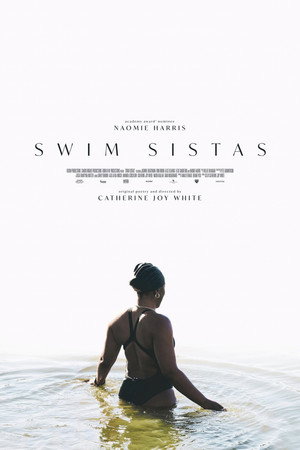
Swim Sistas follows the swimming journeys of three very different Black girls/women as barriers are broken down in the water.
Diagnosed with multiple sclerosis, documentarian Matt Embry takes viewers on a transnational journey — from Italy to Canada, and from the lab to the home — in order to examine the politics of the condition.
In this documentary, wealthy entrepreneur Bryan Johnson puts his body and fortune on the line to defy aging and extend his life beyond all known limits.
Three million years ago, camels roamed through Greenland’s endless forests and our ancestors lived in the trees. It all came to an end with the Ice Ages. What died and what survived, as natural selection shaped the evolutionary tree during this epochal shift from hot to cold? Until now, scientists have known less about the natural world before the Ice Age than they did about the age of dinosaurs, which ended 64 million years ago. A new discovery is set to reveal this lost world, species by species. Led by Danish gene-hunter Eske Willerslev, a team of scientists for the first time in history is sequencing DNA from before the Ice Age. The picture that emerges is of a hot planet, when forests blanketed the Arctic and carbon levels matched those in our atmosphere today. Is this a portrait of our own climate future?
For several decades, geoscientists have been observing that the Earth is changing rapidly due to human intervention. This action has such a great impact on the biological, geological and atmospheric processes of the Earth that some scientists speak of the dawn of a new epoch: the Age of Man or the Anthropocene.
Život stojatých vôd
„The Fabulous Insects – Beetles“ presents colourful and bizarrely shaped species as well as the largest beetle in the world, in its habitat in the South American rainforest. The film also shows that the colourful diversity and beauty of beetles and their exciting natural history can be experienced right on our doorstep, in Central Europe. In aesthetic and never-before-seen macro slow-motion and time-lapse shots, the viewer experiences the world of beetles, which is more beautiful, colourful and surprising than many of us realise. No other group of animals on earth is so diverse: beetles come in a wide variety of ‘models’, from miniature versions a quarter of a millimetre in size to large versions twenty centimetres long. Some beetles flaunt jewel-like iridescent colours, while others wear plain black. Some come in eye-catching warning colours, while many wear an astonishing camouflage.
ME/CFS is a devastating disease that affects around 300,000 people in Germany alone. There has been little help for sufferers to date. Many doctors are not familiar with the clinical picture and treat it incorrectly. However, something has been happening recently, partly due to the coronavirus pandemic: because the late effects of Covid-19 correspond to the typical symptoms of ME/CFS...
Scientists dive deep on the mysterious and unusual predatory behavior of orcas attacking great white sharks, and the disappearance of the other sharks after these attacks.
A journey through six different countries and characters into a world where chemistry is the ultimate response to human pursuits of well-being.